There are certain television shows that take you right back to a particular time in your life. The music, the clothes, the humor, the questionable hairstyles. Suddenly, you’re not a middle-aged adult with a mortgage, responsibilities, and a to-do list that reproduces like rabbits. You’re back in the 1990s, when your biggest concern might have been whether your favorite show was on that night.
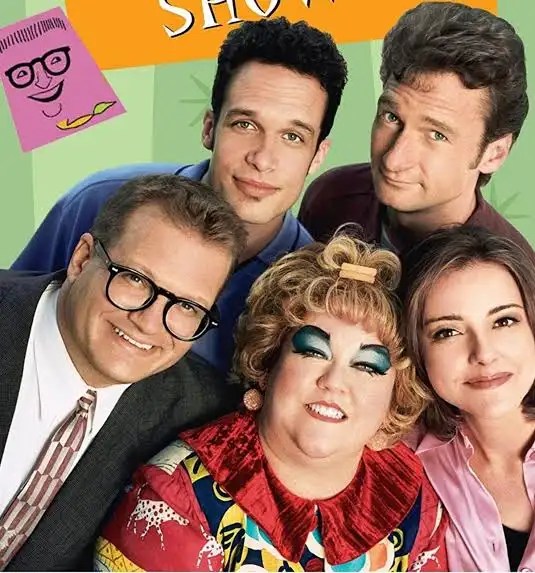
For me, one of those shows is The Drew Carey Show, which I’ve recently started rewatching now that it’s available to stream on the Roku Channel.
And let me tell you, it’s every bit as quirky, ridiculous, and entertaining as I remember.
Of course, I have a little hometown pride invested in this one. Kathy Kinney, the brilliantly outrageous actress who played Mimi Bobeck, is from Stevens Point, Wisconsin. When you grow up in a town like this, seeing someone from your own backyard on a national television show is a pretty big deal. Especially when that person becomes one of the most unforgettable characters on television.
But the older I get, the more I realize that my affection for this show goes beyond nostalgia. There’s something about The Drew Carey Show that feels even more relevant now than it did when it originally aired.
Maybe it’s because, underneath all the absurdity, it was a show about ordinary people trying to figure out what the hell they were doing with their lives.
Sound familiar?
Mimi Bobeck, Stevens Point, and a Little Personal History
Let’s start with Mimi.
With her garish makeup, colorful outfits, enormous hair, and the general demeanor of someone who woke up every morning and chose psychological warfare, Mimi was a force of nature. She didn’t enter a room so much as declare war on it.
And I loved her.
Kathy Kinney brought a level of commitment to that character that made Mimi impossible to ignore. She was loud, abrasive, petty, ridiculous, and occasionally downright mean. But she was also funny as hell, and beneath all that makeup was a character with more depth than you might have expected.
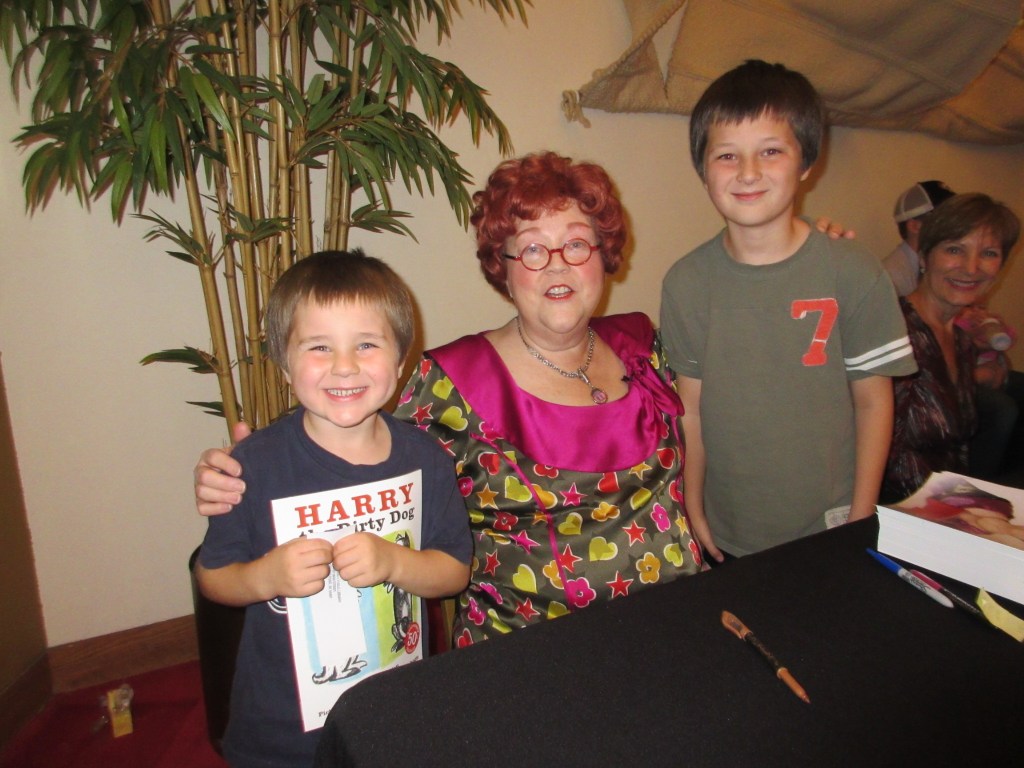
I’ve had the pleasure of meeting Kathy several times over the years. My first memorable connection to her came in 1997, when she served as the keynote speaker at my high school graduation.
Kathy was part of the first graduating class of the then-new Stevens Point Area Senior High School, or SPASH, in 1972. So having her return to speak to a graduating class two decades later was a pretty special connection between our community and someone who had made it in Hollywood.
But my favorite connection to Kathy isn’t about Hollywood at all. It’s about her mom.
After graduation, I took a job as a waitress at my Aunt Kelly’s restaurant, South Point. Kathy’s mother, Marian, was a regular customer, and I waited on her often.
Marian had a very particular arrangement with the restaurant. No matter what she ordered, her bill was $1.99.
One of her regular meals was a cup of cottage cheese topped with fruit cocktail. And yes, I remember that detail because when you wait tables, you never forget the regulars, their orders, or their little quirks.
I loved Marian.
Years later, I told Kathy about my memories of her mom, and Kathy commented on how sweet it was that I’d befriended Marian.
That meant something to me. Because while the rest of the world knew Kathy as Mimi, I knew her through these little hometown connections. A mother who came into a local restaurant. A waitress who remembered her order. A conversation that had nothing to do with television ratings or Hollywood fame.
Just people being people.
And honestly, isn’t that the stuff that matters most?
When Mimi’s Story Hit a Little Too Close to Home
One of the things that has always resonated with me about Kathy is what she’s shared about her childhood and the bullying she experienced growing up.
In a 2016 Stevens Point Journal feature about her life and career, Kathy discussed her journey from Stevens Point to Hollywood, including the experiences that shaped her along the way.
Her experiences resonated with me because I experienced childhood bullying, too.
There’s something validating about discovering that someone you admire has walked in your shoes. Not because their success somehow erases what happened to you, but because it reminds you that the people who were cruel to you when you were young don’t get to write the ending of your story.
The kid who was picked on can grow up, find her people, build a life, and discover that the world is a whole lot bigger than the school hallway where someone once made her feel small.
And the person who seemed weird, awkward, or different might eventually become the person everyone remembers.
Maybe that’s part of why Mimi has always appealed to me. She’s unapologetically herself, even when that self is a walking assault on the senses.
Now, am I saying I see myself in Mimi?
Occasionally.
Minus the garish makeup, obviously. I have standards.
But there’s something to be said for a woman who doesn’t need everyone to approve of her before she gets on with her day. I suspect many of us spend entirely too much of our lives trying to be palatable to people who wouldn’t like us even if we came with a complimentary gift basket.
At some point, you have to decide whether you’d rather be liked by everybody or be comfortable in your own skin.
Mimi, bless her heart, was never particularly interested in the first option.
The Show Was Ahead of Its Time
When The Drew Carey Show originally aired, it was a workplace sitcom about an ordinary guy in Cleveland, his friends, his job at a department store, and the endless stream of ridiculous situations they managed to create.
But looking back, the show was doing some interesting things.
Drew wasn’t a suave leading man. He wasn’t fabulously wealthy, exceptionally handsome, or a mysterious millionaire with an impossibly beautiful apartment. He was a regular guy with glasses, a sense of humor, a job he didn’t particularly love, and a social life that sometimes seemed to be held together with duct tape.
His friends weren’t the cool kids who had somehow remained the center of the universe after graduation. They were grown-up nerds. People who had made it through adolescence without necessarily figuring out how to become the sophisticated, successful, effortlessly confident adults they thought they were supposed to be.
Then there was Drew’s brother, Steve, whose gender expression and cross-dressing storylines brought a different kind of character into a mainstream sitcom at a time when television was still working out how to portray people who didn’t fit conventional expectations.
And Mimi? She was practically a one-woman demonstration of the fact that women didn’t need to be sweet, demure, conventionally attractive, or universally likable to be memorable.
The show was willing to be weird. It embraced absurdity. It let its characters be ridiculous, petty, insecure, and occasionally awful without requiring every episode to end with a perfectly polished lesson about how everyone should behave.
Was every joke timeless? Of course not. It was a 1990s sitcom, not a sacred text. Some humor has aged better than other parts.
But there was a looseness to the comedy that I miss. The characters could be flawed without being reduced to their worst moments. They could say stupid things, make fools of themselves, and move on to the next ridiculous situation.
Nobody needed to issue a twelve-paragraph public statement because somebody made an awkward joke at work.
Sometimes a joke was just a joke. Sometimes a character was just a jerk. And sometimes the whole point was that people are complicated, imperfect, and occasionally hilarious disasters.
There is something refreshing about that.
I Worked at Elder-Beerman. Trust Me, the Show Wasn’t That Far-Fetched.
Part of the reason The Drew Carey Show always felt so relatable to me is that, in the early 2000s, I worked at Elder-Beerman, the department store that used to be in Plover.
And let me tell you something: if you think the characters on Drew’s show were exaggerated for comedic effect, you’ve clearly never worked retail.
There is something about putting a bunch of different personalities under one roof, adding customers, sales goals, questionable management decisions, and a break room where everyone gathers to complain, that creates the perfect environment for sitcom-level entertainment.
The people I worked with at Elder-Beerman were wonderfully quirky in their own ways. We had personalities, characters, and the sort of everyday workplace absurdity that made the antics of Drew and his friends feel less like television comedy and more like a documentary with a laugh track.
You know the type. The coworker who could turn a five-minute conversation into a full-blown production. The person who had a story for absolutely everything. The one whose personality was so big that you could probably hear them coming before you saw them. And, of course, the people who made an otherwise ordinary workday memorable simply by being unapologetically themselves.
Retail has a way of bringing people together who might never otherwise cross paths, and somehow, you make it work. You learn each other’s quirks, develop inside jokes, survive the occasional customer from hell, and eventually realize that the people who drive you a little crazy are often the same people who make going to work enjoyable.
Looking back, I think that’s part of what The Drew Carey Show got so right. The workplace wasn’t just somewhere the characters went to earn a paycheck. It was where friendships formed, personalities collided, ridiculous situations unfolded, and people who might have seemed unremarkable from the outside became the stars of their own little daily comedy.
My Elder-Beerman coworkers weren’t characters on a television show, of course. They were real people with real lives, real problems, and their own particular brands of weirdness. But that was the beauty of it.
You didn’t need to work alongside celebrities or corporate executives to have an entertaining work life. Sometimes all you needed was a department store in Plover and a collection of coworkers who could have given Drew, Oswald, Lewis, and the rest of the gang a run for their money.
And honestly? Some of the funniest people you’ll ever meet aren’t on television. They’re standing beside you at work, trying to get through the shift just like you are.
No laugh track required.
My Husband Thinks He’s Drew Carey. I Have Questions.
One of the funniest parts of rewatching this show is that my husband sees himself in Drew.
I’ll let him have that.
Drew is a regular guy who wants to enjoy life, hang out with his friends, and get through the workweek without too much unnecessary nonsense. He isn’t trying to conquer the world. He isn’t particularly interested in reinventing himself every six months. He’s just trying to make a living and find some happiness in the process.
I can see the appeal.
Although I reserve the right to point out that identifying with a fictional character doesn’t automatically make you the charming protagonist of your own sitcom. Sometimes it just means you’ve recognized a familiar collection of habits and questionable decisions.
As for me, I occasionally identify with Mimi.
Again, the makeup is where we part ways.
But I understand her intensity. I understand the tendency to have strong opinions, to feel things deeply, to notice when something is ridiculous, and to have absolutely no interest in pretending otherwise just to make everyone else comfortable.
Marriage is a funny thing. You can spend decades with someone and still discover that you have very different ideas about which television character best represents your personality.
Perhaps this is why we need sitcoms. They give us a safe way to examine our own ridiculousness without having to admit that we’re the problem.
Well, not entirely, anyway.
The Grown-Up Nerds Might Be the Most Relatable People on Television
Here’s what I think The Drew Carey Show understood better than a lot of television: Most of us don’t magically transform into extraordinary people when we become adults.
We just become older versions of ourselves with bills to pay.
We still have insecurities. We still worry about what other people think. We still sometimes feel like the awkward kid sitting alone at lunch, even when we’re perfectly capable adults with jobs, families, responsibilities, and a reasonable understanding of how to use a calendar.
Drew and his friends remind us that being an adult doesn’t mean you’ve finally figured everything out. It means you’ve learned to function while continuing to figure things out.
Think about the ordinary milestones that make up a life.
You get a job. Maybe it’s not your dream career, but it pays the bills. You develop friendships with people who understand your sense of humor. You get married, raise kids, buy a house, and try to remember whether you’ve paid the electric bill.
You save up for a vacation. You spend a Saturday doing absolutely nothing and discover that doing absolutely nothing is one of life’s greatest luxuries.
You might not own a yacht or a Ferrari. You might never have a vacation home overlooking the ocean. Your idea of extravagance might be a trip to the beach, a comfortable pontoon, a good meal, or a weekend where nobody needs anything from you.
And you know what?
That’s a pretty damn good life.
We live in a culture that constantly tells us we’re supposed to be optimizing something. Our careers. Our bodies. Our homes. Our relationships. Our bank accounts. Our personal brands.
Apparently, even relaxing has become a competitive sport.
We’re encouraged to turn our hobbies into side hustles, our interests into businesses, and our lives into carefully curated highlight reels designed to convince strangers that we’re doing better than they are.
But what if the goal isn’t to be exceptional at everything?
What if you just want to do your job well, come home to people you love, enjoy your hobbies, take a few trips, and have enough money left over to afford the things that make life enjoyable?
What if you want to be good at something without needing to monetize it?
What if you’re perfectly content being a small fish in a very large pond?
The people on The Drew Carey Show weren’t necessarily changing the world. They were changing the subject, making bad decisions, irritating one another, getting into trouble, and trying to find some happiness in the middle of everyday life.
They were ordinary people living ordinary lives.
And they were entertaining because ordinary life is rarely as ordinary as we think.
And then there’s the house.
Drew bought his house from his parents. I bought my house from my parents.
At this point, I’m starting to wonder whether my life has been loosely scripted by the writers of a 1990s sitcom.
Think about the parallels. Drew is a regular person trying to navigate adulthood, work, relationships, and all the ridiculousness that comes with being a grown-up. I’m over here doing the same thing, except my sitcom comes with Wisconsin winters, a mortgage, and significantly fewer commercial breaks.
Neither of us seems particularly concerned with projecting an image of extravagant success. We have houses. We have jobs. We have families and responsibilities. We’re making a life out of what we have, and occasionally we get to look around and think, Well, this is certainly not how I pictured adulthood, but here we are.
There’s something funny about realizing that a fictional character and your actual life have this much in common. Somewhere, a television writer created Drew Carey as an ordinary guy navigating ordinary life, and decades later, I’m watching reruns while recognizing details that could have been lifted straight from my own biography.
The universe has a sense of humor, apparently.
And maybe that’s another reason I love this show. It reminds me that adulthood doesn’t have to follow some grand, carefully orchestrated plan. Sometimes you buy a house from your parents, settle into your community, find your people, and build a life that might not look particularly glamorous on paper but feels like home.
Literally.
Besides, buying your childhood home from your parents is a pretty effective way to keep the family history alive. It’s also a convenient reminder that no matter how old you get, your parents will probably always have opinions about how things should be done.
Drew might have had sitcom writers to help him navigate that arrangement. The rest of us are just winging it.
Popularity Is Fleeting. Contentment Is Underrated.
One of the biggest lessons I take away from this show is that popularity is a temporary condition, not a permanent achievement.
If you were popular in high school, congratulations. You survived adolescence with a social advantage.
But the world doesn’t hand out lifetime achievement awards for being voted most likely to succeed by a bunch of teenagers who were still trying to figure out how to use a locker.
And if you weren’t popular? Congratulations to you, too. You may have missed out on some teenage social perks, but you also learned early that you can survive without universal approval.
Neither experience guarantees happiness.
You can be popular as an adult and still feel insecure. You can have professional success and still wonder whether people genuinely like you. You can walk into a room full of people who admire you and still be too nervous to introduce yourself to the one person who might become a wonderful friend.
You can spend years trying to impress people who wouldn’t recognize your accomplishments if they were printed on a billboard.
And you can achieve everything you thought you wanted, only to discover that you’re exhausted and don’t particularly enjoy the life you’ve built.
That’s the trap.
We spend so much time chasing status that we sometimes forget to ask whether the status we’re chasing will actually make us happy.
A bigger job title. A nicer car. A bigger house. More followers. More recognition. More money.
Some of those things are perfectly reasonable goals. Money provides security, and professional accomplishment can be deeply satisfying. There’s nothing wrong with wanting more for yourself.
But there is a difference between wanting a better life and wanting other people to think you have one.
The first is about contentment. The second is about performance.
And I’m increasingly convinced that contentment is the more difficult achievement.
Because contentment requires you to stop measuring your life against somebody else’s highlight reel.
It requires you to recognize that a good life doesn’t have to look impressive from the outside.
Maybe you work a regular job, enjoy a comfortable home, love your family, and spend your weekends doing things that make you happy. Maybe your greatest luxury is having the freedom to say no to something you don’t want to do.
Maybe you don’t need to be the most successful person in the room.
Maybe you just want to enjoy being in the room.
That’s a lesson I think Drew and his friends understood, even when they were busy demonstrating every possible way to make a bad situation worse.
Nostalgia Is Nice. Recognizing Yourself Is Better.
Rewatching The Drew Carey Show has certainly brought back memories of the 1990s. The fashion. The music. The humor. The unapologetic weirdness.
But the best part isn’t simply remembering who I was when the show first aired.
It’s recognizing pieces of who I still am.
The kid who was bullied. The nerd who didn’t always feel like she belonged. The woman who sometimes has strong opinions and doesn’t particularly enjoy pretending otherwise. The person who wants to do meaningful work without allowing a job title to become an entire identity.
And the person who has learned that life doesn’t have to be extraordinary to be wonderful.
I’ve known people who achieved impressive things and were miserable. I’ve known people who lived relatively simple lives and seemed genuinely happy. I’ve watched people chase the next accomplishment while overlooking the good things sitting right in front of them.
I don’t think success and contentment are mutually exclusive. I just think we’ve become a little too comfortable treating them as the same thing.
They aren’t.
You can be successful and discontented. You can be ordinary and happy. You can be a grown-up nerd with a mortgage, a spouse who thinks he’s Drew Carey, and a weekend plan that involves sitting outside on a pontoon.
You can have a life that would never make the cover of a magazine and still have a life worth celebrating.
And sometimes, the best thing you can do is turn on an old sitcom and remember that you don’t need to be the most remarkable person in the world to have a remarkable life.
You just need to build a life that feels like your own.
So, Here’s to Drew, Mimi, and the Rest of Us
I’m glad The Drew Carey Show is available again, because it deserves to be remembered for more than its 1990s nostalgia factor.
It was funny, unconventional, occasionally outrageous, and willing to let its characters be imperfect human beings. It celebrated the nerds, the misfits, the awkward people, and the folks who never quite figured out how to become the polished, sophisticated adults they thought they were supposed to be.
And for those of us who grew up feeling a little out of place, there’s something comforting about that.
Kathy Kinney will always have a special place in my heart, not just because she gave us Mimi Bobeck, but because she’s a hometown connection whose personal story resonates with my own. I’ll always remember her mom Marian, her cottage cheese and fruit cocktail, and that $1.99 bill.
Those are the little details that turn a television memory into something personal.
As for my husband, I’ll allow him to continue believing he’s Drew Carey.
And I’ll continue seeing a little bit of Mimi in myself, provided nobody mistakes my perfectly respectable makeup routine for a cry for help.
We’re all a little ridiculous. We’re all a little insecure. We’re all trying to figure out how to make a decent life out of the time we’ve been given.
Some of us will accomplish extraordinary things. Others will do perfectly ordinary things and find extraordinary joy in them.
Most of us will probably do a little of both.
So here’s to the grown-up nerds. The late bloomers. The people who never quite fit in. The people who stopped trying to impress everyone else and started figuring out what actually makes them happy.
Here’s to the people who work hard, love their families, enjoy their hobbies, and understand that a good day doesn’t require a luxury car or a six-figure vacation.
Here’s to the people who can laugh at themselves.
And here’s to the beautiful, ridiculous, gloriously imperfect business of being human.
Now, if you’ll excuse me, I have a sitcom to watch and a husband to remind that being Drew Carey does not exempt him from household responsibilities.
Some things never change.


Leave a Reply