Tag: life

  • What We Inherit

    There is something about being Polish that runs deeper than a last name.

    It lives somewhere beneath the surface—in the stories we were raised on, in the food that somehow tastes like childhood, in the sound of a polka that can make an entire room move, and in traditions that have survived not because they were easy to preserve, but because someone decided they were worth preserving.

    Our family is proud to be Polish.

    Not because we believe being Polish makes us better than anyone else.

    But because it reminds us that we come from somewhere.

    And perhaps, in a world where so much seems to change so quickly, knowing where you come from matters more than we realize.

    Our ancestors came to America carrying more hope than possessions. They arrived speaking a language that wasn’t always understood, carrying customs that weren’t always welcomed, and trying to build a life in a country that often expected immigrants to leave pieces of themselves behind.

    Polish immigrants faced prejudice, discrimination, poverty, language barriers and pressure to assimilate.

    And still, they built.

    They worked.

    They sacrificed.

    They endured.

    They built homes and businesses. They raised children. They built churches and neighborhoods. They created communities. They took whatever they had and somehow made a life from it.

    They didn’t have everything handed to them.

    They earned it.

    Maybe that’s why hard work and perseverance feel like such a deeply rooted part of our identity.

    Because somewhere in the back of our minds—or perhaps somewhere much deeper—we know that the life we have was made possible by people who didn’t get to live it themselves.

    We inherited the results of sacrifices we never had to make.

    Think about that for a moment.

    Someone you’ve never met may have worked a job they hated so that their children could have opportunities they never had.

    Someone may have crossed an ocean knowing they might never see home again.

    Someone may have struggled to learn a new language while trying to make sure their children never went hungry.

    Someone may have experienced discrimination and still decided that this was the place where their family would build its future.

    Someone endured so that we could thrive.

    And now we get to decide what we do with that inheritance.

    For us, part of that inheritance is the way we love people.

    We feed people.

    We open our doors.

    We squeeze one more person around the table.

    We show up.

    We celebrate loudly.

    We dance.

    We laugh.

    And if you’ve ever been around a Polish family when the music starts, you know that sitting quietly in the corner was probably never going to be an option.

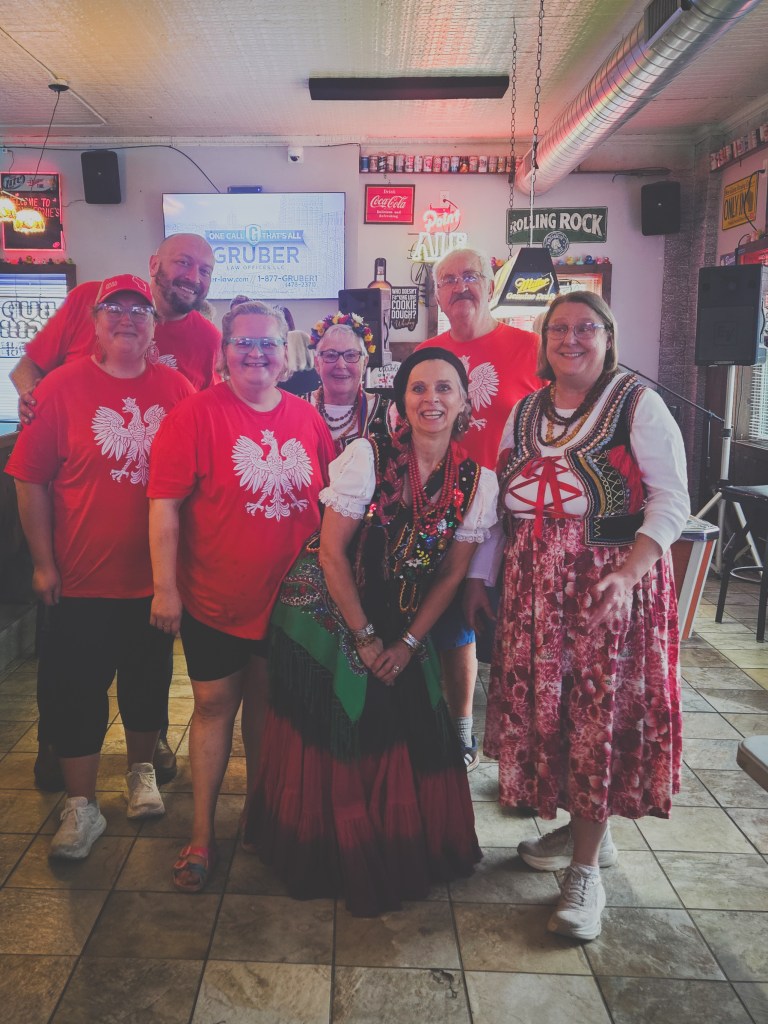
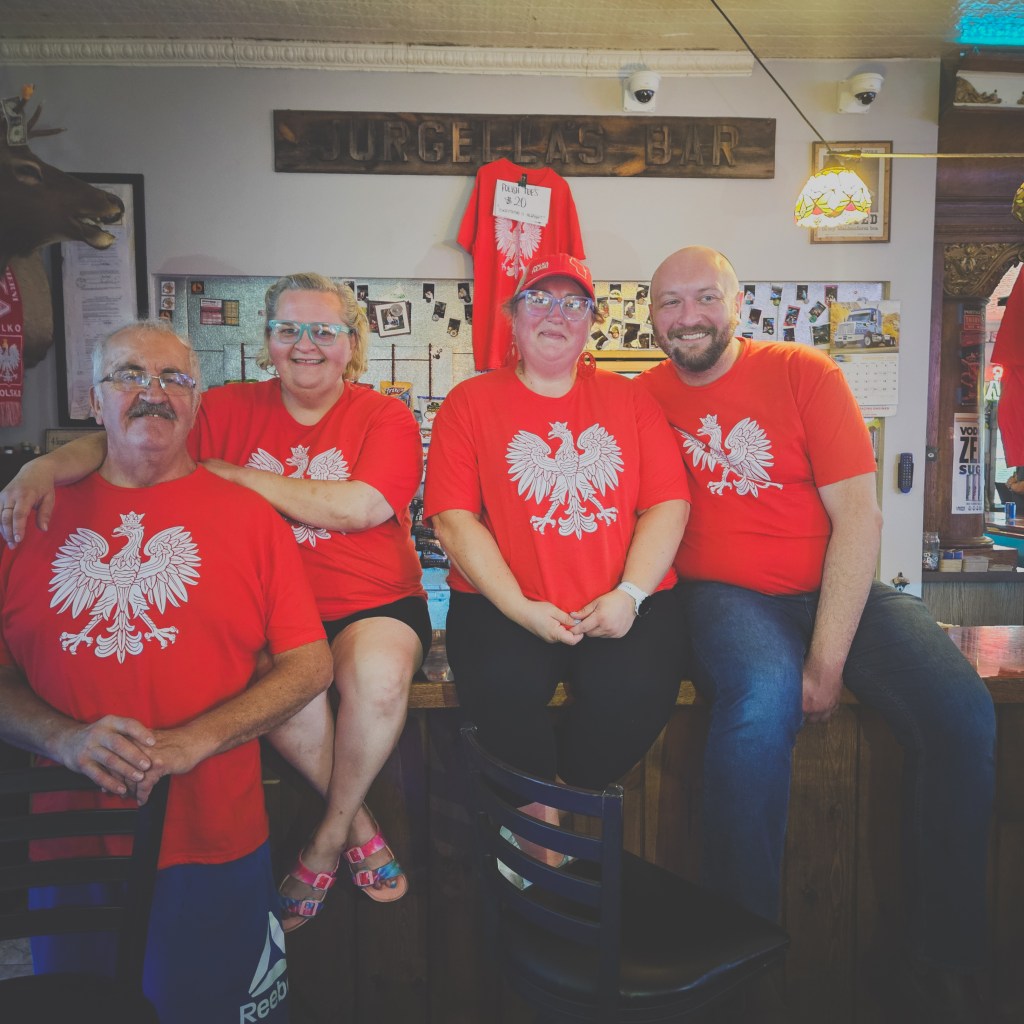
    This weekend, we celebrated Dożynki at my family’s tavern.

    And for a few hours, that place became something bigger than a tavern.

    It became a gathering place for generations.

    There was music.

    There was dancing.

    There was food, of course—gołąbki (stuffed cabbage rolls), pierogi (traditional Polish dumplings), and zupa grzybowa (Polish mushroom soup).

    There was laughter.

    There were people hugging, talking, remembering and making new memories.

    And as I looked around the room, I couldn’t help but think about how much history can exist in one room.

    Generations of Polish families.

    Generations of immigrants.

    Generations of people who came from somewhere else and built something here.

    Generations who carried pieces of the old country into the new one and refused to let those pieces disappear.

    That matters to me.

    Because heritage isn’t just about knowing the country your ancestors came from.

    It’s about understanding that your identity didn’t begin with you.

    Someone came before you.

    Someone struggled before you.

    Someone sacrificed before you.

    Someone dreamed before you.

    Someone loved before you.

    Someone crossed an ocean.

    Someone learned a new language.

    Someone worked with their hands.

    Someone raised children.

    Someone buried people they loved.

    Someone faced uncertainty.

    Someone endured things you will probably never have to endure.

    And somehow, through all of it, they found a reason to keep going.

    Maybe they even found a reason to dance.

    That is what I think about when I hear Polish music.

    I don’t just hear music.

    I hear continuity.

    I hear people who refused to disappear.

    I hear grandparents and great-grandparents whose names I may know only because someone bothered to remember them.

    I hear a culture that survived migration, hardship, prejudice and time.

    And I think about how easily these things can disappear.

    Not all at once.

    But quietly.

    One generation stops making the recipe.

    Another stops teaching the song.

    Someone stops telling the stories.

    The language isn’t passed down.

    The traditions become inconvenient.

    And eventually, something that survived for generations can disappear within one.

    That is why we celebrate.

    Not because we are stuck in the past.

    Because we understand that the past is part of us.

    We can embrace the future without abandoning the people who made it possible for us to have one.

    We can be American and still be Polish.

    We can belong here and still remember where our family began.

    We can appreciate other cultures without apologizing for loving our own.

    There is room for all of it.

    And maybe that’s the most beautiful part.

    Our heritage doesn’t require us to close our doors to anyone.

    It simply asks us not to forget the people who opened those doors for us.

    So yes, we are proud to be Polish.

    Proud of our ancestors.

    Proud of our culture.

    Proud of our food.

    Proud of our music.

    Proud of our dances.

    Proud of the traditions that have somehow survived generation after generation.

    And, yes, even a little proud of the stubbornness that seems to come with the territory.

    But more than anything, I am proud of what our heritage teaches us:

    Work hard.
    Love your people.
    Feed the hungry.
    Open your doors.
    Remember where you came from.
    And when life gives you a reason to celebrate, celebrate.

    Because someday, we will be the ancestors someone else remembers.

    And I hope that when they tell our story, they can say we carried something forward.

    That we remembered.

    That we loved our families.

    That we welcomed people into our home.

    That we laughed loudly and danced when the music played.

    That we understood the sacrifices that came before us.

    And that, despite everything, we kept the music playing.

    To everyone who came to celebrate Dożynki with us this weekend:

    Dziękuję.

    You didn’t just come to a party.

    You came home.

    And for one beautiful evening, we got to honor those who came before us, celebrate those standing beside us now, and give the generations who come after us something worth remembering.

    Niech żyje Polska. 🇵🇱❤️
  • When Mom Chooses the Man: The Children Who Learn They Come Second

    There is a particular kind of heartbreak that doesn’t look like abandonment at first.

    Mom is still there.

    She still has a phone. She still posts pictures. She still says she loves her children. She may even insist that everything she does is for them.

    But somehow, there is always a man.

    And somehow, the children keep coming second.

    I have a hard time understanding the woman who can look at her child—the little person who depends on her for security, consistency and unconditional love—and repeatedly choose the attention, approval or companionship of a romantic partner instead.

    Not once.

    Not during a difficult season.

    But as a pattern.

    The boyfriend gets the late-night phone calls.
    The boyfriend gets the weekends.
    The boyfriend gets the emotional energy.
    The boyfriend gets defended when the children have legitimate complaints.
    The boyfriend gets priority.

    And the children learn, sometimes without anyone ever saying the words:

    Mom chooses him. Not me.

    That lesson can be devastating.

    Psychology has long recognized that children need reliable, responsive caregiving to develop healthy relationships and emotional security. And research suggests that the quality of adults’ romantic relationships can spill over into their parenting. A longitudinal study following multiple generations found that romantic relationship functioning was associated with later parenting quality, while another study found that warmth and positive communication from a romantic partner could actually protect against harsh parenting. (PubMed)

    So this isn’t simply about a woman “having a boyfriend.”

    Of course mothers are allowed to fall in love.
    Of course mothers deserve companionship.
    Of course parents are allowed to have lives outside their children.

    That’s not the issue.

    The issue is when the relationship begins consuming the space that belongs to the parent-child relationship.

    And sometimes, the behavior starts looking disturbingly self-centered.

    Everything revolves around what she wants.

    She wants to feel loved.
    She wants to feel desired.
    She wants someone to tell her she’s beautiful.
    She wants someone to rescue her.
    She wants the excitement.
    She wants the validation.

    And if the children complain?

    They’re “jealous.”

    If they feel neglected?

    They’re “ungrateful.”

    If they don’t like the boyfriend?

    They’re “trying to ruin her happiness.”

    Suddenly, the children aren’t children anymore.

    They’re obstacles.

    That is where I think the word narcissistic enters the conversation—not necessarily as a clinical diagnosis, but as a description of a pattern of behavior in which the adult’s emotional wants consistently eclipse the needs and feelings of everyone around her.

    And there is another person in this equation that we don’t talk about enough:

    The man.

    Because if a man knowingly dates a woman who is neglecting her children to be with him, what exactly is he doing?

    A decent man doesn’t need to compete with children.

    He doesn’t need to be the center of her universe.

    He doesn’t need her to cancel plans with her kids so she can spend the weekend with him.

    He doesn’t need to be prioritized over a child’s birthday, school event, emotional crisis or basic needs.

    And if he notices that she’s neglecting her children for him, the healthy response isn’t:

    “Great. More time for me.”

    It should be:

    “You need to be with your kids.”

    That’s why I struggle with the idea that these men are simply “lucky” to have found a woman who is so devoted to them.

    Maybe sometimes they’re not lucky.

    Maybe they’re weak.

    Not because they are men.

    Not because they have relationships with single mothers.

    But because accepting a position of importance that comes at the expense of children requires a certain willingness to look away.

    A strong man doesn’t need to win a competition against a woman’s children.

    He doesn’t want to.

    He understands that children aren’t rivals.

    He understands that being a good partner sometimes means saying, “Go be Mom. I’ll be here.”

    And there is actually evidence that romantic partners can play a constructive role in parenting. Research has found that supportive romantic partners can help interrupt patterns of harsh or abusive parenting. (PubMed Central (PMC))

    That’s the part that gets lost.

    A romantic partner doesn’t have to be the problem.

    He can be part of the solution.

    He can encourage her to show up for her children.

    He can respect their place in her life.

    He can refuse to participate in manipulation or parental alienation.

    He can understand that dating someone with children means entering a family system—not replacing the children inside it.

    Because children notice.

    They notice who gets Mom’s attention.

    They notice who gets defended.

    They notice who gets her patience.

    They notice who she drops everything for.

    And eventually, they stop asking.

    That’s perhaps the saddest part.

    A neglected child doesn’t always become louder.

    Sometimes they become quieter.

    They stop expecting Mom to come.

    They stop telling her things.

    They stop asking for help.

    They stop believing they’re important.

    And eventually, they may grow into adults who understand exactly what happened but struggle to put words to it:

    “My mother loved having a man more than she loved being my mother.”

    That’s a brutal sentence.

    And I don’t think we should casually throw around accusations of narcissism, because narcissistic personality disorder is a clinical diagnosis—not a synonym for “selfish woman.”

    But we also shouldn’t hide behind diagnoses when the behavior itself is obvious.

    If a mother consistently sacrifices her children’s emotional needs for romantic attention, the behavior deserves scrutiny regardless of what diagnosis—if any—might explain it.

    And if a man knowingly accepts that arrangement, he deserves scrutiny too.

    Because love isn’t supposed to require someone else’s abandonment.

    A healthy relationship shouldn’t demand that children disappear so two adults can feel important.

    A good mother doesn’t have to stop being a woman when she becomes a mother.

    And a good man doesn’t need her to stop being a mother in order to be his woman.

    Children shouldn’t have to compete with adults for a place in their parent’s heart.

    And any relationship worth having should be strong enough to understand that.

  • Who Gets to Decide What Is Real?

    “One of the rights that the powerful often assume is the power to dictate reality.”
    — Rebecca Solnit, Whose Story Is This? (Goodreads)

    That sentence has been sitting with me.

    Not for an afternoon. Not for a day or two.

    For weeks. Maybe months.

    I keep turning it over in my head because the more I think about it, the more places I see it.

    Childhood. Work. Men. Doctors. Politics. Relationships. Institutions. Authority.

    It is the same thing wearing different clothes.

    The powerful don’t always have to threaten you into silence. Sometimes they simply tell you that your version of reality isn’t reality at all.

    That’s not what happened.

    You’re remembering it wrong.

    You’re too sensitive.

    You’re overreacting.

    That’s just how things are.

    You’re misunderstanding.

    You don’t know what you’re talking about.

    And if you hear it enough, from people with enough authority, you can begin to wonder whether maybe they’re right.

    That is the truly insidious part.

    Power doesn’t always look like a fist.

    Sometimes it looks like a person sitting across from you calmly explaining your own life back to you.

    I have been on the receiving end of that more times than I care to count.

    As a kid, there were things I experienced that other people had their own preferred explanations for. Adults get very good at deciding which version of a family story is acceptable and which version must never be spoken aloud.

    Then there were the terrible bosses I encountered at an insurance company where I once worked.

    There is a particular kind of corporate power that can make you question your own instincts. Someone above you can rewrite an interaction, redefine a problem, minimize something that happened, or make you feel like your discomfort is actually the problem.

    And then there was bartending.

    I learned a lot about power behind a bar.

    Especially male power.

    A drunk man can walk into a room believing that because he bought a beer, he bought a little piece of everyone in it.

    He gets louder.

    He gets meaner.

    He gets handsy.

    He crosses a line.

    And then, somehow, you’re the one who is supposed to manage his feelings about being told he crossed it.

    I’ve watched men behave badly and then watched them construct an entirely different story about what happened.

    And I learned something important:

    Someone’s confidence in their version of events does not make their version true.

    That lesson has followed me into adulthood.

    It followed me into the doctor’s office, too.

    There is something uniquely infuriating about sitting in front of a doctor and describing what is happening inside your own body—only to have someone with a medical degree decide that because they cannot immediately explain it, it must not be happening.

    You know your body.

    You know when something isn’t right.

    You know when you’ve been dismissed.

    And there is a particular arrogance in being told, implicitly or explicitly, that the person experiencing the symptoms has less authority over them than the person reading the chart.

    Expertise matters.

    Doctors know things I don’t.

    But expertise should not require pretending the patient knows nothing.

    There is a difference between saying, “I don’t know yet; let’s investigate,” and saying, “I don’t see it, therefore it isn’t real.”

    The first is medicine.

    The second is power.

    And then there is politics.

    This is where the quote gets especially uncomfortable.

    Because I don’t think the instinct to dictate reality belongs exclusively to one political party.

    Democrats do it.

    Republicans do it.

    Progressives do it.

    Conservatives do it.

    Religious people do it.

    Secular people do it.

    Corporate executives do it.

    Activists do it.

    Institutions do it.

    And ordinary people do it.

    We all have the capacity to become attached to a story so tightly that admitting the story is incomplete feels like admitting we are wrong.

    Political identity can make this particularly vicious.

    Sometimes the argument isn’t really about facts anymore.

    It’s about allegiance.

    Our people don’t do that.

    Their people always do that.

    My side is defending reality.

    Your side is denying reality.

    And suddenly we’re no longer asking, “What actually happened?”

    We’re asking, “Which version of what happened protects my identity?”

    That’s dangerous.

    Because reality doesn’t owe us ideological loyalty.

    It doesn’t care whether the truth makes Democrats uncomfortable.

    It doesn’t care whether it embarrasses Republicans.

    It doesn’t care whether it ruins someone’s carefully constructed worldview.

    Reality is reality.

    And sometimes the most honest thing a person can say is:

    “I was wrong.”

    Which brings me to women.

    I have spent enough of my life being told—directly and indirectly—that my boundaries, perceptions, discomfort, instincts, and experiences should be negotiable.

    That women should accommodate.

    Women should be understanding.

    Women should be polite.

    Women should not make people uncomfortable.

    Women should explain themselves.

    Women should be quiet when the conversation becomes inconvenient.

    And I’m increasingly uninterested in that bargain.

    I don’t believe respecting another person’s humanity requires me to surrender my own.

    I don’t believe empathy requires pretending biological sex doesn’t exist.

    I don’t believe acknowledging someone else’s identity requires me to deny my own.

    And I don’t believe women should be shamed into surrendering privacy, safety, language, or sex-based boundaries simply because someone else has a different understanding of gender.

    That isn’t hatred.

    It is disagreement.

    And disagreement is not violence.

    Women are allowed to say no.

    We’re allowed to have boundaries.

    We’re allowed to have private spaces.

    We’re allowed to describe our own experiences.

    We’re allowed to disagree with people—including people who insist that their interpretation of womanhood must supersede ours.

    And perhaps most importantly:

    We are allowed to define our own reality.

    Because that is what Solnit’s quote keeps bringing me back to.

    Power doesn’t just determine who gets to make decisions.

    Sometimes power determines whose version of events gets believed.

    Whose pain counts.

    Whose memory counts.

    Whose discomfort matters.

    Whose voice is considered credible.

    Who gets called difficult.

    Who gets called unstable.

    Who gets called hysterical.

    Who gets told they’re imagining things.

    Who gets told to sit down, shut up, calm down, move along, get over it, or stop making everyone uncomfortable.

    And who gets to walk away believing they were right simply because they had more authority.

    I’ve spent enough of my life watching that happen.

    I’m not interested in participating in it anymore.

    I don’t need everyone to agree with me.

    That’s an important distinction.

    I don’t need to dictate your reality.

    But you don’t get to dictate mine.

    You don’t get to tell me what I experienced.

    You don’t get to rewrite my memories.

    You don’t get to define my boundaries.

    You don’t get to tell me what my body is doing.

    You don’t get to demand that I call something acceptable when I don’t believe it is.

    You don’t get to manufacture a version of events and then punish me for refusing to repeat it.

    And you certainly don’t get to silence me simply because my voice makes you uncomfortable.

    I’ve learned something over the years:

    Being silenced and being disagreed with are not the same thing.

    I can tolerate disagreement.

    I can tolerate criticism.

    I can tolerate being wrong.

    What I won’t tolerate anymore is blatant disrespect disguised as authority.

    I have spent too much of my life making myself smaller so other people could remain comfortable with their version of reality.

    I’m done with that.

    You can disagree with me.

    You can challenge me.

    You can tell me I’m wrong.

    But you don’t get to tell me that I didn’t experience what I experienced simply because acknowledging it would inconvenience you.

    I know what I know.

    I know what I’ve lived.

    And I am no longer asking permission to say so.

    I will not be silenced.

    Not because I believe I’m always right.

    But because I have finally learned that someone else’s power does not give them ownership of my reality.

  • Are We Defending Our Beliefs — or Ourselves?

    I think I’ve finally figured out one of the things that bothers me most about politics right now.

    It’s not even that people disagree with me.

    I actually like when people disagree with me. It makes life interesting. I don’t need everyone sitting around nodding their heads at everything I say.

    What bothers me is when someone’s political beliefs become so intertwined with their identity that admitting they’re wrong becomes almost impossible.

    Because then politics isn’t:

    “I believe this policy is better.”

    It becomes:

    “I am one of the good people.”

    And that’s a completely different thing.

    Once you’ve convinced yourself that your political beliefs are proof of your moral goodness, questioning those beliefs suddenly feels personal.

    If I admit my side was wrong, what does that say about me?

    If I admit the person I’ve been defending actually did something terrible, maybe I’m not as compassionate as I thought.

    If I admit someone from my political tribe is a hypocrite, maybe I’m a hypocrite for defending them.

    If I acknowledge that the other side occasionally has a legitimate point, does that mean I’m betraying my people?

    And THAT is where I think things get really weird.

    Because I’ve watched progressive people bend themselves into absolute pretzels to defend things they would find completely reprehensible if the political labels were reversed.

    I’ve watched people demand that we “believe women” until the woman happens to be accusing someone they politically support.

    I’ve watched people scream about systemic injustice while excusing horrific individual behavior because the perpetrator belongs to a group they’ve decided is oppressed.

    I’ve watched people preach compassion for criminals while having absolutely zero compassion for their victims.

    I’ve watched people demand tolerance while treating anyone who disagrees with them as morally defective.

    And I’ve watched people insist that we must respect someone’s identity while simultaneously telling everyone else that their understanding of reality is hateful and invalid.

    That’s not tolerance.

    That’s “agree with me or you’re a bad person.”

    And here’s the part that really fascinates me:

    Some of these same people seem genuinely convinced they’re the most open-minded people in the room.

    That’s the hypocrisy.

    And before the conservatives start high-fiving themselves…

    We’re not innocent.

    I’ve watched conservatives do the exact same damn thing.

    We talk about personal responsibility until one of our own screws up.

    We talk about family values while excusing terrible behavior from politicians we like.

    We complain about government censorship while wanting to silence things we find offensive.

    We demand law and order until the person breaking the law is someone we’re politically sympathetic toward.

    We scream “fake news” when the facts don’t fit our preferred narrative.

    Same disease.

    Different symptoms.

    Because the real addiction isn’t liberalism or conservatism.

    It’s moral identity.

    There is something incredibly intoxicating about believing you’re on the right side of history.

    You get to be the enlightened one.

    The compassionate one.

    The defender.

    The person who “gets it.”

    And once that becomes part of your identity, you don’t necessarily care about being right anymore.

    You care about being good.

    And those aren’t always the same thing.

    Sometimes the most morally courageous thing you can do is say:

    “I was wrong.”

    Sometimes it’s:

    “I don’t like this person, but they’re right about this.”

    Sometimes it’s:

    “The person I voted for screwed up.”

    Sometimes it’s:

    “The person I disagree with isn’t evil. They just see the world differently than I do.”

    And sometimes it’s:

    “Holy shit…I’ve been defending something I wouldn’t tolerate if the other side did it.”

    That’s growth.

    That’s intellectual honesty.

    And honestly, I think we need a lot more of it.

    Because I don’t want a political identity that makes me feel like I’m one of the good people.

    I want beliefs that can survive being questioned.

    I want to be able to change my mind without feeling like I’ve betrayed my entire identity.

    I want to be able to call bullshit when my own side is full of shit.

    And I want to be able to recognize something good when it comes from the other side without feeling like I’ve joined the enemy.

    Maybe that’s the real problem.

    We’re so busy trying to prove we’re the good guys that we’ve stopped asking whether what we’re actually defending is good.

    And those are two very different questions.

    Being a good person isn’t about always being on the right side.

    It’s about being willing to admit when you’re not.

  • Learning to Let Them Hurt

    I believe one of the hardest parts of parenting is learning to let our children hurt.

    Not because we don’t care. Not because we’re cold. And certainly not because we want them to suffer.

    Quite the opposite.

    Sometimes we let them hurt because we love them enough to understand that pain can teach what protection cannot.

    I want my children to know that their choices matter. That actions have consequences. That apologies don’t always erase the damage. That sometimes you lose the privilege, face the disappointment, repair the mistake, or sit with the uncomfortable reality that you were wrong.

    And yes, sometimes I will be the one enforcing that consequence while every instinct in me is screaming to make it go away.

    Because I am their parent—not their escape route from every uncomfortable consequence of being human.

    I could step in. I could call the teacher. Fix the mistake. Make the excuse. Replace what they broke. Blame someone else. Smooth everything over so they don’t have to feel embarrassed, disappointed, or ashamed.

    And believe me, there will be moments when I desperately want to.

    Because watching your child hurt is one of the most painful things a parent can experience.

    But I have to ask myself: Am I protecting my child from pain, or am I protecting them from learning?

    There is a difference.

    I don’t want to raise children who believe that someone will always rescue them from the consequences of their choices. I don’t want them entering adulthood expecting the world to bend around their mistakes.

    I want them to become adults who can say, I did this. I was wrong. I hurt someone. I need to fix it.

    That requires something more difficult than unconditional comfort.

    It requires accountability.

    Accountability doesn’t mean withholding love. It means refusing to confuse love with rescue.

    My children will never have to earn my love. But they will have to take responsibility for their actions.

    I will stand beside them while they face consequences.

    I will help them learn from their mistakes.

    I will hold them when they’re hurting.

    But I won’t always remove the thing that’s hurting them.

    Because sometimes the most loving thing a parent can say is:

    “I know this hurts. I’m here. And we’re still going to let you learn from this.”

    That may break my heart in the moment.

    But I’d rather have my heart break now than watch the world break them later because I never taught them how to take responsibility for themselves.

  • Unlearning the Lie: A Journey Out of Dysfunction

    Disclaimer:
    To my family members who may be reading this—this is not a personal attack. This is a raw and honest account of my experience growing up in a dysfunctional family system. This is the result of years of therapy, painful reflection, and personal growth. If this makes you uncomfortable, I encourage you to sit with that discomfort. These things happened to me. Your discomfort is yours to manage. I won’t be gaslit, dismissed, or silenced.


    For as long as I can remember, I lived in a house where appearances mattered more than authenticity, where silence was safer than speaking up, and where love came with conditions. The air was often thick with unspoken expectations, repressed anger, and inherited trauma, disguised as tradition. There was little room for individuality—only conformity.

    The voice in my head that doubted me, shamed me, told me I was “too much” or “not enough”? It wasn’t mine. It belonged to a chorus—my parents, some aunts and uncles, a grandparent. Their values were imposed on me like scripture: obey, conform, suppress, believe. I was conditioned to accept their version of religion, success, womanhood, and morality without question. I spent decades chasing their ideals, only to end up exhausted and empty.

    It’s taken five years of therapy—deep, soul-level work—for me to realize that voice was never mine. That guilt and shame? Not mine to carry. Those expectations? Not my responsibility. My therapist once told me, “Just because they handed you the script, doesn’t mean you have to keep reading from it.” That was the moment everything began to shift.

    At 46, I’ve never been clearer. I no longer pretend. I no longer force myself to align with values that don’t fit. I don’t exist to be a mirror for someone else’s version of the “right” life. I now extend the compassion to myself that I so freely gave everyone else. That’s the most sacred, powerful gift I’ve ever given myself.

    Yes, my philosophies have shifted. Yes, my goals and beliefs look different. And no, I will no longer contort myself to please people who can’t—or won’t—see me clearly. I’m no longer afraid to stand up for what’s right for me.

    And if this disappoints my parents, siblings, or extended relatives—so be it. That disappointment is theirs to hold. I was never equipped to be the manager of everyone’s emotions, and I’m done trying to be. I have finally stepped out of the shadows of who I was told to be, and into the light of who I actually am.

    This is my truth. And I won’t apologize for it.

  • The Only Real Control We Have (Spoiler: It’s Not Over Other People)

    Let’s be real for a minute.
    You’re not going to fix that egomaniac in your life.
    You’re not going to outmaneuver the narcissist.
    And you’re definitely not going to “change” that toxic person who’s been draining your energy like it’s their job.

    I know, I know—this isn’t what you want to hear. But it’s what you need to hear. Because here’s the deal:
    The only realistic form of control you have in this life is self-control.

    That’s it. That’s the truth, in all its uncomfortable glory.

    You can’t control how other people treat you. You can’t control how they twist your words, push your buttons, or show up with all the emotional intelligence of a brick wall. You can scream into the void, lose sleep, spiral with overthinking, and still—they’re going to do whatever the hell they want.

    But here’s your superpower: you can control how you respond.
    That’s not weakness. That’s not giving up. That’s strength. That’s freedom.

    Setting boundaries isn’t about changing someone else’s behavior. It’s about saying, “I’m not available for this kind of nonsense anymore.”
    Walking away doesn’t mean you lost. It means you’ve decided your peace matters more than trying to win a battle you never signed up for in the first place.
    Choosing silence doesn’t make you passive. Sometimes, it’s the loudest thing you can do.

    And I get it—we all want justice. We want accountability. We want people to see the light and finally say, “You were right. I was the problem.”
    But you’ll wait forever for that moment with some people. And in the meantime, you’re sacrificing your sanity.

    So here’s the challenge:
    Stop trying to control what’s outside of you, and start mastering what’s within.
    Your thoughts. Your choices. Your reactions. Your energy.

    Because when you stop trying to change toxic people and start changing how you show up around them, something wild happens:
    You get your power back.

    And trust me, that feels a hell of a lot better than banging your head against the wall trying to fix people who don’t want to be fixed.

    You want control? Take it.
    Not over them—over you.
    That’s where the real magic is.

  • Dysfunction in Crisis: The Caretaker’s Burden and the Path to Freedom

    Crisis reveals everything. It strips away the everyday distractions and exposes the mechanics of a dysfunctional family in stark relief. When disaster strikes—an illness, a death, an addiction spiraling out of control—everyone assumes their role like a well-rehearsed play.

    The Martyr drowns in their suffering, making sure everyone sees their pain.
    The Denier pretends nothing is wrong, keeping up appearances at all costs.
    The Scapegoat absorbs the blame, cast as the family’s eternal problem.
    And then there’s the Caretaker—me, maybe you—the one who holds it all together.

    We are the steady hands that wipe tears, the calm voices that diffuse tension, the planners, the peacemakers, the ones who set our own needs aside so everyone else can function. We step up before anyone even asks because we have always been the ones to fix, to manage, to endure.

    But here’s the truth no one tells you: the Caretaker breaks, too.

    We don’t shatter in obvious ways. We don’t scream or slam doors. Our fractures appear in the quiet—exhaustion that seeps into our bones, resentment we swallow before it can surface, the loneliness of being the one who carries everything while no one carries us.

    And yet, we keep going. Because who else will?

    The Lie We Believe

    The biggest deception of the Caretaker role is that we must continue at all costs. That without us, everything falls apart. That our worth is measured in how much we can endure.

    But let me ask you something—when was the last time someone cared for you? When was the last time you let them?

    The truth is, dysfunction thrives when roles never change. And healing begins when one person decides to break the pattern.

    A New Way Forward

    If you are the Caretaker, I want you to know this: you do not have to save everyone. You are allowed to step back. You are allowed to rest. You are allowed to say, I need help, too.

    Maybe that starts small—saying no to a responsibility that isn’t yours, letting someone else manage their own emotions instead of absorbing them, asking for support instead of assuming no one will give it.

    Maybe it means reminding yourself, daily, that love is not measured in sacrifice alone. That your needs are not burdens. That the people who truly love you will not disappear when you stop being their fixer.

    Hope for the Weary

    There is a life beyond being the caretaker. A life where you are not just holding everyone else together but living fully, deeply, for yourself. It won’t be easy. The people who have relied on you to be their constant may resist. But you were never meant to be the foundation of someone else’s survival.

    You deserve peace. You deserve care. You deserve a love that nurtures you, not just one that takes.

    Step back. Breathe. Let the world spin without you holding it up for a while. It will keep turning. And you? You will finally be free.

  • Green & Gold: A Love Letter to Wisconsin, Family, and Football

    There are movies that entertain, movies that inspire, and then there are movies that take root in your soul. Green & Gold is one of those movies.

    Gannon and I saw it yesterday on opening weekend, and from the very first scene, I knew I was about to witness something special. A story about the humble, hardworking, God-fearing farming communities of Wisconsin—woven together with the deep, unwavering love for the Green Bay Packers—was bound to be emotional. But I wasn’t prepared for just how deeply it would resonate with me.

    Sitting in that dark theater, memories of my childhood came rushing back, so vivid I could almost smell the fresh-cut hay. I was back on my grandma’s farm, watching my Uncle Pauly deliver a calf—his arm buried up to his shoulder to help bring new life into the world. I could feel the rough twine of hay bales in my hands, the weight of them just a little too much for my small arms to lift. I saw myself, cautiously walking the aisle of the old barn, petting the heads of the Holsteins, naming them—Bessie, Bossy, Lulu, Buttercup—just like Craig T. Nelson’s character, Buck, named his cows after the 1968 Packers Championship team.

    I thought of my Grandma Alice, how fiercely my family cared for her after her stroke, how we did everything we could to keep her home, safe, and surrounded by love. When Jenny’s grandma had an accident on the farm, the ache in my heart was real. I knew that story.

    And then came the real-life footage of the 1992 Green Bay Packers. Brett Favre, the Gunslinger. Sterling Sharpe. LeRoy Butler. John Jurkovic. Chris Jacke. The icons of my childhood, the voices of my dad and siblings echoing in my memory as we watched those games together. I had goosebumps reliving that era, the golden days of Sundays spent in front of the TV, where wins felt like magic and losses felt personal.

    Craig T. Nelson embodied the kind of Wisconsin man I’ve known my whole life—the hardworking dairy farmer who loves God, his land, his family, and his neighbors. A man whose word is his bond, whose hands are rough from labor but gentle with his children. A man who always does the right thing, even loving his enemy.

    And then there was Jenny—played so beautifully by Madison Lawlor. A girl growing up on a farm, knowing the work never ends, but still daring to dream of something more. I was Jenny. I understood the exhaustion, the longing, the pride. The way your roots never really let go of you, even when you reach for something beyond the fields.

    As the credits rolled, I wiped my tears, turned to Gannon, and asked, “What did you think?”

    “This is the greatest movie ever,” he said.

    I nodded, my throat tight. It’s the Wisconsin, football, farming version of Field of Dreams, I thought.

    And let’s not forget the voice of Charlie Berens, carrying through the film like a thread tying past and present together. It stirred something else inside me—a reminder of Bob Uecker, the voice of my childhood, the sound of sports radio humming in the background of my life. It made me realize, maybe more than ever, how proud I am to be from Wisconsin. To have farming in my blood, to be part of a community that shows up for each other, to wear green and gold like a badge of honor.

    Gannon was right. Best movie ever. Go see it. And Go, Pack!

  • The Dreamer’s Curse and Gift

    Being a Pisces is like living with one foot in reality and the other in an endless dream. I feel everything, deeply and completely, often more than I’d like to admit. My heart is a sponge for the world’s emotions, and my imagination paints vibrant pictures of how things should be. It’s beautiful. It’s maddening. It’s my gift—and my curse.

    I’ve been told that my empathy is admirable, that my creativity is inspiring. But here’s the thing no one talks about: feeling everything and dreaming big can leave you crushed under the weight of it all. When reality doesn’t align with the perfect world I’ve imagined, it’s like hitting a wall at full speed. And I hit that wall a lot.

    There are days when I feel like I’m drowning in emotions that aren’t even mine, carrying the burdens of people who don’t even realize I’m doing it. I’ve learned to hide that part of me, smiling through the ache, retreating into the sanctuary of my mind when it becomes too much. My daydreams are my escape hatch, my shield against the harshness of reality.

    But I’ll let you in on a secret: escaping isn’t the answer. No matter how vivid the dream, it doesn’t erase the pain or solve the problems waiting outside of it. If you’re a Pisces—or even if you’re not, but this resonates with you—remember that while it’s okay to dream, you can’t live there.

    Use that sensitivity, that imagination, that dreamy idealism as fuel. Let it inspire you to create change, not just escape. The world needs people like us. People who feel deeply, dream vividly, and love unapologetically.

    So, yes, I’m a Pisces. A dreamer. A feeler. Sometimes a little too much of everything. And sometimes, I get lost in my own head trying to make sense of a world that feels too harsh, too cold. But I always come back, because those dreams of mine? They’re worth chasing.

    If you’re like me, don’t let the world convince you that you’re too much. Your empathy isn’t a weakness; it’s your power. Your imagination isn’t an escape; it’s a vision. And your sensitivity? It’s what makes you human.

    The world needs dreamers like us—because without us, who else will imagine a better future and bring it to life?