Tag: family

  • What We Inherit

    There is something about being Polish that runs deeper than a last name.

    It lives somewhere beneath the surface—in the stories we were raised on, in the food that somehow tastes like childhood, in the sound of a polka that can make an entire room move, and in traditions that have survived not because they were easy to preserve, but because someone decided they were worth preserving.

    Our family is proud to be Polish.

    Not because we believe being Polish makes us better than anyone else.

    But because it reminds us that we come from somewhere.

    And perhaps, in a world where so much seems to change so quickly, knowing where you come from matters more than we realize.

    Our ancestors came to America carrying more hope than possessions. They arrived speaking a language that wasn’t always understood, carrying customs that weren’t always welcomed, and trying to build a life in a country that often expected immigrants to leave pieces of themselves behind.

    Polish immigrants faced prejudice, discrimination, poverty, language barriers and pressure to assimilate.

    And still, they built.

    They worked.

    They sacrificed.

    They endured.

    They built homes and businesses. They raised children. They built churches and neighborhoods. They created communities. They took whatever they had and somehow made a life from it.

    They didn’t have everything handed to them.

    They earned it.

    Maybe that’s why hard work and perseverance feel like such a deeply rooted part of our identity.

    Because somewhere in the back of our minds—or perhaps somewhere much deeper—we know that the life we have was made possible by people who didn’t get to live it themselves.

    We inherited the results of sacrifices we never had to make.

    Think about that for a moment.

    Someone you’ve never met may have worked a job they hated so that their children could have opportunities they never had.

    Someone may have crossed an ocean knowing they might never see home again.

    Someone may have struggled to learn a new language while trying to make sure their children never went hungry.

    Someone may have experienced discrimination and still decided that this was the place where their family would build its future.

    Someone endured so that we could thrive.

    And now we get to decide what we do with that inheritance.

    For us, part of that inheritance is the way we love people.

    We feed people.

    We open our doors.

    We squeeze one more person around the table.

    We show up.

    We celebrate loudly.

    We dance.

    We laugh.

    And if you’ve ever been around a Polish family when the music starts, you know that sitting quietly in the corner was probably never going to be an option.

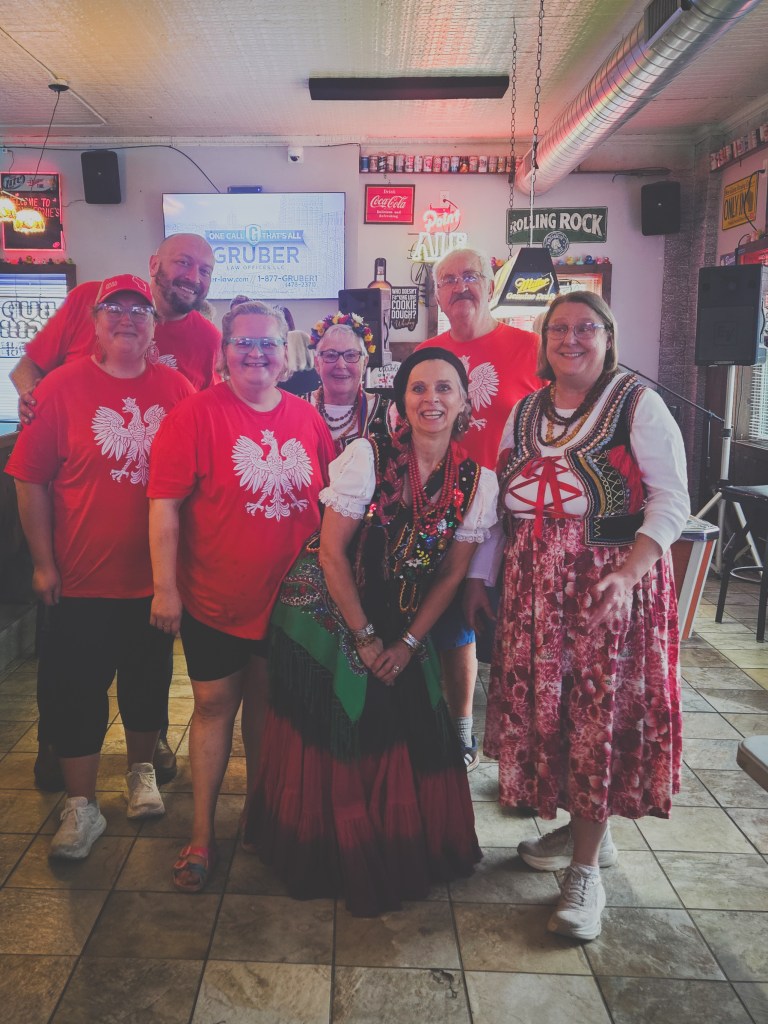
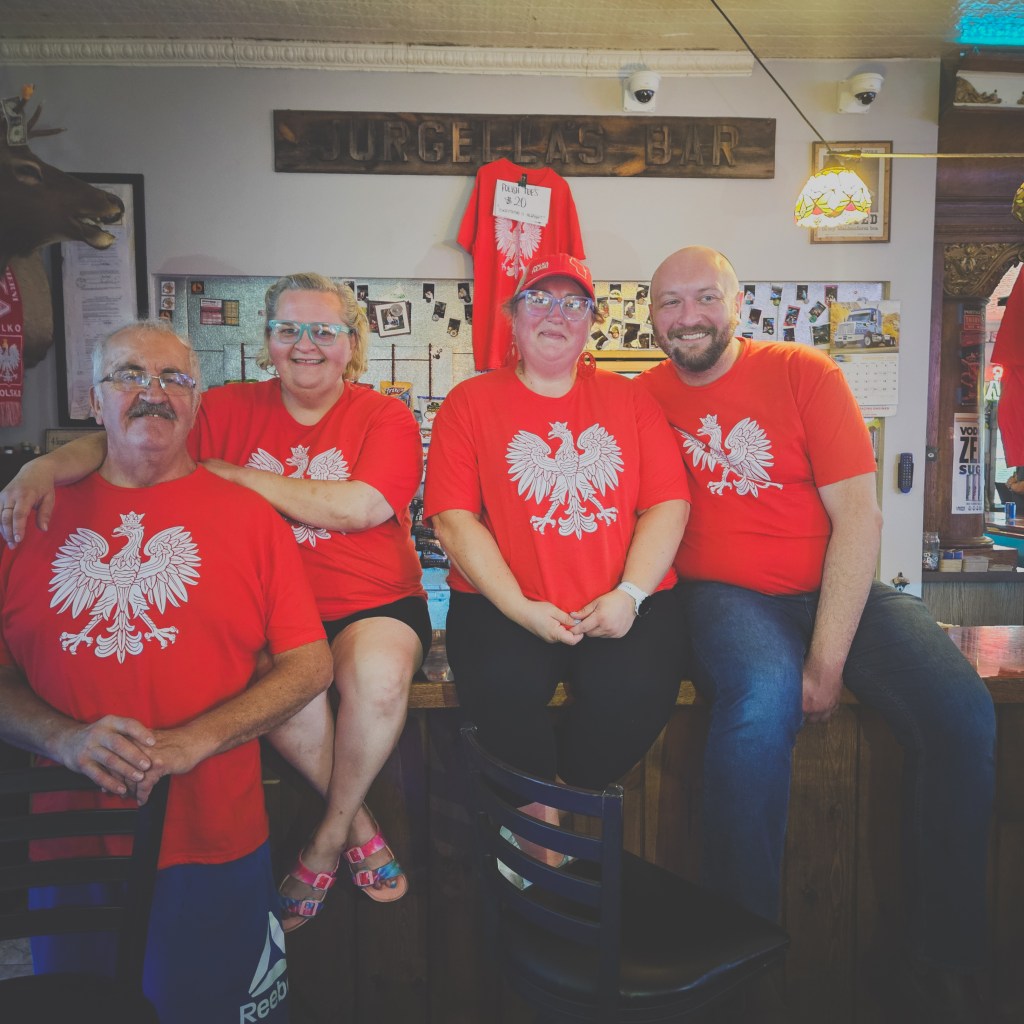
    This weekend, we celebrated Dożynki at my family’s tavern.

    And for a few hours, that place became something bigger than a tavern.

    It became a gathering place for generations.

    There was music.

    There was dancing.

    There was food, of course—gołąbki (stuffed cabbage rolls), pierogi (traditional Polish dumplings), and zupa grzybowa (Polish mushroom soup).

    There was laughter.

    There were people hugging, talking, remembering and making new memories.

    And as I looked around the room, I couldn’t help but think about how much history can exist in one room.

    Generations of Polish families.

    Generations of immigrants.

    Generations of people who came from somewhere else and built something here.

    Generations who carried pieces of the old country into the new one and refused to let those pieces disappear.

    That matters to me.

    Because heritage isn’t just about knowing the country your ancestors came from.

    It’s about understanding that your identity didn’t begin with you.

    Someone came before you.

    Someone struggled before you.

    Someone sacrificed before you.

    Someone dreamed before you.

    Someone loved before you.

    Someone crossed an ocean.

    Someone learned a new language.

    Someone worked with their hands.

    Someone raised children.

    Someone buried people they loved.

    Someone faced uncertainty.

    Someone endured things you will probably never have to endure.

    And somehow, through all of it, they found a reason to keep going.

    Maybe they even found a reason to dance.

    That is what I think about when I hear Polish music.

    I don’t just hear music.

    I hear continuity.

    I hear people who refused to disappear.

    I hear grandparents and great-grandparents whose names I may know only because someone bothered to remember them.

    I hear a culture that survived migration, hardship, prejudice and time.

    And I think about how easily these things can disappear.

    Not all at once.

    But quietly.

    One generation stops making the recipe.

    Another stops teaching the song.

    Someone stops telling the stories.

    The language isn’t passed down.

    The traditions become inconvenient.

    And eventually, something that survived for generations can disappear within one.

    That is why we celebrate.

    Not because we are stuck in the past.

    Because we understand that the past is part of us.

    We can embrace the future without abandoning the people who made it possible for us to have one.

    We can be American and still be Polish.

    We can belong here and still remember where our family began.

    We can appreciate other cultures without apologizing for loving our own.

    There is room for all of it.

    And maybe that’s the most beautiful part.

    Our heritage doesn’t require us to close our doors to anyone.

    It simply asks us not to forget the people who opened those doors for us.

    So yes, we are proud to be Polish.

    Proud of our ancestors.

    Proud of our culture.

    Proud of our food.

    Proud of our music.

    Proud of our dances.

    Proud of the traditions that have somehow survived generation after generation.

    And, yes, even a little proud of the stubbornness that seems to come with the territory.

    But more than anything, I am proud of what our heritage teaches us:

    Work hard.
    Love your people.
    Feed the hungry.
    Open your doors.
    Remember where you came from.
    And when life gives you a reason to celebrate, celebrate.

    Because someday, we will be the ancestors someone else remembers.

    And I hope that when they tell our story, they can say we carried something forward.

    That we remembered.

    That we loved our families.

    That we welcomed people into our home.

    That we laughed loudly and danced when the music played.

    That we understood the sacrifices that came before us.

    And that, despite everything, we kept the music playing.

    To everyone who came to celebrate Dożynki with us this weekend:

    Dziękuję.

    You didn’t just come to a party.

    You came home.

    And for one beautiful evening, we got to honor those who came before us, celebrate those standing beside us now, and give the generations who come after us something worth remembering.

    Niech żyje Polska. 🇵🇱❤️
  • When Mom Chooses the Man: The Children Who Learn They Come Second

    There is a particular kind of heartbreak that doesn’t look like abandonment at first.

    Mom is still there.

    She still has a phone. She still posts pictures. She still says she loves her children. She may even insist that everything she does is for them.

    But somehow, there is always a man.

    And somehow, the children keep coming second.

    I have a hard time understanding the woman who can look at her child—the little person who depends on her for security, consistency and unconditional love—and repeatedly choose the attention, approval or companionship of a romantic partner instead.

    Not once.

    Not during a difficult season.

    But as a pattern.

    The boyfriend gets the late-night phone calls.
    The boyfriend gets the weekends.
    The boyfriend gets the emotional energy.
    The boyfriend gets defended when the children have legitimate complaints.
    The boyfriend gets priority.

    And the children learn, sometimes without anyone ever saying the words:

    Mom chooses him. Not me.

    That lesson can be devastating.

    Psychology has long recognized that children need reliable, responsive caregiving to develop healthy relationships and emotional security. And research suggests that the quality of adults’ romantic relationships can spill over into their parenting. A longitudinal study following multiple generations found that romantic relationship functioning was associated with later parenting quality, while another study found that warmth and positive communication from a romantic partner could actually protect against harsh parenting. (PubMed)

    So this isn’t simply about a woman “having a boyfriend.”

    Of course mothers are allowed to fall in love.
    Of course mothers deserve companionship.
    Of course parents are allowed to have lives outside their children.

    That’s not the issue.

    The issue is when the relationship begins consuming the space that belongs to the parent-child relationship.

    And sometimes, the behavior starts looking disturbingly self-centered.

    Everything revolves around what she wants.

    She wants to feel loved.
    She wants to feel desired.
    She wants someone to tell her she’s beautiful.
    She wants someone to rescue her.
    She wants the excitement.
    She wants the validation.

    And if the children complain?

    They’re “jealous.”

    If they feel neglected?

    They’re “ungrateful.”

    If they don’t like the boyfriend?

    They’re “trying to ruin her happiness.”

    Suddenly, the children aren’t children anymore.

    They’re obstacles.

    That is where I think the word narcissistic enters the conversation—not necessarily as a clinical diagnosis, but as a description of a pattern of behavior in which the adult’s emotional wants consistently eclipse the needs and feelings of everyone around her.

    And there is another person in this equation that we don’t talk about enough:

    The man.

    Because if a man knowingly dates a woman who is neglecting her children to be with him, what exactly is he doing?

    A decent man doesn’t need to compete with children.

    He doesn’t need to be the center of her universe.

    He doesn’t need her to cancel plans with her kids so she can spend the weekend with him.

    He doesn’t need to be prioritized over a child’s birthday, school event, emotional crisis or basic needs.

    And if he notices that she’s neglecting her children for him, the healthy response isn’t:

    “Great. More time for me.”

    It should be:

    “You need to be with your kids.”

    That’s why I struggle with the idea that these men are simply “lucky” to have found a woman who is so devoted to them.

    Maybe sometimes they’re not lucky.

    Maybe they’re weak.

    Not because they are men.

    Not because they have relationships with single mothers.

    But because accepting a position of importance that comes at the expense of children requires a certain willingness to look away.

    A strong man doesn’t need to win a competition against a woman’s children.

    He doesn’t want to.

    He understands that children aren’t rivals.

    He understands that being a good partner sometimes means saying, “Go be Mom. I’ll be here.”

    And there is actually evidence that romantic partners can play a constructive role in parenting. Research has found that supportive romantic partners can help interrupt patterns of harsh or abusive parenting. (PubMed Central (PMC))

    That’s the part that gets lost.

    A romantic partner doesn’t have to be the problem.

    He can be part of the solution.

    He can encourage her to show up for her children.

    He can respect their place in her life.

    He can refuse to participate in manipulation or parental alienation.

    He can understand that dating someone with children means entering a family system—not replacing the children inside it.

    Because children notice.

    They notice who gets Mom’s attention.

    They notice who gets defended.

    They notice who gets her patience.

    They notice who she drops everything for.

    And eventually, they stop asking.

    That’s perhaps the saddest part.

    A neglected child doesn’t always become louder.

    Sometimes they become quieter.

    They stop expecting Mom to come.

    They stop telling her things.

    They stop asking for help.

    They stop believing they’re important.

    And eventually, they may grow into adults who understand exactly what happened but struggle to put words to it:

    “My mother loved having a man more than she loved being my mother.”

    That’s a brutal sentence.

    And I don’t think we should casually throw around accusations of narcissism, because narcissistic personality disorder is a clinical diagnosis—not a synonym for “selfish woman.”

    But we also shouldn’t hide behind diagnoses when the behavior itself is obvious.

    If a mother consistently sacrifices her children’s emotional needs for romantic attention, the behavior deserves scrutiny regardless of what diagnosis—if any—might explain it.

    And if a man knowingly accepts that arrangement, he deserves scrutiny too.

    Because love isn’t supposed to require someone else’s abandonment.

    A healthy relationship shouldn’t demand that children disappear so two adults can feel important.

    A good mother doesn’t have to stop being a woman when she becomes a mother.

    And a good man doesn’t need her to stop being a mother in order to be his woman.

    Children shouldn’t have to compete with adults for a place in their parent’s heart.

    And any relationship worth having should be strong enough to understand that.

  • Dysfunction in Crisis: The Caretaker’s Burden and the Path to Freedom

    Crisis reveals everything. It strips away the everyday distractions and exposes the mechanics of a dysfunctional family in stark relief. When disaster strikes—an illness, a death, an addiction spiraling out of control—everyone assumes their role like a well-rehearsed play.

    The Martyr drowns in their suffering, making sure everyone sees their pain.
    The Denier pretends nothing is wrong, keeping up appearances at all costs.
    The Scapegoat absorbs the blame, cast as the family’s eternal problem.
    And then there’s the Caretaker—me, maybe you—the one who holds it all together.

    We are the steady hands that wipe tears, the calm voices that diffuse tension, the planners, the peacemakers, the ones who set our own needs aside so everyone else can function. We step up before anyone even asks because we have always been the ones to fix, to manage, to endure.

    But here’s the truth no one tells you: the Caretaker breaks, too.

    We don’t shatter in obvious ways. We don’t scream or slam doors. Our fractures appear in the quiet—exhaustion that seeps into our bones, resentment we swallow before it can surface, the loneliness of being the one who carries everything while no one carries us.

    And yet, we keep going. Because who else will?

    The Lie We Believe

    The biggest deception of the Caretaker role is that we must continue at all costs. That without us, everything falls apart. That our worth is measured in how much we can endure.

    But let me ask you something—when was the last time someone cared for you? When was the last time you let them?

    The truth is, dysfunction thrives when roles never change. And healing begins when one person decides to break the pattern.

    A New Way Forward

    If you are the Caretaker, I want you to know this: you do not have to save everyone. You are allowed to step back. You are allowed to rest. You are allowed to say, I need help, too.

    Maybe that starts small—saying no to a responsibility that isn’t yours, letting someone else manage their own emotions instead of absorbing them, asking for support instead of assuming no one will give it.

    Maybe it means reminding yourself, daily, that love is not measured in sacrifice alone. That your needs are not burdens. That the people who truly love you will not disappear when you stop being their fixer.

    Hope for the Weary

    There is a life beyond being the caretaker. A life where you are not just holding everyone else together but living fully, deeply, for yourself. It won’t be easy. The people who have relied on you to be their constant may resist. But you were never meant to be the foundation of someone else’s survival.

    You deserve peace. You deserve care. You deserve a love that nurtures you, not just one that takes.

    Step back. Breathe. Let the world spin without you holding it up for a while. It will keep turning. And you? You will finally be free.

  • Green & Gold: A Love Letter to Wisconsin, Family, and Football

    There are movies that entertain, movies that inspire, and then there are movies that take root in your soul. Green & Gold is one of those movies.

    Gannon and I saw it yesterday on opening weekend, and from the very first scene, I knew I was about to witness something special. A story about the humble, hardworking, God-fearing farming communities of Wisconsin—woven together with the deep, unwavering love for the Green Bay Packers—was bound to be emotional. But I wasn’t prepared for just how deeply it would resonate with me.

    Sitting in that dark theater, memories of my childhood came rushing back, so vivid I could almost smell the fresh-cut hay. I was back on my grandma’s farm, watching my Uncle Pauly deliver a calf—his arm buried up to his shoulder to help bring new life into the world. I could feel the rough twine of hay bales in my hands, the weight of them just a little too much for my small arms to lift. I saw myself, cautiously walking the aisle of the old barn, petting the heads of the Holsteins, naming them—Bessie, Bossy, Lulu, Buttercup—just like Craig T. Nelson’s character, Buck, named his cows after the 1968 Packers Championship team.

    I thought of my Grandma Alice, how fiercely my family cared for her after her stroke, how we did everything we could to keep her home, safe, and surrounded by love. When Jenny’s grandma had an accident on the farm, the ache in my heart was real. I knew that story.

    And then came the real-life footage of the 1992 Green Bay Packers. Brett Favre, the Gunslinger. Sterling Sharpe. LeRoy Butler. John Jurkovic. Chris Jacke. The icons of my childhood, the voices of my dad and siblings echoing in my memory as we watched those games together. I had goosebumps reliving that era, the golden days of Sundays spent in front of the TV, where wins felt like magic and losses felt personal.

    Craig T. Nelson embodied the kind of Wisconsin man I’ve known my whole life—the hardworking dairy farmer who loves God, his land, his family, and his neighbors. A man whose word is his bond, whose hands are rough from labor but gentle with his children. A man who always does the right thing, even loving his enemy.

    And then there was Jenny—played so beautifully by Madison Lawlor. A girl growing up on a farm, knowing the work never ends, but still daring to dream of something more. I was Jenny. I understood the exhaustion, the longing, the pride. The way your roots never really let go of you, even when you reach for something beyond the fields.

    As the credits rolled, I wiped my tears, turned to Gannon, and asked, “What did you think?”

    “This is the greatest movie ever,” he said.

    I nodded, my throat tight. It’s the Wisconsin, football, farming version of Field of Dreams, I thought.

    And let’s not forget the voice of Charlie Berens, carrying through the film like a thread tying past and present together. It stirred something else inside me—a reminder of Bob Uecker, the voice of my childhood, the sound of sports radio humming in the background of my life. It made me realize, maybe more than ever, how proud I am to be from Wisconsin. To have farming in my blood, to be part of a community that shows up for each other, to wear green and gold like a badge of honor.

    Gannon was right. Best movie ever. Go see it. And Go, Pack!

  • Work, Food, and Perspective: My Trip to Austin

    After a short break from the blog, I’m back! I spent the past few days traveling to Texas for work, flying into Austin for a conference with two colleagues. The trip itself was mostly smooth, except for one unsettling moment—mid-flight, a man seated across the aisle began having seizures. The flight attendants quickly jumped into action, and an announcement was made asking for any doctors or nurses on board. Thankfully, a nurse in first class was able to assist him until we landed, where paramedics were waiting at the gate. It was a scary situation to witness, but I was relieved to hear he was okay.

    Conference by Day, Relaxation by Night

    The conference itself was productive—long days filled with sessions and networking. But while my colleagues ventured out for beers after dinner, I found myself retreating to my hotel room, book in hand, flipping through TV reruns, and falling asleep early… three nights in a row. When did I become the person who prefers silence over socializing? Maybe it’s just the reality of parenthood—when no one is yelling “Mom!” every ten seconds, the quiet feels like a luxury.

    A Culinary Adventure

    One of the highlights of any trip to Austin is the food, and this visit did not disappoint.

    • Sunday Night: I took my colleagues to Moonshine Grill, a favorite from a previous trip. This time, I tried the horseradish-encrusted salmon with crispy Brussels sprouts—absolute perfection. My teammates indulged in street corn queso, blackened catfish, and chicken & waffles, and they loved every bite.
    • Monday Night: We hit up Terry Black’s Barbecue, a staple in Austin. We devoured ribs, brisket, and green beans. Lucas ordered a beef rib so massive, we joked it was the size of a child’s femur. I stuck to the pork ribs, which were fall-off-the-bone delicious.
    • Tuesday Night: Our final dinner was at Pinthouse Brewing, and wow—this place was a winner. I tried their cider and hard kombucha (both fantastic), but the food was next level. The wagyu burger was hands down the best I’ve had, and the sourdough pizza was an unexpected delight. Safe to say, we’ll be dining here again when we return next month.

    Gratitude & Perspective

    After a whirlwind few days, I was more than ready to be home on Wednesday. Travel always makes me grateful for the pilots and crews who get us safely from one place to another. That gratitude hit even harder the next morning when I woke up to the devastating news of a mid-air collision between an American Airlines plane and a military helicopter at Reagan International Airport in Washington, D.C. It was heartbreaking to hear of the lives lost. Moments like these remind me how fragile life is and why we should never take it for granted. My heart goes out to those grieving their loved ones.

    This trip was full of work, good food, and quiet reflection. And as much as I love traveling, there’s nothing like coming home.

    Moonshine Grill, downtown Austin
    Terry Black’s Barbecue, downtown Austin
    Pinthouse Brewing, Austin, TX
  • Protecting Your Family From Manipulative People

    Let’s talk about something we all hope never to deal with: people who try to worm their way into your family and use manipulation to get what they want. You know the type—they seem charming at first, maybe even helpful, but over time, their true colors start to show. Before you know it, they’re stirring up drama, playing the victim, or turning people against each other. It’s exhausting, right?

    Here’s the thing: protecting your family from these kinds of people isn’t just important—it’s absolutely necessary. Let’s break it down.


    How Manipulators Operate

    These people don’t show up with a flashing sign that says, “I’m here to mess things up!” They’re sneaky. They might:

    • Act helpless: They love to make you feel sorry for them. Suddenly, you’re bending over backward to help someone who never seems to help themselves.
    • Twist the truth: They’ll make you question your own memory or feelings. You’ll catch yourself thinking, Am I the problem here? Spoiler alert: you’re not.
    • Exploit weaknesses: Maybe they latch onto the soft-hearted member of your family, or they guilt-trip someone who’s too nice to say no.
    • Create drama: They thrive on chaos. They’ll pit people against each other or stir up conflict to keep the focus off their own behavior.

    Sound familiar?


    Why It’s Such a Big Deal

    If you let this kind of behavior slide, it doesn’t just go away. It grows. Here’s what happens when you don’t set boundaries:

    1. Trust gets shaky: Suddenly, you’re questioning each other instead of the person causing the problems.
    2. Everyone’s drained: Dealing with manipulation is emotionally exhausting. You end up feeling tense, frustrated, and maybe even guilty for wanting peace.
    3. The family dynamic shifts: Instead of feeling like a team, your family starts to feel fractured, which is exactly what the manipulator wants.

    So, What Can You Do?

    Protecting your family doesn’t mean you have to be rude or aggressive, but it does mean you have to take a stand. Here’s how:

    • Set boundaries: Be clear about what’s okay and what’s not. And don’t just set the boundary—enforce it.
    • Trust your gut: If someone’s actions consistently make you uncomfortable, pay attention to that feeling.
    • Stick together: Talk openly as a family about what’s going on. The manipulator’s power comes from dividing you—don’t give them that chance.
    • Know when to walk away: If someone keeps crossing the line despite your best efforts, it might be time to cut ties. It’s tough, but sometimes it’s the only way to protect your peace.

    It’s Okay to Protect Your Space

    At the end of the day, you don’t owe anyone an open door to your family. If someone’s behavior is causing harm, you’re allowed to step in and say, “Enough.” That doesn’t make you mean or heartless—it makes you protective of the people you care about.

    Family should be a place of love and support, not manipulation and drama. If someone can’t respect that, it’s not your job to make excuses for them. Trust yourself, stand firm, and protect what matters most. You’ve got this.

  • The Harsh Reality of Addiction: A Wake-Up Call for Parents

    Addiction is a devastating force that doesn’t just harm the person using—it tears through families, leaving emotional wreckage in its wake. For parents battling substance abuse, the consequences stretch far beyond their own lives, affecting their children in ways that can last a lifetime.

    When addiction takes control, responsibilities fall by the wayside. Nights spent using instead of parenting create a home filled with instability, neglect, and heartbreak. And the ones who suffer the most are the children left behind.

    Addiction’s Impact on Families

    Cocaine and other hardcore drugs don’t just destroy bank accounts and bodies—they destroy relationships. According to the National Institute on Drug Abuse (NIDA), addiction often leads to erratic behavior, financial instability, and a breakdown in trust. For children living in this environment, these problems are more than just abstract—they define their daily lives.

    Kids of addicts frequently face emotional neglect and inconsistent care. When a parent is consumed by substance abuse, things like helping with homework, showing up for school events, or simply being present for bedtime stories often fall by the wayside. Instead, children are left to navigate a confusing and lonely world, wondering why their parent’s attention is elsewhere.

    A Forgotten Aspect: The Role Reversal

    One heartbreaking aspect often overlooked is the role reversal that occurs in homes where addiction takes hold. Children of addicts often become their parent’s caretaker, nursemaid, defender, and protector.

    It’s not uncommon for these children to:

    • Nurse their parents back to health after hangovers or binges.
    • Feed and care for a parent who is too high or intoxicated to function.
    • Find their parents passed out and ensure their safety.

    These children don’t just take care of siblings—they become the primary caregiver for their entire family. Many even take on jobs to provide for the household because their parents spend money on their addiction instead of necessities like food or bills. In a cruel twist, parents may take the child’s hard-earned money to fund their addiction, forcing the child to hide their earnings in a desperate attempt to keep their family afloat.

    This reversal—becoming a parent to your parent—is one of the most damaging consequences of addiction. It robs children of their childhood, forcing them into roles they’re far too young to handle.

    The Hidden Toll on Children

    The effects of growing up in a home with addiction are profound. Children often experience:

    • Emotional Trauma: Feelings of neglect, abandonment, and an overwhelming sense of responsibility.
    • Developmental Delays: Struggles with school, friendships, and trust due to the instability at home.
    • Long-Term Consequences: A higher likelihood of developing anxiety, depression, or substance abuse problems themselves.

    A Call to Action

    For parents battling addiction, it’s critical to understand that the harm extends far beyond their own lives. Addiction creates a ripple effect that impacts every member of the family, especially the most vulnerable ones.

    But it doesn’t have to stay this way. Help is available for those willing to seek it.

    Your children don’t need perfection—they need presence. They need stability, love, and someone who puts their needs above all else. Breaking free from addiction is hard, but the rewards are immense: a better life for you and a brighter future for your children.

    Breaking the Cycle

    If you’re a parent struggling with addiction, remember that every day is an opportunity to make a change. Your children shouldn’t have to carry the weight of your choices—they deserve to be kids, not caregivers. Seek help for yourself and your family.

    Recovery is possible, and resources are available. Don’t wait. Your family’s future depends on it.

    If you or someone you know is battling addiction, reach out today. Because no child should have to be their parent’s parent.

  • Another Christmas Come and Gone

    Another Christmas has come and gone. Just like that, the wrapping paper is torn and tossed, the cookies are crumbs, and the lights are starting to lose their magic. Every year, I swear I’ll slow down and savor it all, but somehow, 2024 felt especially fast and furious. It’s wild to think the new year is just a week away.

    Time is a thief, isn’t it?

    I look at my boys, and I wonder how they grew up so quickly. One minute they were sitting on my lap, clutching a sippy cup, watching Christmas specials, and the next, they’re towering over me, with their own opinions about life and their own dreams to chase. It’s bittersweet. I love watching them become who they’re meant to be, but I’d give anything to relive those simple moments—just for a day.

    And then there are my parents. Every Christmas with them feels more fleeting. Their mortality weighs on me, not in a sad way, but in a deeply reflective one. It makes me think of my own. I still feel like the kid at heart, caught somewhere between wanting to sleep in on Christmas morning and needing to make everything magical for my family. But now, the torch has been passed, and I’m the one hosting the holidays.

    Me—the holiday matriarch. It feels strange even to write that.

    I catch myself sometimes, standing in my kitchen with flour on my shirt and a ham in the oven, wondering how I got here. When did I become the one keeping the traditions alive, the one making sure the stockings are hung and the cookies are baked? I still feel like the child running around the house, sneaking extra sprinkles on my sugar cookies. And yet, here I am, creating those memories for my boys.

    If I’m honest, it’s overwhelming at times. But it’s also a gift. A reminder that life keeps moving, even when we wish it would pause. It’s a call to hold tight to the moments we have—to look around the room and soak in the laughter, the chaos, and the love.

    As we say goodbye to Christmas and prepare for a new year, I’m reminded that the best we can do is live fully in the time we’re given. To show up, to love deeply, and to embrace every moment—even the messy, complicated ones.

    So here’s to another year gone by and a new one on the horizon. May we find the courage to keep passing the torch, to honor those who came before us, and to cherish the memories we’re making for those who come after.

    Time may be a thief, but we have the power to make it count.

  • Christmas Eve: Roast Beast, Dice Games, and Family Nostalgia

    Christmas Eve at our house this year was a beautiful mix of chaos, laughter, and roast beast (as Gannon insists on calling it). We hosted my parents and siblings, and let me tell you, there’s nothing quite like having a house full of people you’ve known your entire life. The good, the crazy, and the hilarious all come rushing back when we’re together.

    We went all out with the food—roast beef, ham, meatballs, cheesy potatoes, deviled eggs, shrimp, broccoli salad, and a veggie tray. It was the kind of spread that makes you wonder why we don’t eat like this every day. Everyone brought something to the table, literally, except my mom. This year, she didn’t have to. She’s been battling cancer, and for once, I wanted her to just enjoy herself, no casserole dish in tow. Watching her relax and laugh with her grandkids warmed my heart more than any holiday candle ever could.

    Gannon, of course, was thrilled to see his cousins. He rallied the troops for a dice game with Poppa Frank that quickly turned into a miniature riot when they discovered the treasure trove of costumes and toys in the playroom. Our house echoed with the sound of kids laughing, arguing over who got to be the Packers quarterback, and the occasional crash (nothing broke… I think).

    Later, we all piled into the living room to watch Home Alone—a tradition, because no Christmas is complete without Kevin McCallister outsmarting two hapless burglars. We followed it up with Planes, Trains, and Automobiles, one of my dad and brother’s favorites. The living room was a sea of kids, crumb-covered paper plates, and the occasional snoring adult (no names, but you know who you are).

    As the night wound down, I found myself sitting back and taking it all in. Family isn’t perfect. We argue, we annoy each other, and we bring a lifetime of baggage to every holiday gathering. But when it matters, we come together. We set aside our differences, gather around the table, and play dice games with Poppa Frank like we’re kids again.

    This Christmas Eve reminded me that no matter what challenges we face—whether it’s a tough year, a health battle, or just the everyday chaos of life—there’s something magical about family. It’s messy and complicated, but it’s also beautiful.

    So here’s to another Christmas filled with nostalgia, laughter, and love. And here’s to many more nights of roast beast, toy-strewn living rooms, and the comforting chaos of being with the people who know you best.

  • Remembering Grandma Alice at Christmas

    Christmas always brings a swirl of emotions for me—joy for the present and a wistful longing for the past. This season, more than any other, makes me think of my Grandma Alice, who passed away on December 6, 2005. Though she has been gone for nearly two decades, her memory is woven into every part of the holiday season. She loved Christmas, and it was a time when the house was filled with all her children and grandchildren, bringing the family together in a way only she could.

    Grandma was a warrior. Widowed in 1978, she endured unimaginable heartache after losing Grandpa Adolph. She also survived several strokes that left her partially paralyzed, but she never let those challenges dim her spirit or her love for her family. Christmas, to her, was a chance to pour love into each of us, whether through the meals she helped prepare or the gifts she so thoughtfully gave.

    A Rotating Celebration of Love

    Every year, Christmas Day rotated between my mom, Aunt Donna, and Aunt Mary’s homes. Regardless of whose house hosted, the warmth and joy were always the same. Grandma ensured the traditions stayed alive, even when her health declined.

    One of my favorite memories was the mountain of presents under the tree. Grandma always went above and beyond to make sure every grandchild felt special. She often enlisted Aunt Judy to help her wrap gifts, and it wasn’t unusual to find something wrapped in a cereal box—a funny, practical touch that still makes me smile. The excitement of tearing into those uniquely wrapped presents is a feeling I’ll never forget.

    The Feast

    Of course, Christmas wasn’t complete without the feast. The table overflowed with family favorites: ham, Polish sausage, delicious potatoes, and green bean casserole. And let’s not forget the desserts! The cutout cookies and peanut butter balls were legendary, a treat we all looked forward to year after year.

    It wasn’t just about the food or the gifts, though. What I treasure most is the time spent with my cousins, playing and laughing. We didn’t get to see each other every day, so Christmas was extra special. It was a time to reconnect and create memories that we’d carry with us long after the holiday ended.

    Grandma’s Legacy

    Looking back, I realize how much effort Grandma put into making Christmas magical for us. She made sure we had these beautiful moments to hold onto, even when life was difficult for her. Her resilience, love, and determination to keep our family close are lessons I carry with me to this day.

    Now, as a parent, I pray that my children will have fond memories of Christmas, just as I do. I want them to feel the same warmth and love that Grandma Alice worked so hard to give us. Whether it’s through baking cookies, unwrapping gifts, or simply being together, I hope to pass on her legacy of making Christmas a time for family and love.

    So this Christmas, as I cook the meal or watch my kids tear into their presents, I’ll be thinking of Grandma Alice. I’ll be grateful for the memories she gave me and for the lessons she taught about love, family, and resilience. And I’ll pray that somewhere, she’s smiling down on us, knowing how much she’s missed and loved.