Every once in a while, I look at an old photograph and see something I didn’t fully understand when the picture was taken.
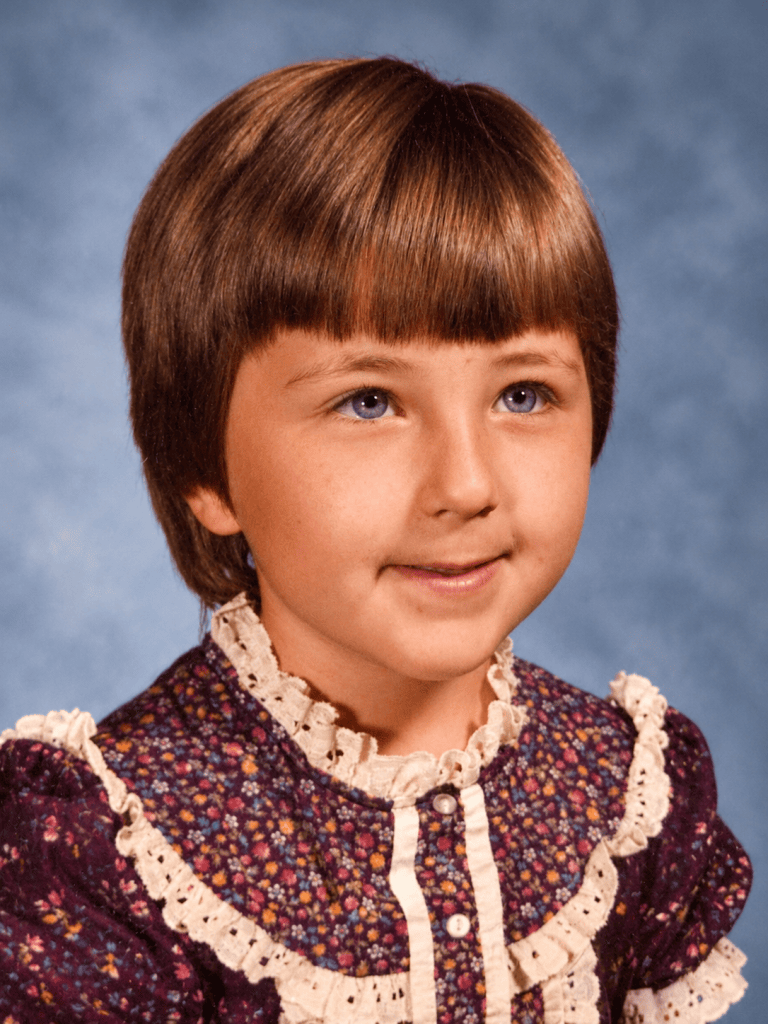
This is me in kindergarten.
I look at this little girl and wonder how much of who I am today was already there. The independence. The determination. The instinct to figure things out for herself. The sense that if something needed doing, she would probably be the one to do it.
I’m the oldest of four children. And somewhere along the way, I became the doer, the leader, the responsible one. The one who stepped up. The one who figured it out. The one who could be counted on.
In a lot of ways, I think this little girl raised herself.
That doesn’t mean my parents weren’t there, or that I’m interested in rewriting my childhood as some tragic story. I’m not. Families are complicated, and everyone has their own experiences and perspectives. But when I look back, I recognize a little girl who learned very early to be independent, to rely on herself, and to take care of the people around her.
What I didn’t realize was how much of that would follow me into adulthood.
The oldest daughter comes with a certain reputation.
There’s plenty of discussion about birth order and the characteristics often associated with eldest children, particularly eldest daughters. They’re frequently described as responsible, conscientious, organized, independent, and natural leaders.
They’re also often the children who are expected to know better, help more, set an example, and shoulder responsibilities that their younger siblings may never experience in quite the same way.
Of course, birth order isn’t a personality diagnosis, and not every oldest child grows up the same way. But there’s something worth exploring about the expectations placed on the oldest daughter.
Sometimes, being responsible becomes your identity.
Being capable becomes your assignment.
Being the one who handles things becomes your default setting.
And when everyone becomes accustomed to you filling that role, it can be surprisingly difficult to step outside of it.
The funny thing is, my independence didn’t always translate into confidence.
Within my family, I was often the leader, the one who made things happen, and the one who took care of things.
Outside of that familiar environment, I was frequently insecure. I second-guessed myself. I worried about what people thought. I was uneasy in situations where I didn’t know exactly where I stood.
I became a people pleaser.
I wanted people to be happy with me. I wanted to be liked. I wanted to avoid disappointing anyone. I could be fiercely independent and still desperately want reassurance that I was doing everything right.
Looking back, I think those two things were connected.
When you spend so much of your life being the person everyone can depend on, you can start believing your value is tied to how much you do for other people.
You learn to anticipate needs. You learn to solve problems. You learn to keep things moving.
And sometimes, you forget to ask yourself what you actually want.
There’s a difference between being known and being assigned a role.
This is probably one of the harder things I’ve come to understand as I’ve gotten older.
My parents and siblings share my history, my childhood, and my genes. But I don’t think they necessarily know all of me.
They know the role I’ve played in our family.
They know the responsible one. The independent one. The one who gets things done. The one who takes charge. The one who can handle it.
But there’s so much more to me than that.
And I think it can make people uncomfortable when I don’t behave according to the role they’ve grown accustomed to.
When I say no.
When I have a different opinion.
When I make a decision that doesn’t require everyone’s approval.
When I stop volunteering to fix something that isn’t mine to fix.
When I choose myself.
It isn’t necessarily that anyone is intentionally trying to hold me back. Sometimes people simply become comfortable with the version of you they’ve always known. Your growth requires them to adjust, too.
And not everyone is particularly enthusiastic about adjusting.
But I’m learning that I don’t have to remain a familiar version of myself just because it’s more convenient for everyone else.
At 47, I’m finally getting to know myself outside of the role.
I wish I could go back and tell that kindergarten girl a few things.
I’d tell her that she doesn’t have to earn her place by being useful.
That she doesn’t have to make everyone happy.
That being independent doesn’t mean she has to do everything alone.
That it’s okay to need people, and it’s okay to let people take care of her sometimes.
I’d tell her that one day, she’ll stop questioning whether she’s capable.
Because she is.
I’m successful. I’m smart. I’m resourceful. I’m a natural leader. I’m still the person who will roll up her sleeves and get something done when it needs doing.
And I’m incredibly kind. Not because I need people to like me, not because I’m afraid of disappointing them, and not because I expect something in return.
I’m kind because that’s who I choose to be.
There’s a difference.
I’ve spent a lot of years confusing kindness with accommodation and responsibility with obligation. I’m learning that I can be a good person without being everyone’s solution.
I can love my family without allowing family expectations to define me.
I can be independent without carrying everything.
I can be a leader without needing to take charge of every situation.
And I can disappoint someone without making that disappointment my responsibility to fix.
I don’t resent the little girl in this photograph for becoming the person she became. In fact, I’m pretty proud of her. She persevered. She figured things out. She kept going, even during the years when she wasn’t entirely sure of herself.
But I also don’t want to spend the rest of my life being defined by what she learned she had to be.
At 47, I’m not starting over. I’m finally taking ownership of the person I’ve always been underneath all those expectations.
And maybe that’s the greatest thing about getting older.
You begin to understand that you don’t owe everyone the same version of yourself they’ve always known.
That little girl was fiercely independent. She just hadn’t learned yet that she was allowed to choose herself, too.
I think she’d be pretty proud of us.


Leave a Reply