Category: Uncategorized

  • The Day I Watched the World Change From a Television Screen

    I was 22 years old on September 11, 2001.

    I was engaged to be married. October was just weeks away. My life was moving forward in the ordinary, beautiful way young adulthood is supposed to move forward.

    And then, in a matter of hours, the world became something different.

    I watched it happen on television.

    That is one of the strangest things about being part of a generation shaped by 9/11. We witnessed one of the most horrific days in American history from couches, kitchen tables, classrooms and offices. We watched smoke pour from buildings we had never visited. We watched people run. We watched the towers collapse.

    And then we watched it again.

    And again.

    The images were impossible to comprehend, yet somehow impossible to look away from.

    I remember the disbelief. The confusion. The sick feeling that this couldn’t possibly be happening in the United States. I remember realizing that this wasn’t a movie, wasn’t some distant war happening on the other side of the world.

    People were dying.

    Thousands of them.

    And even though I was a thousand miles away, something about that day lodged itself permanently inside me.

    September 11, 2001 is not a memory I simply remember. It is something I carry.

    For years, I carried another strange feeling with it.

    In 2008, I took my first trip to New York City. I desperately wanted to go to Ground Zero.

    But I couldn’t.

    I got close, but something stopped me.

    At the time, Ground Zero was not the memorial we know today. It was still an enormous, active construction site—a massive excavation cut deep into the earth, surrounded by fencing, machinery, steel and the beginnings of rebuilding.

    Perhaps that was part of it.

    But I think there was something deeper.

    I wanted to see it.

    And I didn’t want to see it.

    I felt pulled toward that place and, at the same time, almost afraid of what I might feel when I stood there.

    So I walked away.

    For years afterward, I wondered why.

    What was I afraid of?

    Maybe I wasn’t ready to turn something I had experienced through a television screen into something physical.

    Because as long as Ground Zero remained somewhere in New York, it was possible to keep September 11 at a distance.

    I could remember the images.

    I could remember the names.

    I could remember the horror.

    But I didn’t have to stand on the ground where it happened.

    This past August, nearly 25 years after that terrible day, I returned to New York City with my two youngest sons.

    We had an incredible trip. We laughed. We explored. We ate amazing food. We saw the city from above and below. We made memories.

    And then, on our final day, we went to the 9/11 Memorial & Museum.

    This time, I walked in.

    And there is something profoundly different about experiencing 9/11 when you are no longer looking at it through a television screen.

    Because eventually, the realization hits you:

    You are standing where they died.

    Not near it.

    Not somewhere that represents it.

    You are standing on the footprint of the place where thousands of human beings went to work that morning and never came home.

    People who had families.

    People who had plans for that evening.

    People who were worried about ordinary things.

    People who thought they were going to have another tomorrow.

    And suddenly, the enormity of what happened becomes almost impossible to hold in your mind.

    The museum is incredibly powerful, but the memorial pools affected me in a way I wasn’t expecting.

    The names.

    Thousands of them.

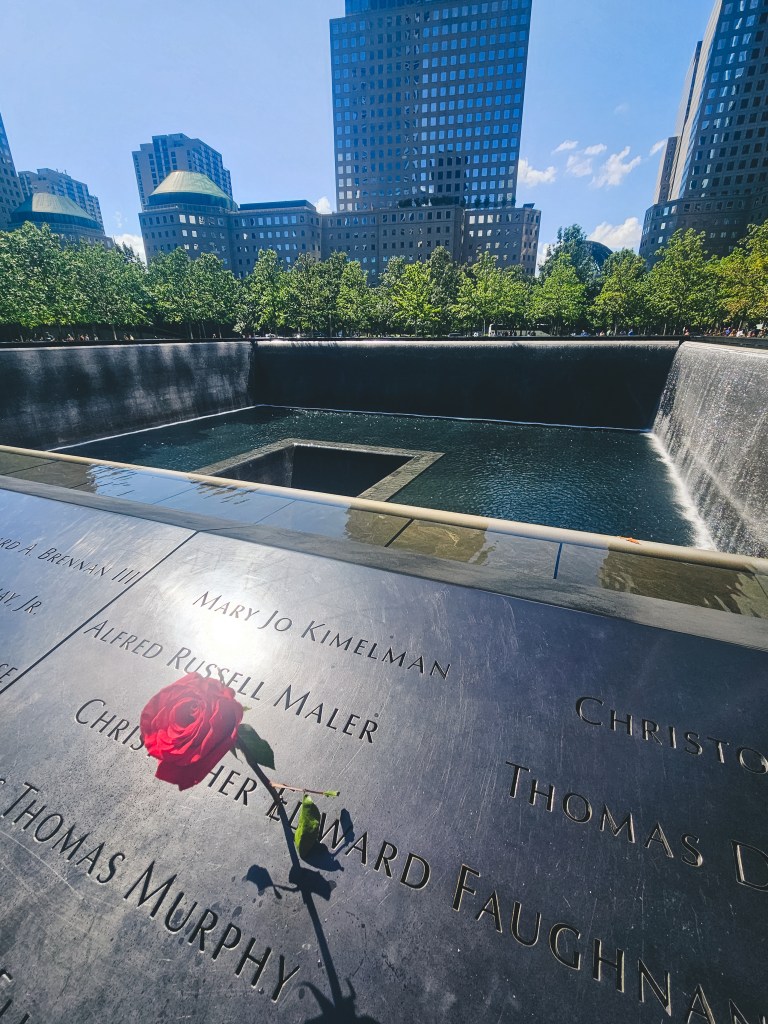
    I traced some of those names with my finger.

    And I prayed.

    For the people whose names were beneath my hand.

    For their families.

    For the firefighters and police officers and paramedics who ran toward the buildings while everyone else was running away.

    For the people trapped above the fires.

    For the people who jumped because there was nowhere left to go.

    For the passengers on those airplanes.

    For the people in the Pentagon.

    For the people in Shanksville.

    For the children who grew up without a parent.

    For the spouses who came home to an empty chair.

    For the parents who never got another phone call.

    And then the wind moved across the water.

    The pools are enormous, and the water constantly disappears into the darkness below.

    When the wind blows, the water sprays across the edges.

    For a moment, standing there, it almost felt like a cleansing.

    Of what, I don’t know.

    Grief?

    Anger?

    Twenty-five years of carrying images in my head?

    Maybe it was simply nature doing what nature does—moving water, moving air, continuing on.

    But standing there, I felt something I couldn’t quite put into words.

    Maybe it was finally being where I had needed to be all those years ago.

    Maybe the part of me that had been pulled toward Ground Zero in 2008 had finally caught up with me.

    And I realized something else.

    There are some places you don’t visit simply to see them. You visit them to bear witness.

    That is what this trip became for me.

    I wasn’t there for a photograph.

    I wasn’t there because it was another tourist attraction on our itinerary.

    I was there because I had spent nearly 25 years carrying September 11 from a television screen inside my head.

    And finally, I stood on the ground.

    I stood there as a 47-year-old woman instead of the 22-year-old young woman who had watched the towers fall while planning her wedding.

    So much of my life happened in between.

    I got married.

    I became a mother.

    I watched my children grow.

    I experienced joy and heartbreak and ordinary Tuesdays and birthdays and Christmases and all the little moments that make up a life.

    The people whose names are carved into those memorials never got any of that.

    That may be the hardest realization of all.

    They didn’t get the ordinary things.

    They didn’t get another birthday.

    Another Christmas.

    Another argument with their spouse.

    Another morning coffee.

    Another hug from their child.

    Another chance to complain about traffic.

    Another completely unremarkable Tuesday.

    They simply disappeared from the future they thought they had.

    And that is why I don’t think we should ever allow September 11 to become merely a date in a history textbook.

    It wasn’t history to the people who died.

    It wasn’t history to the people who survived.

    It wasn’t history to the firefighters who climbed those stairs.

    It wasn’t history to the families who waited for someone who never came home.

    And it wasn’t history to the 22-year-old woman sitting in front of her television, watching in horror and trying to understand how the world she knew could suddenly become so terrifying.

    Twenty-five years later, I finally stood there.

    I finally touched the names.

    I finally looked into the place where those buildings once stood.

    And I finally understood why I had been unable to go in 2008.

    Sometimes grief has its own timetable.

    Sometimes we aren’t ready.

    And sometimes, years later, we find ourselves standing in the place we’ve spent years avoiding—and realize that we weren’t being held back.

    We were waiting until we were ready to bear witness.

    I am so grateful I went.

    It was one of the most somber experiences of my life.

    And it was absolutely worth it.

    For them.

    For their families.

    For the people who ran toward danger.

    For the survivors.

    For the generations who will never know the world exactly as it was before that morning.

    And for the 22-year-old woman who watched it all unfold on a television screen and never forgot.

    We will never forget.

    ————————————————————
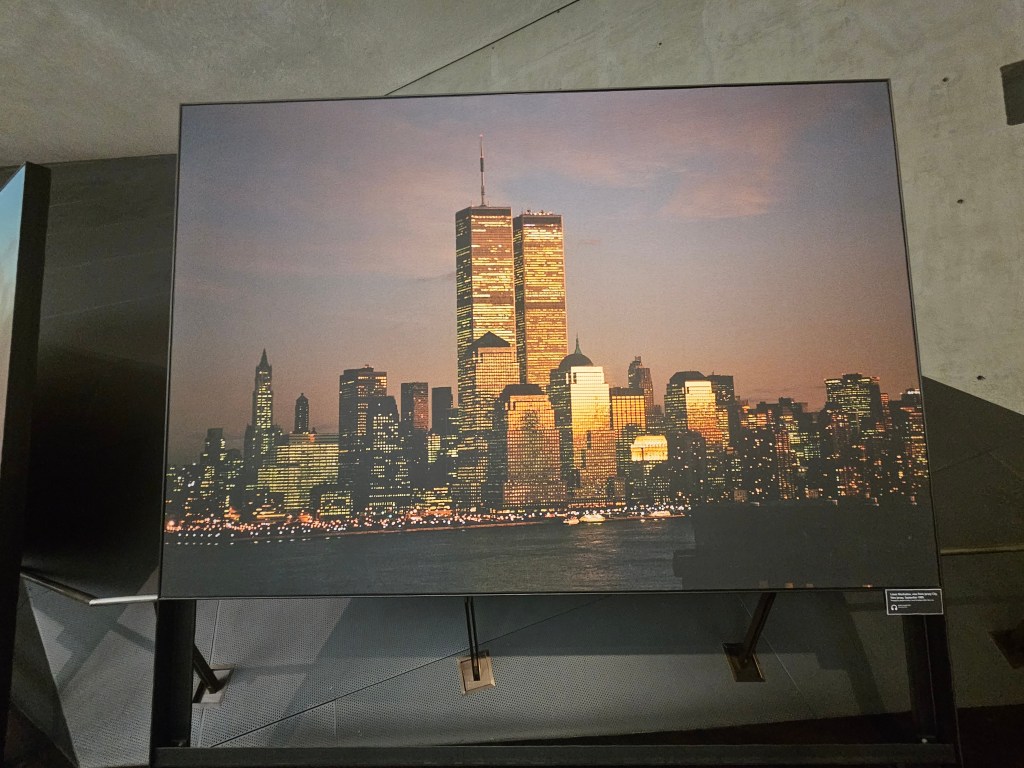
    The twin towers before 9/11/2001
    Ground zero in 2008 (photo from The Guardian, 9/9/2008)
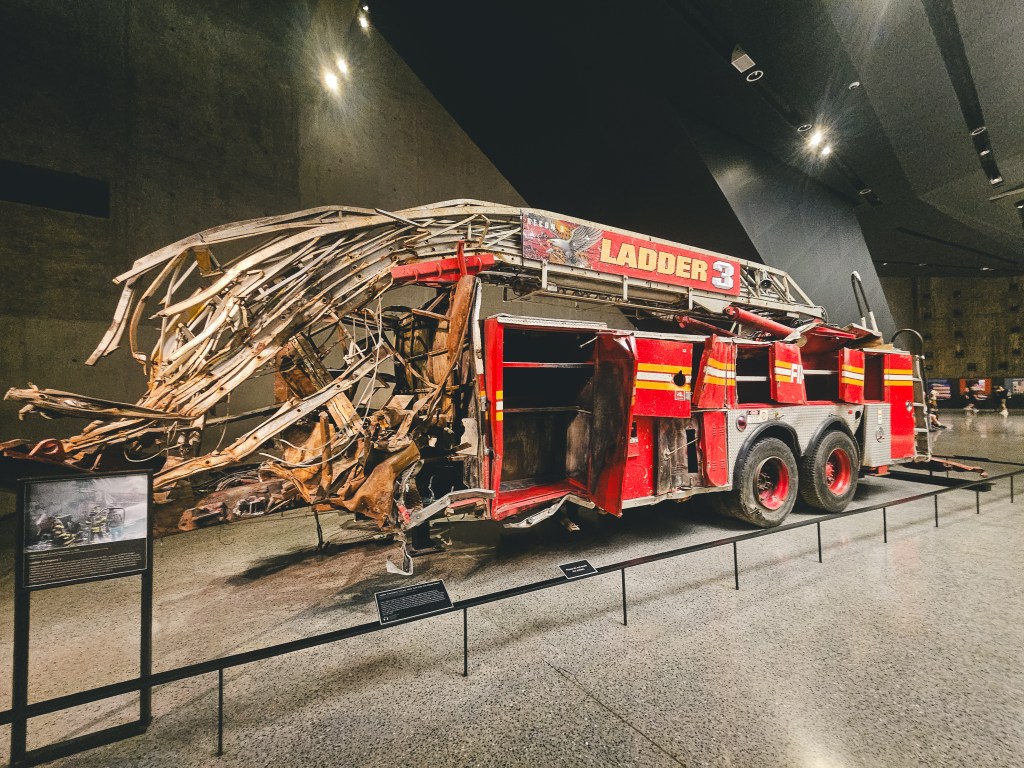
    A destroyed fire truck, FDNY, from 9/11/01.
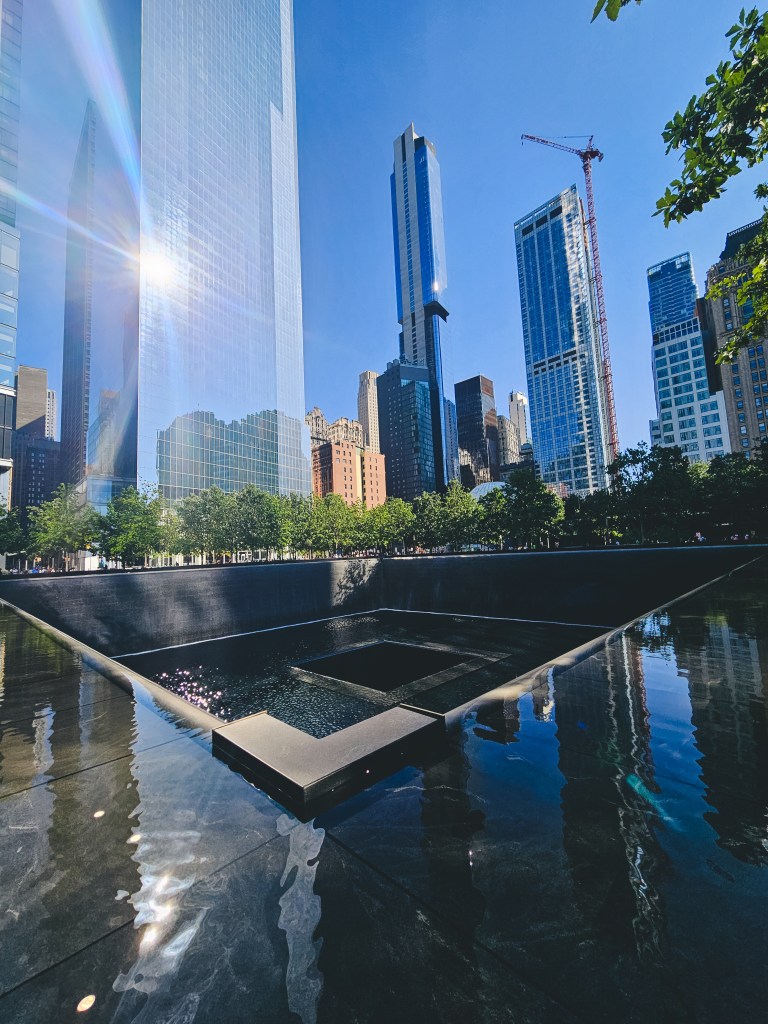
    South Infinity Pool.
    North Infinity Pool
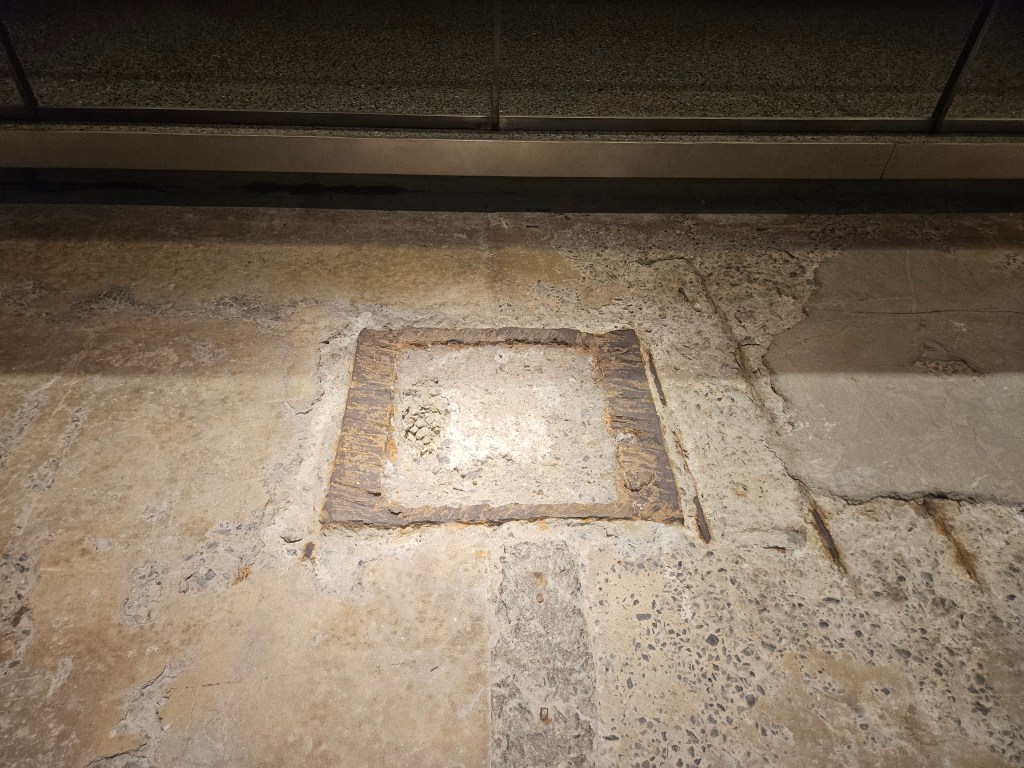
    Original beam of the North Tower.

  • Are We Defending Our Beliefs — or Ourselves?

    I think I’ve finally figured out one of the things that bothers me most about politics right now.

    It’s not even that people disagree with me.

    I actually like when people disagree with me. It makes life interesting. I don’t need everyone sitting around nodding their heads at everything I say.

    What bothers me is when someone’s political beliefs become so intertwined with their identity that admitting they’re wrong becomes almost impossible.

    Because then politics isn’t:

    “I believe this policy is better.”

    It becomes:

    “I am one of the good people.”

    And that’s a completely different thing.

    Once you’ve convinced yourself that your political beliefs are proof of your moral goodness, questioning those beliefs suddenly feels personal.

    If I admit my side was wrong, what does that say about me?

    If I admit the person I’ve been defending actually did something terrible, maybe I’m not as compassionate as I thought.

    If I admit someone from my political tribe is a hypocrite, maybe I’m a hypocrite for defending them.

    If I acknowledge that the other side occasionally has a legitimate point, does that mean I’m betraying my people?

    And THAT is where I think things get really weird.

    Because I’ve watched progressive people bend themselves into absolute pretzels to defend things they would find completely reprehensible if the political labels were reversed.

    I’ve watched people demand that we “believe women” until the woman happens to be accusing someone they politically support.

    I’ve watched people scream about systemic injustice while excusing horrific individual behavior because the perpetrator belongs to a group they’ve decided is oppressed.

    I’ve watched people preach compassion for criminals while having absolutely zero compassion for their victims.

    I’ve watched people demand tolerance while treating anyone who disagrees with them as morally defective.

    And I’ve watched people insist that we must respect someone’s identity while simultaneously telling everyone else that their understanding of reality is hateful and invalid.

    That’s not tolerance.

    That’s “agree with me or you’re a bad person.”

    And here’s the part that really fascinates me:

    Some of these same people seem genuinely convinced they’re the most open-minded people in the room.

    That’s the hypocrisy.

    And before the conservatives start high-fiving themselves…

    We’re not innocent.

    I’ve watched conservatives do the exact same damn thing.

    We talk about personal responsibility until one of our own screws up.

    We talk about family values while excusing terrible behavior from politicians we like.

    We complain about government censorship while wanting to silence things we find offensive.

    We demand law and order until the person breaking the law is someone we’re politically sympathetic toward.

    We scream “fake news” when the facts don’t fit our preferred narrative.

    Same disease.

    Different symptoms.

    Because the real addiction isn’t liberalism or conservatism.

    It’s moral identity.

    There is something incredibly intoxicating about believing you’re on the right side of history.

    You get to be the enlightened one.

    The compassionate one.

    The defender.

    The person who “gets it.”

    And once that becomes part of your identity, you don’t necessarily care about being right anymore.

    You care about being good.

    And those aren’t always the same thing.

    Sometimes the most morally courageous thing you can do is say:

    “I was wrong.”

    Sometimes it’s:

    “I don’t like this person, but they’re right about this.”

    Sometimes it’s:

    “The person I voted for screwed up.”

    Sometimes it’s:

    “The person I disagree with isn’t evil. They just see the world differently than I do.”

    And sometimes it’s:

    “Holy shit…I’ve been defending something I wouldn’t tolerate if the other side did it.”

    That’s growth.

    That’s intellectual honesty.

    And honestly, I think we need a lot more of it.

    Because I don’t want a political identity that makes me feel like I’m one of the good people.

    I want beliefs that can survive being questioned.

    I want to be able to change my mind without feeling like I’ve betrayed my entire identity.

    I want to be able to call bullshit when my own side is full of shit.

    And I want to be able to recognize something good when it comes from the other side without feeling like I’ve joined the enemy.

    Maybe that’s the real problem.

    We’re so busy trying to prove we’re the good guys that we’ve stopped asking whether what we’re actually defending is good.

    And those are two very different questions.

    Being a good person isn’t about always being on the right side.

    It’s about being willing to admit when you’re not.

  • Learning to Let Them Hurt

    I believe one of the hardest parts of parenting is learning to let our children hurt.

    Not because we don’t care. Not because we’re cold. And certainly not because we want them to suffer.

    Quite the opposite.

    Sometimes we let them hurt because we love them enough to understand that pain can teach what protection cannot.

    I want my children to know that their choices matter. That actions have consequences. That apologies don’t always erase the damage. That sometimes you lose the privilege, face the disappointment, repair the mistake, or sit with the uncomfortable reality that you were wrong.

    And yes, sometimes I will be the one enforcing that consequence while every instinct in me is screaming to make it go away.

    Because I am their parent—not their escape route from every uncomfortable consequence of being human.

    I could step in. I could call the teacher. Fix the mistake. Make the excuse. Replace what they broke. Blame someone else. Smooth everything over so they don’t have to feel embarrassed, disappointed, or ashamed.

    And believe me, there will be moments when I desperately want to.

    Because watching your child hurt is one of the most painful things a parent can experience.

    But I have to ask myself: Am I protecting my child from pain, or am I protecting them from learning?

    There is a difference.

    I don’t want to raise children who believe that someone will always rescue them from the consequences of their choices. I don’t want them entering adulthood expecting the world to bend around their mistakes.

    I want them to become adults who can say, I did this. I was wrong. I hurt someone. I need to fix it.

    That requires something more difficult than unconditional comfort.

    It requires accountability.

    Accountability doesn’t mean withholding love. It means refusing to confuse love with rescue.

    My children will never have to earn my love. But they will have to take responsibility for their actions.

    I will stand beside them while they face consequences.

    I will help them learn from their mistakes.

    I will hold them when they’re hurting.

    But I won’t always remove the thing that’s hurting them.

    Because sometimes the most loving thing a parent can say is:

    “I know this hurts. I’m here. And we’re still going to let you learn from this.”

    That may break my heart in the moment.

    But I’d rather have my heart break now than watch the world break them later because I never taught them how to take responsibility for themselves.

  • From Static to Stillness

    Last night I had one of those dreams that lingers.

    I pulled two metal antennae out of my head.

    Not gently. Not surgically. I just reached up and removed them, like they had always been there. I remember touching the holes afterward, feeling where they had been attached. It wasn’t bloody or dramatic. Just… aware. Curious. Almost relieved.

    And then, much later in the dream, I was nursing a baby.

    When I woke up, it felt symbolic. Not random. And the more I’ve sat with it, the more it feels like a picture of what this season of my life — and this season of Lent — has been.

    For a while now, I’ve felt mentally overloaded. Not just busy — overloaded. So many voices. So many opinions. So many expectations. Family systems. Politics. Faith conversations. Social media. Cultural narratives. Old childhood beliefs. New revelations.

    It’s like I’ve been walking around with antennae, constantly receiving signals.

    Constantly scanning.

    Constantly processing.

    And if I’m honest, some of those signals weren’t even mine to begin with. They were installed in childhood. Fear-based interpretations of God. Family patterns. Ideas about authority. Ideas about women. Ideas about obedience and worth and silence. Things I absorbed before I was old enough to evaluate them.

    The antennae in my dream felt metal. Mechanical. Not organic.

    That’s what struck me.

    They weren’t part of me. They were attached to me.

    Pulling them out felt like a quiet act of fasting.

    Because that’s what Lent is, isn’t it? Not just giving up chocolate or wine, but removing what doesn’t belong. Detaching from what feeds the ego, the noise, the fear. Stripping away what has attached itself to us over time so we can hear God more clearly.

    “I don’t need to receive every signal anymore.”

    That sentence has been sitting in my spirit this morning.

    Lent invites us into the desert. And the desert is quiet. No constant updates. No crowd noise. No performance. Just you, your thoughts, and God.

    Maybe the antennae had to come out so the static could stop.

    Touching the holes afterward felt like examen — noticing where those messages used to enter. Not pretending they were never there. Just acknowledging them. Naming them. Offering them.

    That’s what growth has felt like lately.

    Not rebellion.
    Not rejection.
    Revelation.

    I’ve been having these “aha” moments — the kind that don’t feel condemning, but freeing. Like God gently saying, “You weren’t ready to understand this before. But you are now.”

    Lent isn’t about shame. It’s about clarity.

    And here’s the part that moves me most.

    After removing the antennae, I was nursing a baby.

    That image feels holy.

    Because once you stop absorbing everything from the outside, you finally have the capacity to nurture what’s growing inside.

    Nursing is slow. Quiet. Intentional. Protective. It’s life-giving. It’s intimate. It’s not loud or performative.

    It feels like this softer version of me I’m growing into.

    I’m still strong. Maybe stronger. But softer. Less reactive. More grounded. More protective of my peace. More selective about what I allow into my mind and spirit.

    Maybe the baby represents a new understanding of God — not the fear-based version I inherited, but the faithful, patient, revealing-in-seasons God I’m coming to know.

    Maybe it represents my inner child finally being cared for instead of corrected.

    Maybe it represents faith that is chosen, not installed.

    Lent is a season of subtraction before resurrection.

    You clear out.
    You detach.
    You fast.
    You sit in the quiet.

    And in that space, something small and vulnerable is born.

    What if the goal isn’t just to give something up — but to make room to nurse what God is forming in us?

    If there’s anything someone else might take from this, maybe it’s this:

    You are allowed to question what you were handed.
    You are allowed to disconnect from voices that exhaust you.
    You are allowed to refine your faith instead of abandoning it.
    You are allowed to grow into revelations you weren’t ready for at 20.

    And Lent is not punishment.

    It’s pruning.

    Sometimes you have to remove the antennae before you can nourish the baby.

    This morning, my strange dream doesn’t feel strange at all.

    It feels like the desert.

    And it feels like new life quietly beginning.

  • Enraged

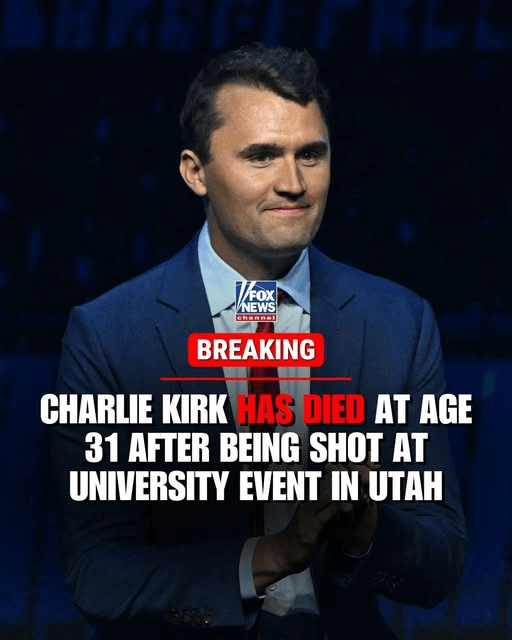
    The assassination of Charlie Kirk has left me shaken in ways I can hardly put into words. I don’t want to draw comparisons that don’t belong, but the words of Anne Wilson’s song echo in my mind: “Who changed the world when His blood was spilled? Who takes His own cross up a hill?”

    In so many ways, I believe the world will be changed by Charlie’s blood being spilled. He bore his cross with courage and conviction, carrying it faithfully and wholeheartedly in the name of Christ. He was hated for his beliefs, mocked for his boldness, and yet he never wavered. For that, he paid the ultimate price. Charlie was martyred.

    And yet, what deepens the wound is not just the loss of his life, but the cultural numbness that followed. To see people sharing the graphic video of his attack—carelessly, thoughtlessly, as if it were nothing more than shock-value content—is an act of cruelty in itself. One day, Charlie’s children may stumble across that video. That thought makes my stomach turn.

    This is not just brutality. This is sickness. This is a world so desensitized that we cannot even recognize the sacredness of life. And it enrages me.

  • A Nation in Mourning: Charlie Kirk’s Tragic Assassination

    I am overwhelmed with sorrow. I am seething with anger. Today, our brave, devout conservative friend Charlie Kirk was assassinated—struck down in cold blood while standing firmly for truth and faith at Utah Valley University. He wasn’t just a figurehead; he was a young father, a passionate believer, a warrior for Christ—and he fell victim to the hatred and division that poison this country.

    Charlie was brilliant. His mind was sharp, his insight clear. Whether he was debating on stage, speaking to students, or encouraging fellow believers, he had an ability to articulate truth in a way that cut through the noise. He was a leader who inspired countless young conservatives to think critically, live boldly, and never apologize for their faith. He had so much of life ahead of him—a life that should have been filled with more books, more speeches, more debates, more moments as a father and husband. That future was stolen.

    At approximately 12:10 p.m. MDT, a single gunshot rang out from a building roughly 200 yards away—hitting Charlie in the neck during a live public event. Within hours, he succumbed to his injuries and died at age 31, leaving behind a grieving wife and two young children.

    This wasn’t random violence—it was a savage act of political hatred. The perpetrators of this cruelty are the extremists who have poisoned our national conversation, who preach division, who despise Christians and conservatives, who incite fear and violence with their vitriol.

    To those who revel in chaos, who whisper that such violence is justified—know this: you have crossed a moral line. You have torn a family apart, left two children fatherless, and extinguished a vibrant life dedicated to faith and courage.

    I mourn Charlie’s life. I mourn the light he brought into conservative youth movements nationwide. I mourn his bold voice, his unapologetic Christianity, his unyielding commitment to truth. But I will not be silent.

    Let this crime spark a turning point. Let us confront and reject the hatred that divides us. We must stand united—Christians and conservatives in the face of extremist violence, in defense of free speech, in honor of Charlie’s legacy.

    Rest in peace, Charlie. Your brilliance, your faith, and your courage will not be forgotten.

  • What 46 Feels Like

    On March 17, I turned 46.

    It’s a strange number. Not quite a milestone, but far enough along the timeline to make you pause. People ask, “How does it feel?” and I honestly don’t know how to answer that. I don’t feel 46. But then again, what should 46 feel like?

    There’s no textbook description for this age. No clean, universal definition. Some of us are raising children. Some are burying parents. Some are reinventing careers or navigating health issues. Some are chasing dreams we set down years ago, now finally brave enough to pick them up again. Forty-six doesn’t come with a rulebook—it comes with stories. Lots of them.

    That’s the most profound realization I’ve had this year: my greatest strength is not in how young I can stay, or how much I can still do, but in what I’ve lived through. The experiences. The heartbreaks. The doubts. The faith. The lessons I learned the hard way and the ones I learned by watching others fall and rise again. That’s where my real power lies now—in the hard-earned wisdom of all the ages I’ve already been.

    I don’t resent getting older. I don’t want to go back. But I am becoming increasingly aware of my mortality, of the finite nature of all this. The clock ticks louder in midlife, not in a panicked way, but in a purposeful one. Time feels like it’s speeding up, and suddenly every moment is asking to be noticed.

    I’m trying to slow down where I can. To be present. To laugh without distraction. To see the people I love more clearly. To soak in the ordinary. Because these are the days I’ll want back someday—the ones I’m living right now.

    46 isn’t old. It’s not young either. It’s a bridge between who I’ve been and who I’m becoming. And standing in that in-between space is sacred. It’s humbling. It’s beautiful.

    So this year, my birthday wish isn’t for more time—it’s for deeper time. More intentional, more meaningful, more alive. I don’t want to just exist. I want to live—fully, truthfully, and gratefully.

    Because I’ve never felt more me than I do right now.

    And maybe that’s exactly what 46 feels like.

  • Life Lately: Work, Travel, and Sleep Deprivation

    Well, it’s been a minute, hasn’t it? I didn’t mean to disappear, but life has been a whirlwind lately. Work has been busy, I spent a week in Texas, and things haven’t slowed down since I got back. I keep waiting for a lull, but at this point, I think I need to accept that my “normal” is just organized chaos.

    Between keeping up with work, making sure the boys are where they need to be, and attempting to maintain some level of order in my house (a battle I’m slowly losing), I feel like I’m running on fumes. And just when I thought I had a handle on things, Owen left for his class trip to Washington, D.C., early Sunday morning—right as daylight saving time ended. Nothing like losing an hour of sleep and sending a kid off on a big trip to completely throw off my schedule.

    So, yeah, I know this isn’t the most exciting update. No dramatic stories, no major catastrophes—just the usual hustle of work, parenting, and trying to keep my head above water. But honestly? Sometimes the mundane is better than total chaos.

  • 40 Days of Renewal: A Catholic Journey Through Lent

    A 40-day Lenten guide for Catholics focused on prayer, fasting, and almsgiving. This daily plan will help you reflect, repent, and grow closer to Christ, leading you through Holy Week and into the joy of Easter.

    Week 1: Turning Toward God

    • Ash Wednesday (Day 1) – Fast and abstain from meat. Reflect on your Lenten intentions.
    • Day 2 (Thursday) – Read Matthew 6:1-6, 16-18 on fasting, prayer, and almsgiving.
    • Day 3 (Friday) – Abstain from meat. Pray the Stations of the Cross.
    • Day 4 (Saturday) – Do an act of charity: donate food or money to those in need.
    • 1st Sunday of Lent – Read Mark 1:12-15 (Jesus in the desert). Reflect on your own spiritual wilderness.

    Week 2: Deepening Prayer

    • Day 5 (Monday) – Spend 10 minutes in silent prayer with God.
    • Day 6 (Tuesday) – Pray for someone who has hurt you.
    • Day 7 (Wednesday) – Meditate on the Seven Sorrows of Mary.
    • Day 8 (Thursday) – Fast from distractions (social media, TV) for a day.
    • Day 9 (Friday) – Abstain from meat. Pray the Sorrowful Mysteries of the Rosary.
    • Day 10 (Saturday) – Read and reflect on Psalm 51 (A prayer of repentance).
    • 2nd Sunday of Lent – Read Mark 9:2-10 (The Transfiguration). Ask God to reveal His glory in your life.

    Week 3: Acts of Mercy

    • Day 11 (Monday) – Forgive someone who has wronged you.
    • Day 12 (Tuesday) – Write a thank-you note to someone who has blessed you.
    • Day 13 (Wednesday) – Meditate on the Beatitudes (Matthew 5:1-12).
    • Day 14 (Thursday) – Perform a random act of kindness.
    • Day 15 (Friday) – Abstain from meat. Attend or watch a Stations of the Cross service.
    • Day 16 (Saturday) – Spend time with someone lonely or in need.
    • 3rd Sunday of Lent – Read John 4:5-42 (The Woman at the Well). Reflect on how Jesus satisfies your thirst.

    Week 4: Renewal of Heart

    • Day 17 (Monday) – Pray for peace in the world.
    • Day 18 (Tuesday) – Attend daily Mass or Eucharistic Adoration.
    • Day 19 (Wednesday) – Read Luke 15:11-32 (The Prodigal Son). Ask God for mercy.
    • Day 20 (Thursday) – Fast from complaining.
    • Day 21 (Friday) – Abstain from meat. Give alms to the poor.
    • Day 22 (Saturday) – Make a list of things you are grateful for.
    • 4th Sunday of Lent (Laetare Sunday) – Rejoice in the mercy of God and reflect on Ephesians 5:8-14.

    Week 5: Drawing Near to the Cross

    • Day 23 (Monday) – Read John 8:1-11 (The Woman Caught in Adultery). Accept God’s mercy.
    • Day 24 (Tuesday) – Pray for those who are suffering.
    • Day 25 (Wednesday) – Write down your burdens and offer them to God.
    • Day 26 (Thursday) – Read John 13:1-17 and reflect on serving others.
    • Day 27 (Friday) – Abstain from meat. Meditate on Jesus’ Seven Last Words.
    • Day 28 (Saturday) – Confess your sins in Reconciliation.
    • 5th Sunday of Lent – Read John 11:1-45 (Raising of Lazarus). Where is God calling you to new life?

    Holy Week: Entering into Christ’s Passion

    • Palm Sunday – Reflect on Jesus’ triumphal entry into Jerusalem (Matthew 21:1-11).
    • Holy Monday – Meditate on John 12:1-11 (Mary anoints Jesus’ feet).
    • Holy Tuesday – Read John 13:21-38 (Jesus predicts Peter’s denial).
    • Holy Wednesday (Spy Wednesday) – Reflect on Judas’ betrayal and examine your own heart.

    Sacred Triduum

    • Holy Thursday – Attend Mass of the Lord’s Supper. Reflect on the Eucharist and Jesus washing the disciples’ feet.
    • Good Friday – Fast, abstain from meat, and venerate the Cross. Read the Passion narrative (John 18-19).
    • Holy Saturday – Enter into silence and waiting. Pray the Sorrowful Mysteries and prepare your heart for Easter.

    Easter Sunday: He is Risen!

    • Celebrate Christ’s victory over sin and death! Read John 20:1-18 and rejoice in the resurrection.

  • Faith and Frustration: Reconciling Catholicism with Gender Equality

    Loving my Catholic faith while rejecting its patriarchal structures is a constant tug-of-war. I find deep meaning in the teachings of Jesus—the radical compassion, the call to justice, the insistence that the last shall be first. But when I look at how the Church has evolved, I can’t help but wonder: did Jesus really intend for His Church to become a system that marginalizes half of humanity?

    There’s an argument that men and women are simply different, that our roles in faith and society should reflect these differences. Fine. But difference does not mean hierarchy. It does not mean exclusion. It does not mean that women, who were present at the foot of the cross, who were the first witnesses to the resurrection, who led in the early Church, should be relegated to the background while men make all the decisions.

    The Church claims to uphold the dignity of women while simultaneously limiting our influence. Women can educate, organize, nurture, and serve—but we cannot lead at the highest levels. We are good enough to be saints but not priests. We can be the backbone of parishes, the first teachers of faith in the home, but we cannot be decision-makers in the Church’s most sacred spaces.

    And yet, despite this frustration, I stay. I stay because I believe the Church is more than its flaws. I stay because faith is not about blind obedience to human institutions but about seeking truth, even when it challenges authority. I stay because I believe that change is possible, that women’s voices must continue to rise, and that the love of Christ is not limited by outdated structures.

    If Jesus broke barriers in His time, why should we accept them in ours? If He welcomed women as disciples, why should we accept a Church that excludes them from leadership? The contradiction is maddening, but the faith itself—the message of love, justice, and redemption—is worth fighting for.

    So, I will continue to challenge, question, and push for a Church that reflects the true spirit of Christ—a Church where women are not just silent supporters but active, empowered leaders. I refuse to believe that God created women with intellect, passion, and spiritual gifts only to see them sidelined. My faith is not in an institution’s flawed traditions but in a God who calls us all—male and female—to build His kingdom together, as equals.