Category: Uncategorized

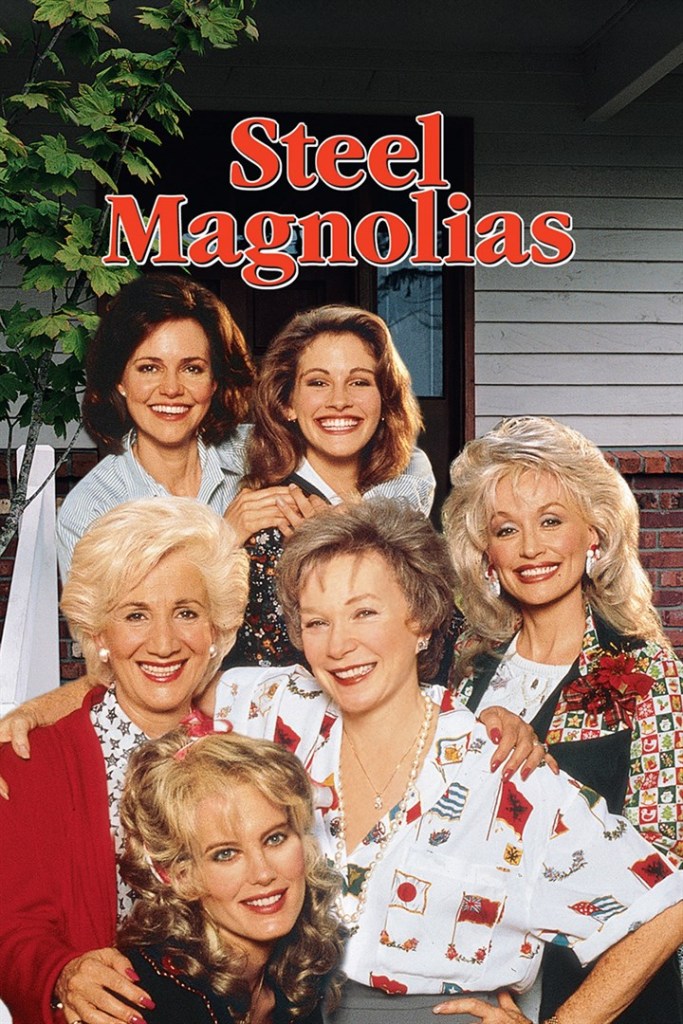
  • Why Steel Magnolias Will Forever Have My Heart (and My Tears)

    Some movies come and go, but Steel Magnolias? That one stays with you. It’s been a favorite of mine since I was a young girl, and no matter how many times I watch it, I still find myself laughing, crying, and quoting lines like it’s my own personal scripture.

    The casting? Absolute perfection. Julia Roberts, Sally Field, Dolly Parton, Shirley MacLaine, Olympia Dukakis, and Daryl Hannah—legends, every single one of them. They don’t just play their roles; they become them. M’Lynn, Shelby, Ouiser, Clairee, Truvy, and Annelle feel like old friends, the kind you can always count on for a good laugh or a shoulder to cry on (even if that shoulder is your own, because let’s be real, Steel Magnolias will wreck you in the best way possible).

    It’s the kind of movie that makes you laugh so hard you snort (thank you, Ouiser), then turns right around and shatters your heart into a million pieces. And somehow, you want it to. You need it to. Because sometimes, life calls for a good cry, and no one delivers catharsis quite like Sally Field’s heartbreaking, raw, and unforgettable monologue in the cemetery. If you know, you know.

    But for all its emotional gut punches, Steel Magnolias is ultimately about love, friendship, and the kind of resilience that only the strongest—like the flowers themselves—possess. It’s about finding humor even in the darkest moments and holding onto the people who make life worth living.

    So, will I keep watching it even though I know it’ll leave me sobbing on my couch? Absolutely. Because sometimes, you just need a movie that makes you feel everything—and this one does, every single time.

    And now, if you’ll excuse me, I need to go find my tissues. And maybe some sweet tea.

  • Grandma Alice’s Farmhouse

    The farmhouse stood tall, its brick walls holding generations of laughter and love. The porch was a place for whispered dreams, where summer breezes carried the scent of wildflowers and fresh-cut hay. Inside, the floors creaked with the weight of footsteps both past and present, and the kitchen was always warm, filled with the comforting smells of home-cooked meals.

    Through bright summers and harsh winters, the house remained, a constant presence against the ever-changing world. It was more than just a building; it was a keeper of stories, a witness to childhood adventures and quiet moments of reflection.

    Then, one day, fire took it away. The walls crumbled, the memories held in wood and stone reduced to ash. But no flame could erase the love it once sheltered. The farmhouse still stands, not in fields of green, but in the heart of those who loved it. And there, it will remain—untouched by time, forever home.

  • Dysfunction in Crisis: The Caretaker’s Burden and the Path to Freedom

    Crisis reveals everything. It strips away the everyday distractions and exposes the mechanics of a dysfunctional family in stark relief. When disaster strikes—an illness, a death, an addiction spiraling out of control—everyone assumes their role like a well-rehearsed play.

    The Martyr drowns in their suffering, making sure everyone sees their pain.
    The Denier pretends nothing is wrong, keeping up appearances at all costs.
    The Scapegoat absorbs the blame, cast as the family’s eternal problem.
    And then there’s the Caretaker—me, maybe you—the one who holds it all together.

    We are the steady hands that wipe tears, the calm voices that diffuse tension, the planners, the peacemakers, the ones who set our own needs aside so everyone else can function. We step up before anyone even asks because we have always been the ones to fix, to manage, to endure.

    But here’s the truth no one tells you: the Caretaker breaks, too.

    We don’t shatter in obvious ways. We don’t scream or slam doors. Our fractures appear in the quiet—exhaustion that seeps into our bones, resentment we swallow before it can surface, the loneliness of being the one who carries everything while no one carries us.

    And yet, we keep going. Because who else will?

    The Lie We Believe

    The biggest deception of the Caretaker role is that we must continue at all costs. That without us, everything falls apart. That our worth is measured in how much we can endure.

    But let me ask you something—when was the last time someone cared for you? When was the last time you let them?

    The truth is, dysfunction thrives when roles never change. And healing begins when one person decides to break the pattern.

    A New Way Forward

    If you are the Caretaker, I want you to know this: you do not have to save everyone. You are allowed to step back. You are allowed to rest. You are allowed to say, I need help, too.

    Maybe that starts small—saying no to a responsibility that isn’t yours, letting someone else manage their own emotions instead of absorbing them, asking for support instead of assuming no one will give it.

    Maybe it means reminding yourself, daily, that love is not measured in sacrifice alone. That your needs are not burdens. That the people who truly love you will not disappear when you stop being their fixer.

    Hope for the Weary

    There is a life beyond being the caretaker. A life where you are not just holding everyone else together but living fully, deeply, for yourself. It won’t be easy. The people who have relied on you to be their constant may resist. But you were never meant to be the foundation of someone else’s survival.

    You deserve peace. You deserve care. You deserve a love that nurtures you, not just one that takes.

    Step back. Breathe. Let the world spin without you holding it up for a while. It will keep turning. And you? You will finally be free.

  • The Fragile Things We Nurture

    The dream lingered with me long after I woke, its weight pressing against my chest like the tiny, fragile body of the starving puppy I had cradled in my sleep. In the dream, I found it—weak, trembling, on the edge of life—somewhere within the familiar walls of my home. Its ribs jutted out beneath a matted coat, its eyes dull with exhaustion, but even in its desperate state, it had looked at me with trust. I couldn’t ignore it. I couldn’t turn away. So, I scooped it up, wrapping it in warmth, offering it food, water, comfort. Slowly, it revived. Day by day, it grew stronger under my care, its tail beginning to wag, its eyes regaining their light. Love, patience, and tenderness brought it back from the brink.

    When I woke, I couldn’t shake the feeling that the dream meant something more. A quick search for dream analysis suggested that the puppy symbolized something—or someone—in my life that needed care and nurturing. And suddenly, it made sense.

    The night before, I had sat in the sterile, beeping quiet of a hospital room, watching my mother battle against the cruel complications of cancer. I had held her hand, spoken to her in gentle tones, adjusted her blanket when she shivered. She was the one now so fragile, so weak, caught between exhaustion and survival. And I, helpless in so many ways, could only offer my presence, my love, my care.

    Maybe my subconscious was telling me what I already knew deep down: that this season of my life is about giving—of patience, of strength, of love—no matter how heavy it feels. And just like in the dream, all I can do is nurture, tend, and hope that, somehow, it will be enough.

  • The Innocence of a Child’s Prayer

    There is a purity in a child’s prayer that can soften even the heaviest of hearts. It isn’t weighed down by doubt, overcomplicated by adult reasoning, or hindered by pride. It is simple, honest, and full of trust.

    Last night, as my mom lay in a hospital bed—her body fighting the cruel complications of cancer, possibly even a transient ischemic attack—my son, Gannon, wanted to pray for her. I watched as he folded his hands, made the sign of the cross, and began to speak:

    “Dear God, we ask you to help Grandma and make her well. Anything you can do is appreciated. We ask this in Jesus’s name, Amen.”

    That was it. No long-winded pleas, no desperation masked in complex words—just a child’s heart speaking plainly to God. And it was enough.

    As I listened, I felt something stir deep within me. Humility. Hope. A reminder of faith unshaken by life’s hardships. Gannon wasn’t worried about saying the right thing or making sense of all the fear and uncertainty. He just asked, believing that God would hear.

    Tears welled in my eyes as he ended with the sign of the cross, sealing his words with sincerity. In that moment, I was reminded just how special children are. They show us what it means to trust without hesitation, to love without limits, and to pray without doubt.

    I don’t know what the coming days will bring, but I do know this—God hears the prayers of children. And maybe, just maybe, that’s all the faith we need.

  • The Road to Grown

    The road from kindergarten to senior year is wild and unrelenting, a blur of milestones and moments that feel too big and too small all at once. One day, you’re tying their shoes, and the next, you’re watching them drive away, their world expanding while yours grows quieter. It’s thrilling and devastating all at the same time.

    You cheer them on, of course. You want them to grow, to thrive, to become everything they’re meant to be. That’s the job. You celebrate their victories, no matter how small—a finger-painted masterpiece, a first home run, a college acceptance letter. But in the quiet, when no one’s looking, you ache. You ache for the tiny hand that used to slip into yours without hesitation. You ache for the bedtime stories and the giggles over nothing. You ache for the version of them that still needed you for everything.

    And yet, here they are, needing you less every day. You’re proud of them, so proud it feels like your chest might burst, but the pride comes with a hollowing-out, a slow surrender to the fact that they’re not yours to keep. They never were. They’re only borrowed, these beautiful, messy, miraculous little humans.

    You try not to let it show. You focus on the joy—their first dance, their first job, their first steps into the world without you. You tell yourself this is what it’s all for, and it is. But some nights, when the house is too quiet and the memories creep in, you’d give anything to go back. Just for a little while. To kiss their scraped knees, to hear them call for you in the night, to hold them close and feel like their whole world again.

    It’s the sweetest agony, watching them grow up. You wouldn’t trade it for anything, but if you’re honest, you’d keep them small just a little longer if you could.

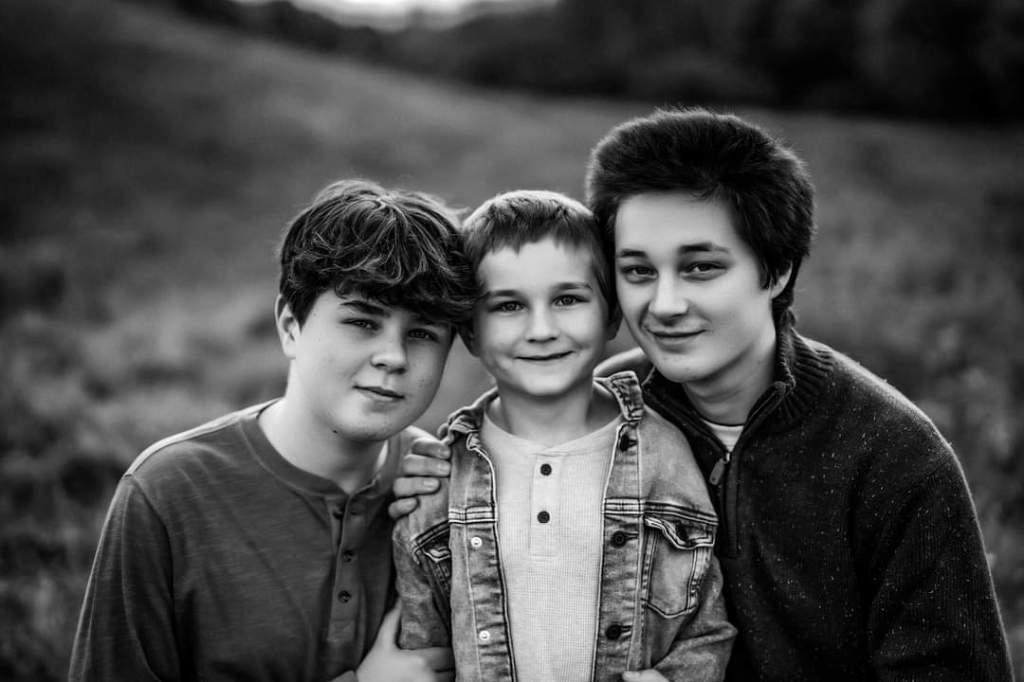
    One of my favorite images from our family portrait session by Ashley Herek Photography.
  • The Trouble With Never Having to Try

    Let’s get one thing straight: if you’ve never had to work for something, you probably don’t know how to work for anything. Yeah, I said it. And before you get defensive, take a moment to ask yourself—what have you really earned? Not inherited, not been handed, not stumbled into by sheer dumb luck. Earned.

    There’s a certain irony to the human condition: the less we’re required to try, the less capable we become of rising to the occasion when effort is actually demanded. It’s not a failing—it’s a lack of practice. People who’ve always had safety nets don’t develop balance. People who’ve never been told “no” don’t understand negotiation. And people who’ve never failed? Well, they’re not prepared for life, because failure is a guarantee.

    Here’s the kicker: this isn’t just about privilege or luck; it’s about entitlement. When you don’t have to claw your way to the top, you miss out on the process that teaches you resilience, problem-solving, and grit. You come to believe that success is a right, not a reward. And when reality doesn’t meet those expectations? Cue the tantrums, the blame, the flailing.

    Meanwhile, the rest of us—those who’ve fought tooth and nail, cried in frustration, and stayed up too late trying again—we know something you don’t. We know what it feels like to earn our victories. We know that the struggle is the point. The satisfaction isn’t just in getting what you want; it’s in knowing you had to fight for it.

    And let’s be clear: the world doesn’t owe you effortlessness. Relationships require work. Careers demand hustle. Even happiness takes intention. The sooner we stop romanticizing ease and start valuing the grind, the better off we’ll be. Because the truth is, those who haven’t struggled won’t survive when life inevitably demands that they do.

    So, here’s my challenge: instead of coasting on what you’ve been given, ask yourself what you’re willing to work for. What’s worth the blood, sweat, and tears? What will make you proud to say, “I earned this”? Because if you can’t answer that, then maybe the problem isn’t the world—it’s you.

    Think about it. Or don’t. But don’t say I didn’t warn you.

  • Marveling at the Everyday Miracles of the Human Body

    The other day, I had a small culinary mishap while slicing a rotisserie chicken. What was meant to be a delicious shortcut to dinner turned into an unexpected biology lesson—courtesy of my own finger.

    In my attempt to expertly carve that golden bird, I missed and nicked my finger instead. Now, I’m no stranger to being a bleeder (it’s like my body just knows how to throw a dramatic flair into a mundane moment). Blood began to drip at a pace that made me wonder if I was auditioning for a medical drama.

    But instead of panicking, I found myself utterly fascinated. Think about it: our bodies are these self-repairing wonders. I had just damaged myself, and already the biological clean-up crew was clocking in for duty. Platelets rushed to the scene like tiny EMTs, clotting the wound to keep me from, you know, bleeding out over a $6.99 rotisserie chicken.

    The more I thought about it, the more amazed I became. My skin, which I carelessly cut, would regenerate itself. In a week or two, the evidence of my dinner mishap will fade like it never happened. No memo needed, no training manual—it’s just what the body does.

    Most of us don’t think about these everyday miracles. We complain about paper cuts, bruises, or the occasional stubbed toe, but rarely do we stop to marvel at how our bodies are constantly at work, protecting and healing us.

    This accidental cut reminded me of how truly incredible we are. Skin grows back, blood clots, and eventually, even the faintest scar fades. Our bodies are always trying their best, even if we don’t give them the credit they deserve.

    So, the next time you find yourself dealing with a minor injury, pause for a moment. Sure, the sting is annoying, but isn’t it incredible that we’re basically walking, talking self-healing machines? Honestly, it’s enough to make me want to wear a Band-Aid like a badge of honor.

    As for that chicken, it was delicious—seasoned with just a little extra respect for the body that made it all possible.

  • The Cost of Losing Control

    You know that person—the one who flies off the handle at the slightest inconvenience, blurts out the first thing on their mind, and barrels through life like a tornado with no regard for the aftermath. We all know someone like this, and if we’re honest, maybe we’ve been that person a time or two. But here’s the thing: living like that doesn’t just leave a trail of destruction for everyone else to deal with. It messes you up on the inside, too.

    Let me break it down. If you never learn to contain yourself—your emotions, your impulses, your words—you’re not living free. You’re living shackled to your anxiety. Why? Because every outburst, every impulsive decision, every careless word creates fallout. You spend your days putting out fires you started, constantly looking over your shoulder, wondering who’s mad at you or what disaster is waiting around the corner. That’s not freedom. That’s a life sentence of unease.

    Containment isn’t about suppression or being a robot. It’s about self-respect and understanding that every action has a consequence. The people who learn to pause, breathe, and think before they react? They’re not just being polite; they’re preserving their peace. When you stop letting your emotions control you, you take back your power. And let me tell you, that power feels a whole lot better than the temporary high of saying or doing whatever you want in the heat of the moment.

    I’m not saying it’s easy. It’s hard as hell to bite your tongue when you’re boiling inside or to walk away when every cell in your body is screaming for a fight. But the reward is worth it. Calm. Confidence. The kind of quiet strength that says, I don’t need to prove myself to anyone because I’ve got myself.

    So here’s the challenge: the next time you’re about to lose it, ask yourself if it’s worth sacrificing your peace. Because the truth is, the more you let yourself spiral, the harder it is to stop. And no one deserves to live life as a prisoner to their own chaos.

  • Female Robots for Human Companionship: Another Way the Patriarchy is Replacing Women

    Lately, I’ve been reading about the rise of female robots for human companionship, and honestly, it has me shaking my head. These robots, designed to be emotionally and physically “perfect,” feel like another step in the wrong direction when it comes to how society views women. To me, this isn’t just about technology—it’s about control, objectification, and the lengths the patriarchy will go to erase the complexities of real women.

    The Growing Market for Female Robots

    We’ve all seen the headlines: lifelike robots with flawless appearances and the ability to hold basic conversations are becoming more common. Companies like RealDoll and Hanson Robotics are at the forefront of creating female robots meant to “fulfill” emotional and physical needs. And here’s the kicker: nearly all of these robots are modeled after women.

    A 2020 report from the Foundation for Responsible Robotics found that while female robots dominate the market, there’s hardly a push for male counterparts. Why? Because these robots aren’t about connection—they’re about catering to a very specific (and outdated) version of femininity that’s all about being attractive and agreeable.

    A Patriarchal Fantasy Come to Life

    It’s impossible to ignore the patriarchal undertones here. These robots are basically the physical embodiment of male fantasies: beautiful, compliant, and completely programmable. No agency. No opinions. No complexity. They’re marketed as the “perfect partner,” but let’s call it what it is—a way to eliminate the need for real women and the real work that relationships require.

    This trend also ties back to how society assigns gender to roles. Several studies have found that most robots default to male unless the role is caregiving or service-related—then suddenly, they’re feminized. The message is loud and clear: women, whether real or robotic, exist to serve.

    The Danger of Replacing Real Connection

    Here’s what really worries me. These robots don’t just reflect outdated gender roles—they reinforce them. By creating a “perfect” version of femininity, we’re sending a message that real women, with their thoughts, feelings, and boundaries, are too much to deal with.

    And what happens when people get used to this? A 2017 MIT blog post suggests that overexposure to emotionally simplistic AI can actually harm a person’s ability to navigate real human relationships. Think about that: the more someone interacts with a robot programmed to please them, the less likely they are to handle the complexities of a real, messy, human connection.

    A Bigger Problem Than Just Robots

    The truth is, these robots are part of a much bigger issue. Women have been commodified for centuries—on screens, in ads, and now in robotics. The idea that women’s value lies in their ability to be attractive, subservient, and available isn’t new. This is just the latest way that idea is playing out.

    If this trend continues, it’s not hard to imagine it deepening the already-existing divides between men and women. Instead of encouraging respect and equality, these technologies are normalizing control, unrealistic expectations, and a world where women can literally be replaced.

    What Needs to Change

    The technology itself isn’t the problem—it’s how it’s being used. There’s potential here to create robots that reflect equality, diversity, and respect instead of perpetuating stereotypes. Some ideas?

    • Representation: Let’s see robots that don’t conform to narrow, gendered stereotypes.
    • Ethics First: Companies need to develop guidelines to prevent misuse.
    • Cultural Accountability: We need to ask hard questions about what these trends say about us and actively challenge harmful norms.

    So, What Do We Do?

    At the end of the day, this isn’t just a conversation about robots. It’s a conversation about what we value as a society. Do we want technology that uplifts and connects us? Or do we want technology that reinforces harmful power dynamics?

    Female robots for companionship may seem like a niche issue, but they reflect the same old story: the patriarchy finding new ways to undermine, control, and replace women. And if we don’t start pushing back, we’re all going to pay the price.