Author: heydanajane

  • Ranking the Best Period Dramas of All Time

    There’s something undeniably captivating about period dramas. They transport us to bygone eras, immersing us in tales of love, ambition, betrayal, and societal norms wrapped in layers of opulent fashion and historical intrigue. Over the years, some period dramas have stood out as true masterpieces, blending compelling storytelling with meticulous attention to detail.

    Here’s my take on the best period dramas of all time, including modern hits like The Gilded Age and Bridgerton, and the lessons they offer about history, humanity, and ourselves.

    1. The Gilded Age (2022–Present)

    Set in late 19th-century New York, The Gilded Age captures the clash between old money and new wealth. The show masterfully intertwines the lives of the Russell family, ambitious social climbers, and the Van Rhijn-Brook family, who represent New York’s established elite.

    Why It Stands Out: The detailed depiction of societal transitions, exquisite costume design, and strong female leads make this show a must-watch. It’s a reminder of how change is often met with resistance, yet it is inevitable.

    Lesson: Embrace progress and innovation while honoring tradition. Change is a constant force, and those who adapt are often the ones who thrive.

    2. Bridgerton (2020–Present)

    This Shonda Rhimes-produced hit reimagines Regency-era England with a diverse cast, sumptuous costumes, and a fresh, modern perspective on love and relationships. Bridgerton excels in blending historical settings with contemporary themes of independence, identity, and the pursuit of happiness.

    Why It Stands Out: Its bold storytelling and reimagined historical accuracy give it universal appeal. The orchestral covers of modern pop songs further bridge the gap between past and present.

    Lesson: The pursuit of love and personal freedom is timeless. Breaking societal norms can lead to greater fulfillment and pave the way for future generations.

    3. Downton Abbey (2010–2015)

    Set in the early 20th century, Downton Abbey chronicles the lives of the aristocratic Crawley family and their servants. It explores themes of social mobility, war, and the rapidly changing landscape of British society.

    Why It Stands Out: Its ability to balance the upstairs-downstairs dynamic gives viewers a comprehensive view of the era’s complexities. The characters are richly developed, making their struggles and triumphs deeply relatable.

    Lesson: Empathy and understanding transcend social barriers. We are all connected by shared human experiences, regardless of our station in life.

    4. Pride and Prejudice (1995)

    This BBC adaptation of Jane Austen’s classic novel is often regarded as the definitive version. Colin Firth’s portrayal of Mr. Darcy and Jennifer Ehle’s Elizabeth Bennet brought the story’s themes of love, class, and personal growth to life.

    Why It Stands Out: Its fidelity to Austen’s text and its stellar performances make it a timeless classic.

    Lesson: True love is built on mutual respect and understanding, and personal growth is often the key to overcoming societal prejudices.

    5. The Crown (2016–Present)

    While not strictly a “period drama,” The Crown captures the reign of Queen Elizabeth II with historical accuracy and dramatic flair. Its exploration of power, duty, and family dynamics makes it a standout in the genre.

    Why It Stands Out: The show’s ability to humanize iconic figures while showcasing key historical events is unparalleled.

    Lesson: Leadership comes with sacrifices, and history often unfolds in the tension between personal desires and public responsibilities.

    Honorable Mentions

    • Emma (2020): A playful yet faithful adaptation of Austen’s comedy of manners.
    • Victoria (2016–2019): A heartfelt portrayal of Queen Victoria’s early reign.
    • Peaky Blinders (2013–2022): A grittier take on post-World War I Britain with unforgettable characters and intense storytelling.

    Why We Love Period Dramas

    Period dramas aren’t just entertainment—they’re a lens through which we can examine history, culture, and the timeless struggles of humanity. They remind us that while fashions, languages, and customs change, the core of what it means to be human remains the same.

    Prefer books over television and movies? Stay tuned for my future post on book recommendations inspired by these dramas.

    What’s your favorite period drama, and what lessons have you taken from it? Let’s discuss in the comments below!
  • When Enough Is Enough: Why We Left Pacelli Catholic Schools

    Pulling Gannon out of Pacelli Catholic Schools (PCS) was one of the most difficult decisions we’ve ever made. We wanted so badly for PCS to be the nurturing, faith-filled community it promised to be. For years, I volunteered my time, energy, and resources to help the school thrive, believing I was making a difference. But when the school itself became the source of harm to my child, we knew we had to leave.

    The issues we faced weren’t just misunderstandings or isolated incidents. Gannon was targeted and bullied by his teacher. It wasn’t just favoritism—it was a pattern of exclusion and criticism that left him feeling singled out and unwelcome in his own classroom. Despite raising our concerns repeatedly, the administration refused to hold the teacher accountable. Instead of working with us to address the situation, they dismissed our concerns and made us feel like we were the problem.

    In the end, it wasn’t just Gannon who felt bullied—it was our entire family. The administration’s refusal to take responsibility and their unwillingness to make meaningful changes made it clear they were pushing us out. We were heartbroken, not only for Gannon but also because we had invested so much into PCS. We believed in its mission, volunteered countless hours, and did everything we could to contribute to its success. To feel cast aside after all that effort was devastating.

    But walking away was the best decision we could have made for Gannon. Since transferring to public school, he has been thriving in ways we hadn’t seen in quite a long time. He’s made wonderful friends, is excited to go to school every day, has a wonderful teacher, and is learning in an environment where he feels valued and supported. Most importantly, his smile has returned. The happiness and confidence that PCS stole from him have been restored, and we couldn’t be more grateful for his new school.

    What hurts the most is knowing PCS continues to lose dedicated families like ours without reflection or accountability. So many families have left for similar reasons—bullying, favoritism, and an administration that refuses to listen—but the leadership remains resistant to change. It feels like they don’t care about the community they’re losing, and that’s a tragedy.

    We’re sharing our story not out of bitterness, but because we hope PCS will one day take these issues seriously. We want it to be a place where every child feels safe, supported, and seen. Until then, we can only hope our experience serves as a wake-up call.

    For us, moving on has been bittersweet, but seeing Gannon flourish makes it all worth it. To any family in a similar situation, please know you’re not alone. Your child’s happiness and wellbeing are worth standing up for—and sometimes, the hardest decisions are the ones that bring the greatest rewards.

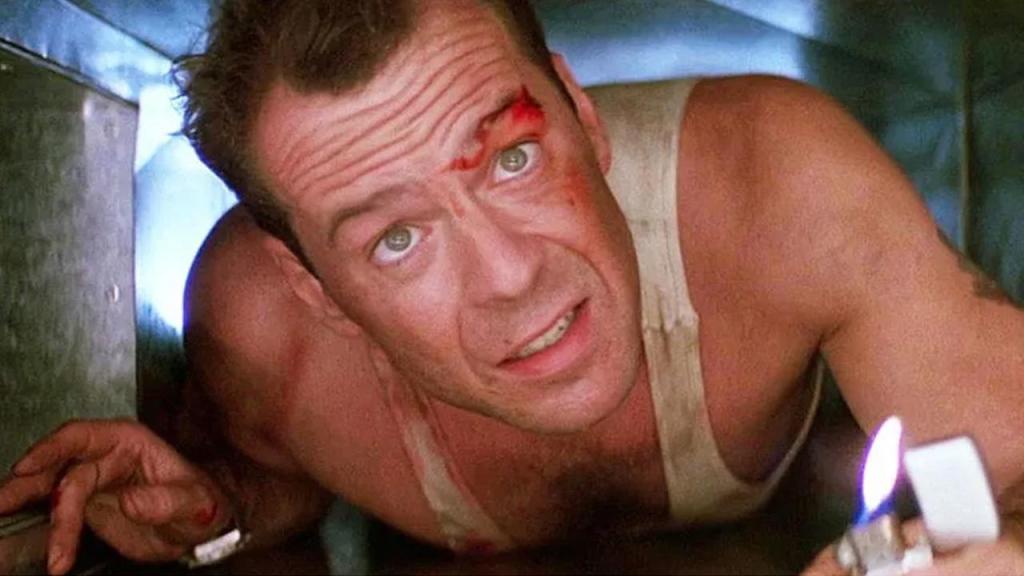
  • Yippee-Ki-Yay, Momma’s Watching Die Hard!

    As a 45-year-old mom of three boys, my life is chaos personified. We’re talking Nerf wars in the living room, backpacks dumped in the hallway, and a soundtrack of “MOMMMM!” on repeat. So when I got the chance to sit down and watch the Die Hard movies, I thought, “Bruce Willis, explosions, and maybe a little nostalgia? Sign me up.”

    Now, as a superfan of Bruce Willis (seriously, have you seen that smirk?), this wasn’t my first ride on the Nakatomi Plaza elevator. But watching it through my tired-mom glasses brought a new perspective. For starters, John McClane is the epitome of the parental energy I aspire to: tired, annoyed, running on fumes, yet somehow saving the day with duct tape and a bad attitude. If McClane can take on terrorists barefoot, I can certainly handle a fourth-grade book report disaster.

    But Are They Really Christmas Movies?

    Ah, the age-old debate. Is Die Hard a Christmas movie? Let’s examine the evidence, shall we?

    The Yes Camp:

    1. It’s set during Christmas. The office party is as awkward as your Aunt Carol’s White Elephant gift exchange.
    2. There are festive lines! “Now I have a machine gun. Ho. Ho. Ho.”
    3. It’s about family. Sort of. McClane’s entire goal is to save his estranged wife and show up Hans Gruber. Sounds like every family holiday gathering to me.

    The No Camp:

    1. There’s way too much blood for a Christmas movie. I don’t remember Frosty the Snowman having a standoff on a rooftop.
    2. Christmas movies typically feature cocoa, carols, and warm fuzzies. Die Hard features bombs, bullet casings, and Alan Rickman falling off a building.
    3. Let’s face it: If Hans Gruber were a Grinch-like figure, the story would end with him growing a heart, not shattering his tailbone on a limo.

    My Verdict

    As a Boy Mom, Die Hard is absolutely a Christmas movie in this house. Why? Because it keeps my kids quiet for 2+ hours and teaches them valuable life lessons, like always wear shoes and never trust a guy in a fancy suit. Plus, there’s something hilariously festive about yelling “Yippee-Ki-Yay!” while untangling Christmas lights.

    So yes, Bruce Willis is now part of our holiday tradition. Move over, Rudolph. McClane is here to save Christmas—and my sanity.

    But hey, whether you think it’s a Christmas movie or not, we can all agree on one thing: Hans Gruber falling off Nakatomi Plaza is the greatest gift of all.

    Pass the popcorn, and Merry Christmas, ya filthy animals!

  • When Growth Feels Like Betrayal: Navigating Family Dynamics During Personal Evolution

    Growth is beautiful. It’s messy, hard, and often uncomfortable, but it’s also deeply fulfilling. However, for those of us growing within dysfunctional family systems, personal evolution can feel like a betrayal—not of yourself, but of them. Suddenly, your pursuit of bettering your life becomes a mirror reflecting their insecurities, their stagnant choices, and their unresolved wounds.

    If you’ve heard phrases like “You think you’re better than us” or “You’re so perfect now,” you’re not alone. These words sting, but they reveal something deeper: their struggles, not yours. The truth is, your growth can disrupt the equilibrium in a family system that relies on everyone staying the same.

    I’ve been on my own personal growth journey for the last four years, and it may seem like a long time to some, but there’s so much to unpack from the baggage of my childhood. Therapy, self-awareness, and a ton of self-reflection has taught me a thing or two, and I’m happy to share these lessons with you.

    Understanding the Dynamics

    1. Projection
      What they accuse you of isn’t necessarily about you—it’s about them. When someone projects feelings of insecurity or failure onto you, it’s easier for them than facing their own discomfort.
    2. The Lack of Grace
      Families steeped in dysfunction often struggle to offer grace because it challenges the roles they’ve assigned. You’ve stepped out of the role they expect you to play—maybe it was “the helper,” “the black sheep,” or “the fixer.” Without that role, they don’t know how to interact with you.
    3. Emotional Outsourcing
      Dysfunctional families often expect one member to manage everyone’s emotions. By focusing on your own growth, you’re inadvertently signaling that you won’t carry that burden anymore, which can create tension.

    Coping Strategies

    1. Set Boundaries, Not Walls
      Boundaries are about protection, not punishment. Let your family know what behavior you will and won’t accept. For example, calmly responding with, “I don’t think it’s fair to assume I think I’m better than you just because I’m working on myself,” can gently reframe the conversation.
    2. Release the Need for Approval
      You don’t need their validation to continue growing. It’s okay if your journey makes others uncomfortable; you’re not responsible for their feelings. Focus on aligning your actions with your values, not their expectations.
    3. Practice Compassion Without Enabling
      While their behavior may hurt, it often stems from pain. Acknowledge their feelings without taking responsibility for them. Say things like, “I understand this is hard for you, but my growth is important to me.”
    4. Find Your Support System
      Surround yourself with people who celebrate your wins and hold space for your struggles. Whether it’s friends, a mentor, or a therapist, having a safe space to process emotions is vital.
    5. Forgive Without Forgetting
      Forgiveness doesn’t mean condoning harmful behavior. It means freeing yourself from resentment so you can move forward unburdened. But forgiveness doesn’t erase the need for accountability or boundaries.

    Moving Forward

    When you’re not given grace, give it to yourself. When they don’t allow you to fail, remind yourself it’s okay to stumble. When they try to pull you into old patterns, stand firm in your growth.

    Your journey is yours alone, and it’s okay if it doesn’t fit their narrative. Keep evolving, even if it means walking a lonely path for a while. Growth doesn’t mean leaving them behind—it means choosing yourself without abandoning them. Whether they join you on this journey or stay behind, your responsibility is to yourself first.

    Remember: You’re not growing to prove them wrong. You’re growing to become who you’re meant to be. That is reason enough.

  • “Take Space,” They Said. “Sit in Your Own Energy,” They Said. But What Does It All Mean?

    Have you ever felt like the health and wellness world is speaking in a code only decipherable by crystal-clutching yogis and smoothie enthusiasts? Phrases like “take space,” “create space,” and “sit in your own energy” sound deep, but they also sound like something a self-help guru would chant before disappearing into a puff of sage smoke.

    Don’t get me wrong—I’m all for self-care. But when someone tells me to “create space,” I’m left wondering: do I need to move furniture? Is this a Marie Kondo thing? Or is it like, emotional feng shui?

    So, because I’m a curious soul (and frankly, a bit tired of pretending I know what anyone’s talking about), I decided to decode these mystical phrases for the rest of us mere mortals.

    1. Take Space

    Translation: Go sit in a corner and ignore everyone.
    Apparently, “taking space” is wellness-speak for saying, “Leave me alone so I can drink my coffee in peace.” It’s about carving out time just for yourself, away from your kids, coworkers, or that chatty neighbor who somehow knows when you’re trying to relax.

    Practical Example: Lock yourself in the bathroom and pretend you’re constipated for 20 minutes. Boom. Space taken.

    2. Create Space

    Translation: Clean up your house. Or your brain. Or both.
    This one is trickier because it’s vague on purpose. “Create space” could mean decluttering your living room. It could mean breaking up with that friend who never Venmos you back. It might even mean throwing out your guilt about binge-watching reality TV. The possibilities are endless, and that’s the point: you decide what needs space in your life and what needs to go.

    Practical Example: Toss out those skinny jeans you’re never wearing again. That’s “creating space” and being honest with yourself.

    3. Sit in Your Own Energy

    Translation: Be awkwardly alone with your thoughts.
    This one’s a doozy. “Sit in your own energy” sounds like the wellness version of being grounded for something. And honestly? It kind of is. The idea here is to stop distracting yourself with Instagram, Netflix, or five million tasks and just…exist. Feel your feelings. Think your thoughts. Maybe have a small existential crisis.

    Practical Example: Sit on your couch with no phone, no TV, and no distractions. Yes, it’s weird. Yes, you’ll survive.

    But Why?

    Okay, so now that we’ve translated the lingo, you might wonder: what’s the point of all this? Why do we need to “take space” or “sit in our energy” when we could just doom-scroll like normal people?

    Well, it turns out these practices are about mindfulness and self-care—just wrapped in a blanket of poetic language. They’re meant to help us slow down, reflect, and make space (there’s that word again) for the things that actually matter.

    Do they sound a bit pretentious? Sure. But when you break them down into everyday actions, they’re surprisingly doable. So the next time someone tells you to “take space,” just smile, nod, and go lock yourself in the bathroom. You’ve got this.

    And remember: it’s all just words—until you make it work for you.

  • Born Too Late: My Love for the Hippie Movement

    Born Too Late: My Love for the Hippie Movement

    For as long as I can remember, I’ve been enamored with the Hippie Movement. It all started with my Aunt Judy, who played a pivotal role in shaping my love for music. She introduced me to the King of Rock and Roll, Elvis Presley, when I was just three years old. He became my first celebrity crush, and from that moment, my musical tastes blossomed under her influence. Aunt Judy’s vinyl collection was like a time machine, transporting me to an era of peace, love, and incredible music. Thanks to her, I grew up listening to The Beatles, The Doobie Brothers, The Grateful Dead, Jimi Hendrix, Janis Joplin, Joe Walsh, and The Mamas & The Papas. These artists left an indelible mark on me, and I’ve always felt a deep connection to that time in history.

    I’ve often felt like I don’t belong in this post-Summer-of-Love world. The 1980s passed by in a blur as I was too young to fully understand or appreciate the trends of the decade. And when I became a teenager in the early 1990s, I found myself rejecting the mainstream. Tight-rolling my jeans and curling my bangs? No, thank you. Instead, I grew my hair out long—no bangs!—and opted for flare-leg jeans and Doc Marten boots. While the world around me embraced grunge and pop culture, I held on to something different. I didn’t want to follow the crowd; I wanted to stay true to what felt natural to me. At the time, I thought I was ahead of my generation, but now, I realize I might just be a reincarnated hippie.

    If I had a dollar for every time someone told me I was born three decades too late, I’d be a very wealthy woman. I’ve always related more to the counterculture movement than to the fast-paced, material-driven world we live in now. The hippie ethos of love, peace, freedom, and community resonates deeply with me. It wasn’t just the music that captivated me—it was the entire lifestyle. I admired how the hippies rebelled against societal norms, advocating for love, understanding, and acceptance in a world that often felt cold and divided.

    The movement itself was more than a protest against war or a rejection of mainstream values. It was a search for something deeper—a desire for love, freedom, and a sense of belonging. The hippies were seeking connection, community, and a place where they could express their authentic selves. In a 1968 article, Baptist Pastor John Bisagno once said, “The kids are searching for authority, love, and understanding—ingredients missing at home. Jesus is what their fathers aren’t.” His words resonated with the era’s search for meaning, love, and acceptance in a world that seemed to lack those very things.

    Even now, I see traces of that search in modern-day movements, but nothing feels quite as genuine or powerful as the original counterculture of the 1960s and 1970s. The hippies had something special—a sense of unity and a desire to create a better world, despite the turbulence around them. They were unapologetically themselves, and that’s something I’ve always admired and tried to emulate.

    So while I might have missed the Summer of Love by a few decades, I still carry its spirit with me every day. Whether it’s through the music I listen to or the values I hold dear, that connection to the hippie movement will always be a part of me. Maybe I was born in the wrong era, but that just means my heart is a little more colorful and a lot more free.

  • The Threat of Independent Women: Unpacking the ‘Emotional’ Accusation

    In today’s society, the narrative of independent women carving out their paths is increasingly prevalent. However, with this empowerment comes a disturbing trend: the tendency for some men to feel threatened by such autonomy. In their attempt to assert dominance, they often resort to labeling these women as “emotional” as a means to belittle their achievements and undermine their capabilities.

    The accusation of being “emotional” is a tactic deeply rooted in gender stereotypes and societal expectations. Historically, women have been portrayed as overly emotional and irrational, while men are perceived as logical and level-headed. This false dichotomy not only perpetuates harmful stereotypes but also serves to delegitimize women’s experiences and opinions.

    When a woman displays assertiveness, confidence, and independence, it challenges the traditional power dynamics, leaving some men feeling insecure and emasculated. Unable to cope with this shift, they resort to gaslighting and manipulation, weaponizing the label of “emotional” to diminish her accomplishments and maintain their sense of superiority.

    But let’s unpack this accusation further. What does it mean to be “emotional”? Emotions are a natural and essential aspect of the human experience, regardless of gender. They serve as valuable indicators of our needs, desires, and boundaries. However, when women express emotions such as anger or frustration, they are often dismissed as being overly sensitive or irrational.

    Moreover, the implication that being emotional is somehow a weakness is deeply flawed. Emotions are not antithetical to competence or professionalism; in fact, they can enhance decision-making and empathy in various contexts. Women should not be penalized for expressing their emotions authentically, nor should they be expected to suppress them to conform to societal expectations.

    Furthermore, the accusation of being “emotional” is often a tool used to silence women and maintain the status quo. By dismissing their concerns as mere emotional reactions, their voices are marginalized, and their agency is undermined. This not only perpetuates inequality but also perpetuates a culture of silence and oppression.

    So, what can be done to combat this harmful narrative? Firstly, we must challenge traditional gender norms and stereotypes that equate emotionality with weakness. Both men and women should be encouraged to express their emotions authentically without fear of judgment or retribution.

    Additionally, we must acknowledge and celebrate the achievements of women without resorting to undermining tactics. Recognizing and valuing their contributions to society is essential for fostering a culture of equality and respect.

    The accusation of being “emotional” is a thinly veiled attempt to diminish the autonomy and agency of women. It is time to dismantle this harmful narrative and embrace a more inclusive and equitable society where women are celebrated for their strength, resilience, and independence.

  • Dog-walking Misadventures

    Yesterday marked the inaugural 2.25 mile walk of the dynamic duo: Daley and Hank. Let me tell you, it was a comedy of errors from start to finish.

    I decided it was high time to take Daley, my 5-year-old Lab, Beagle, Pitbull mix, and Hank, my 5-month-old American Feist, on a joint adventure. I imagined a picturesque stroll down the Tomorrow River State Trail, bonding with my furry companions, and maybe even gaining some street cred as a dog whisperer (just kidding, a little).

    Oh, how naïve I was.

    As soon as we stepped out of the truck onto Twin Towers Road, Daley and Hank transformed into canine drag racers. Daley, weighing in at a solid 50 pounds of muscle, took the lead, while Hank, a sprightly under-30-pounder, eagerly followed suit. And there I was, the hapless human anchor, desperately trying to keep up.

    We charged across County Road R like a furry tornado, dodging startled bike riders and bewildered motorists alike. Under the overpass we went, with me skidding along behind like a water skier holding onto dear life. I’m sure it was quite the sight – a grown adult being towed by two overenthusiastic pups.

    Down Hoover we thundered, leaving chaos and confusion in our wake. Passersby stared, bemused, as I careened around corners, desperately trying to maintain some semblance of control over my four-legged locomotives. At one point, I swear I heard someone shout, “Who’s walking who?!”

    Eventually, we made it home in one piece, albeit slightly frazzled and thoroughly exhausted. Daley and Hank collapsed into contented heaps, blissfully unaware of the chaos they had caused. And me? Well, let’s just say I’ll be investing in some heavy-duty leash anchors before our next adventure.

    But despite the mayhem, I can’t help but chuckle at the absurdity of it all. After all, what’s life without a little canine chaos?

    Hopefully next time we walk I’ll have fewer near-death experiences.

  • The Doer’s Dilemma: Remembering Self-Care in the Chaos

    Hey there, fellow doers! You know who you are – the ones who always seem to have a never-ending to-do list, the go-getters, the fixers, the ones who somehow manage to keep everything together even when it feels like the world is falling apart. Yes, you, the unsung heroes of everyday life.

    Let’s talk about something that often gets overlooked in the hustle and bustle of constantly doing for others – self-care. Yep, that thing we all know we should be doing but often push to the bottom of our priorities because, well, there’s just so much to do, right?

    I get it. I’m guilty of it myself. As someone who tends to take on a lot and put others’ needs before my own, I know firsthand how easy it is to forget about self-care. But here’s the thing – neglecting ourselves in favor of taking care of others isn’t sustainable. Eventually, it catches up with us, leaving us feeling exhausted, burnt out, and frankly, not very effective at helping others.

    So, why do we do it? Why do we put our own needs on the back burner in favor of helping everyone else? Well, for starters, it’s often because we genuinely care about the people around us (or, if you’re like me, you were conditioned from a young age to believe your self-worth is tied to how much you do for others). Whether it’s family, friends, coworkers, or even strangers, we want to make a difference in their lives, and sometimes that means sacrificing our own well-being in the process.

    But here’s the reality check – we can’t pour from an empty cup. In other words, if we’re not taking care of ourselves, we’re not going to be able to effectively take care of others either. It’s like trying to drive a car without ever stopping to refuel – eventually, you’re going to run out of gas.

    So, how do we break the cycle of putting others first and neglecting ourselves? Well, it starts with a mindset shift. We need to recognize that self-care isn’t selfish – it’s necessary. Just like we wouldn’t expect a car to run without gas, we can’t expect ourselves to keep going without taking time to recharge.

    Self-care looks different for everyone, so it’s important to find what works best for you. Whether it’s carving out time for exercise, practicing mindfulness and meditation, indulging in a hobby you love, or simply taking a moment to breathe and relax, prioritize activities that nourish your mind, body, and soul.

    It’s also important to set boundaries and learn to say no when necessary. We can’t be everything to everyone, and that’s okay. Learning to prioritize our own needs doesn’t make us any less caring or compassionate – in fact, it makes us better able to show up for the people who need us most.

    So, to all the doers out there – keep doing what you do best, but don’t forget to take care of yourselves along the way. You deserve it, and trust me, the world will thank you for it.

  • Beneath the Critical Gaze

    In shadows cast by a critical gaze,
    My mother stands, her voice ablaze.
    Her words, like daggers, pierce my heart,
    Tearing what’s fragile apart.

    She sees not the petals, but thorns in bloom,
    Her scrutiny a relentless gloom.
    Every step, every choice, under her eye,
    Measured and weighed, no room to fly.

    In her vision, I am but a flawed creation,
    Each flaw magnified, a harsh narration.
    Her expectations lofty, her standards high,
    Leaving me in constant battle, a silent cry.

    Yet beneath the layers of her harsh critique,
    Lies a love profound, though it may seem bleak.
    For in her striving for perfection’s embrace,
    She yearns for my success, in every race.

    I’ll weather her storm, her judgment profound,
    For in her critique, love may yet be found.
    And though her words may wound and scar,
    I can still love her from afar.

    For she is my mother, flawed yet dear,
    Even if her love comes from a place of fear.
    Through the trials, we’ll find our way,
    And, perhaps, get along one day.