Author: heydanajane

  • Just. This.

    I had taken a much needed break from blogging shortly after my last post. The holidays are a little rough on me this year. Thanksgiving was a simple dinner at home, and I prepared the house for Christmas a few days after that. My usual anxieties popped up and I made the conscious decision to just deal with it.

    I’m trying to recognize my patterns- mental, emotional and physical, so that I can change what isn’t working and maintain the routines that help me feel good about myself. If I’m completely honest, I do love the holiday season, but I also tend to shut down when I know I must face certain things that are uncomfortable or traumatic.

    In having a conversation with my husband, he mentioned that my mood changes drastically in the days leading up to Thanksgiving, Christmas and Easter when I know I will see my parents and siblings. I denied this for many years. I blamed the stress of marriage, raising kids and my job, instead of being honest with myself. The truth is, I don’t like celebrating holidays with my extended family because of the past traumas I endured.

    As a trained people-pleaser, I have always felt that I’ve never been able to meet my father’s expectations. I ‘have believed that I deserved my mother’s criticism of my life choices or parenting style. Instead of addressing these problems head on I always avoided confrontation. I rarely, if ever, spoke up about how their behaviors affected me.

    As the oldest child I was parentified very early in childhood and took on responsibilities for my brothers and sister that should have been reserved for adults. I have slowly started to acknowledge that I have resentment towards them. As a teenager, I was always told by my parents that I had to be responsible, I had to help them with my siblings because they both worked outside the home, they needed me to be mature and take on their roles as parents in their absence.

    You can imagine how my siblings must have felt when my parents put me in charge. I had no understanding of what they were asking me to do, and my brothers and sister believed they “didn’t have to listen” to me because I’m not their mother. But when chores didn’t get done, I was the one my parents punished. We fought constantly. I knew that if they didn’t do their fair share, I’d be in trouble. They knew it, too. If things were a mess they knew I’d take the heat. So naturally, I did their chores, too.

    “You’re the oldest, you need to help them. You’re smarter, they don’t know any better. Just do it if they can’t.”

    That’s a tall order for a 15-year-old girl. It was infuriating, too. I didn’t have a childhood. My siblings did. They had no responsibilities so long as I lived in that house. This is one of the reasons why I moved out as fast as I could after turning eighteen. I needed to escape. I needed to live my own life. I needed to be free from parenting my siblings.

    They don’t see it the same way. They see me as a control freak, someone who has trouble letting loose and just having fun. They accuse me of being tightly wound. I’ve been accused of abandoning them when I moved out, when the reality is I had too many expectations placed on me and I needed to flee for my own sanity.

    It’s true, I have control issues. I’m OCD about cleaning my house. I don’t let the dishes pile up in the sink. I vacuum daily. I make my kids clean their own rooms and do chores. I’ve been criticized as being too tough on my kids by certain family members. This used to upset me, but then I remember they don’t clean their houses the way I do, because they never had to when we all lived in the same house. I was the house keeper.

    I’ve mentioned this to my parents and siblings before and have been met with outrage. They don’t remember how I did the dishes almost daily. They don’t remember the laundry I did for myself and for the rest of my family. How I cleaned toilets and cleaned out the refrigerator. And having a parent who can’t throw anything away made it very difficult for me. Instead they have gaslighted me or told me they don’t remember it happening that way, but they were 14, 12 and 6 when I moved out. I still struggle with these traumas today.

    My husband tells me I have an obsession with cleaning and purging. I am constantly throwing things away. I go through phases of overwhelming urges to get rid of things, followed by moments where I hang on to things that have memories attached. It’s a nightmare. It’s like having a split personality. The OCD side of me is enraged when the house is a mess. The part of me raised by a pack rat wants to save things in case I forget the happy memories associated with the item. Can you imagine the fight inside my brain?

    This is why I spend days cleaning my house for holidays. It’s almost as if I have to prove my worth by how clean my house is and how nice it looks. And then when family arrives, I am so keyed up from stress and anxiety that I want them to leave immediately. I battle myself quietly, trying to tell myself it’s all okay, and things will be fine. It’s still a struggle.

    Therapy has helped with some of this. I have recognized that I’m not at fault for my obsessive tendencies. It’s hard to break free from something ingrained in you as a child. I have learned to acknowledge it, to accept it and to consciously work on changing my habits. It’s not easy. To be honest it’s awful sometimes, but I’m doing the best I can.

    One of the skills I adopted during these moments is mindfulness and meditation. I have learned to be honest about what is happening inside my brain. It’s challenging. It’s also beautiful. One of the mantras I use when meditating is to say the words, “Just. This.” I repeat this phrase to remind myself that what is happening in the present moment is what matters. Not yesterday. Not tomorrow. Today. Present moment.

    I acknowledge my shortcomings I allow myself grace. I accept myself and others for who we are. I forgive myself for allowing others to guilt, shame, manipulate or control me. I forgive others for their mistreatment of me. And I focus on just this, a mantra to carry with me in my daily life.

  • The Value of Assertiveness

    In my early forties, I found myself wondering if my life is anything like I thought it would be at this age. I often feel that something bigger is in store for me, yet I don’t know what that something is; I’m adrift and unsure of my purpose.

    Have you ever felt that way?

    I used to think I was a steady person, not often willing to make drastic changes in my life. Now all I can think about is making big changes to my life. What is this feeling? It’s unsettling. I don’t like it.

    The last fifteen months has been a tornado of change. From acknowledging traumas, recognizing negative behaviors of myself and others, to making the decision to no longer tolerate abuse and manipulation, I have discovered that I’m no longer interested in doing what everyone else thinks I should.

    There have been many lightbulb moments that led me to my journey of defining my values. One of the brightest moments was realizing that I want, and need, to be more assertive.

    What does it mean to be assertive? The dictionary defines assertiveness as being confident, self-assured, and having the ability to express needs easily.

    Being raised in an environment where I was made to believe I didn’t know what I was doing, that my needs weren’t important, I was certainly not assertive and didn’t possess the ability to express what I needed from my parents or siblings.

    To be assertive I have learned to speak up. I no longer expect others to know what I want or need. I have become more open about what works or does not work for me, and I’m not afraid to be honest when my boundary lines have been crossed.

    When communicating verbally or in text or email, I have taken time to think about my words. It is important for me to understand other people’s points of view, to consider all sides of a situation and to use assertive statements such as, “I think” and “I feel” instead of saying “you always” or “you never.”

    Being assertive means I am never passive nor aggressive. Being assertive means being direct and honest. And the first step toward assertiveness is creating boundaries that help me decide what I will and will not allow, and this helps me decide the best way to communicate.

    For me, communicating my needs has helped me feel less anxious about my interpersonal relationships. My husband and children know my boundaries. We have eliminated many miscommunications and everyone is more willing to discuss issues freely. The quality of my friendships has improved, too. I no longer tolerate negative behavior and I’m more aware of my own attitude toward negative people.

    Are you an assertive person? Or, do you tend to be passive-aggressive? In what ways will effectively communicating your needs improve your life?

  • For Good

    Sometimes good things fall apart so better things can fall together.

    – Jessica Howell

    I haven’t written about therapy or my family in a long time. I have finally come to accept that they will never acknowledge their treatment of me, nor will they apologize for pain they have caused.

    In September, my father asked me to put my “grievances” in a letter. His exact words were, “Send it in a letter and put time frames together because I think I will need time to digest.”

    I haven’t heard from him since. He hasn’t responded to subsequent emails and he didn’t attend my son’s confirmation Mass last Sunday. My mom said he was sick. That may be true. It also might be an excuse not to face me. I suppose I won’t know the truth.

    I’ve been distant with my siblings for awhile. I feel that I’m now an outsider. I am quite fine with it, I suppose. My life has been far less stressful and I’ve experienced fewer anxiety attacks.

    I don’t know if I’ll ever reconcile with my family of origin. I don’t know if I want to reunite. I do know that I won’t tolerate manipulation, guilt or shame for doing what’s best for me.

    Over the weekend when seeing the musical Wicked with friends, I had a moment of sorrow wash over me. It was during the song, For Good, that I was suddenly sad.

    I thought about how much my mother would have enjoyed the show. Actually, she would have hated paying “too much” for a ticket, but I know she would have loved the music, costumes, and stage design as much as I did.

    I was emotional thinking about the time I’ve lost since this family “trouble” began. I started to miss my dysfunctional family, and that feeling made me question my own sanity, because my family relationships have fallen apart.

    But then I realized that while I’m no longer involved with my family, it was my choice to distance myself, and I needed to walk away from anyone that doesn’t love me unconditionally.

    What I’ve gained in the process is self-worth, confidence, and healthy friendships. I have invited people into my life who have similar values. I have found people who see the good in me, always, instead of trying to fix me, or control me.

    I’ve heard it said
    That people come into our lives for a reason
    Bringing something we must learn
    And we are led
    To those who help us most to grow
    If we let them
    And we help them in return
    Well, I don’t know if I believe that’s true
    But I know I’m who I am today
    Because I knew you

    Listening to these lyrics helped me realize that better things have fallen together for me. I have found friendships that are meaningful with people who love my personality. These friends don’t hesitate to congratulate me on my successes, tell me I’m beautiful (inside and out), or acknowledge my feelings.

    And just to clear the air
    I ask forgiveness
    For the things I’ve done you blame me for
    But then, I guess we know there’s blame to share
    And none of it seems to matter anymore

    I’m choosing to forgive my family. I’m choosing to love them unconditionally. I’m choosing to forgive myself and move forward in the way that serves my best interests. I’m choosing to make myself a priority and to surround myself with people I love, who love me, too.

    During the last verse of the song my friend Kat leaned over and gave me a side hug. I’m so grateful to have her in my life. New friends can never replace my family, but they definitely come close. The best part is I get to choose who I let into my life.

    Things fall apart so that better things fall together. And I’ve been changed for the better.

    I do believe I have been changed for the better
    And because I knew you
    Because I knew you
    Because I knew you
    I have been changed
    For good

  • Wicked!

    This weekend I had the privilege of seeing the musical Wicked with friends. It was a last minute invitation as one of the original parties was unable to attend. When my friend asked me if I wanted to go along I didn’t hesitate to say yes!

    This musical has been on my bucket list for years. I’ve always been a fan of the Wizard of Oz, even dressing up as Dorothy one year for Halloween, and this show was nothing I thought it would be. It was more!

    The cast was brilliant in their roles, the stage design and costumes were spectacular, and the music! Oh, the music. I am still high on this performance, so I am struggling to find the proper words to describe my experience. I just loved it. Absolutely loved it!

    Wicked!

    The best part is that this group of friends loves to see musicals and stage performances and they have invited me to see Mean Girls in January. This should be a hoot!

    Are you a fan of performing arts? Share your favorites with me!

  • Living My Values

    I’ve always envied people who are fortunate enough to know who they are and the values that are most important to them. They know how to make decisions because their values guide them. They are confident and comfortable with themselves.

    But what about the rest of us, the ones who feel clueless and adrift in life?

    We live in a world of intense distraction. We are pulled in many directions. We are navigating mental pollution, and in the process, we have lost touch with what really matters to us.

    I often feel like I’m living my life on autopilot. I sometimes make decisions passively, in the rush of daily life, with no time to reflect on what I truly want or what’s most important to me.

    Somewhere amidst all the chaos I found myself asking, what are my values? And, do my values belong to me, or have I inherited someone else’s?

    In my therapy journey I’ve had to strip down to the core values in which I was raised. I’ve examined my beliefs. I’ve opened my heart and mind to other ways of thinking. It’s a very terrifying experience, but also necessary.

    I realized how tightly I had clung to what I was taught as a child, but never really examined why I aligned myself with any of it. The difficult part was discovering how challenging it is to let go of what’s familiar and embrace what’s true for me.

    Through self-awareness, I’ve learned to let go of what doesn’t serve my life. I discovered that I don’t always agree with the beliefs or politics that have been passed on to me. I hid what I truly believed and suppressed my opinions to avoid confrontation or judgment.

    I am giving up the values and beliefs that do not belong to me and taking ownership of my own values.

    We all have core values, whether we’re aware of them or not. They remain with us for most of our lives. They sometimes shift and change over time, but mostly remain stable throughout our lives.

    After many months of self-reflection and learning how to re-parent my inner child, I realized that I need to identify my values.

    To begin this process, I asked these questions:

    • What matters most to me?
    • What do I stand for?
    • What am I made of?
    • What are my values?
    • How do I know my actions and decisions reflect my values?

    This morning I came across a quote from Michelle Obama that resonated with me:

    “I have learned that as long as I hold fast to my beliefs and values, and follow my own moral compass, then the only expectations I need to live up to are my own.”

    As I read these words over and over, I asked an important question. How can I live up to my own expectations?

    Suddenly, I had an answer. I need to live my values.

    Identifying my values is the goal for the remainder of 2021. Living my values is the goal for 2022 and beyond.

    If you’re feeling the way I do and want to jump on board the values train, stay tuned for my weekly blog post on this topic. Let’s learn and grow together.

  • Photography: A Path to Healing

    My love for photography began in high school. I had taken a class as an elective credit. I was a terrible photographer back then, but I loved taking pictures. I learned how to develop my eye and how to develop film. Remember film? Does it age me to say I’m old enough to have worked in a darkroom developing my own photos? I can still smell the chemicals and recall how disgusting it was if you accidently got any on your hands.

    Over the years my photography skills have improved. My most favorite things to capture are portraits of family, friends and pets. But I also have an affinity for photographing architecture; namely churches, old buildings and houses, and nature landscapes. Some of my favorite works are of nostalgic places from my childhood.

    By now you know I’ve used this forum as catharsis for my therapy. But lately, I’ve discovered that my healing is a journey and I can spend time venting and releasing my emotional demons, or I can focus that energy into something positive and worthwhile.

    I’m choosing positivity and focusing on my true passion: Photography.

    One of the first projects I’ve had in mind for quite a long time is capturing the local churches in Portage County. I was raised Catholic and we have some of the most beautiful parishes in this area. Thus, I started a series I’m calling Churches of Portage County. I plan to expand this project as time allows, eventually taking pictures of the beauty inside each. And of course, I’ll work toward feature churches of other denominations as well.

    Stay tuned! For now, here’s a sample of my work:

    Holy Spirit Parish, Stevens Point, Wisconsin

    There’s definitely more to come and I can’t wait to share with you!

    You can find the full album of Holy Spirit Parish, here.

  • Leaving the Dysfunction

    What happens when you distance yourself from your dysfunctional or narcissistic family?

    You begin to heal. And it’s painful.

    You feel as though you had been asleep your whole life, and suddenly you’re awake.

    You begin to see things from another perspective. You see things for what they truly are. You notice behavior that you previously ignored in order to survive.

    It’s brutal.

    You come face to face with a reality that changes everything you thought you knew about yourself and your life.

    You face the truth. You realize you have little to no self-esteem, self-confidence or self-worth, and you were groomed to believe these false truths.

    My narcissistic family demanded that I be agreeable, compliant, and subservient. I was never taught how to love and accept myself. I was taught to hate myself for being a normal, imperfect human being. When you’re the child of a narcissist, you question every decision you make because you’ve been taught you can’t trust yourself or your instincts.

    When you’ve been abused this way for decades, it leaves a painful mark on your life. You’ve always felt lonely and unsupported. You soon realize the person you loved and trusted is actively trying to sabotage your life and your happiness.

    After going no contact with a narcissistic family, it soon becomes very clear that you were always alone, you just didn’t know it.

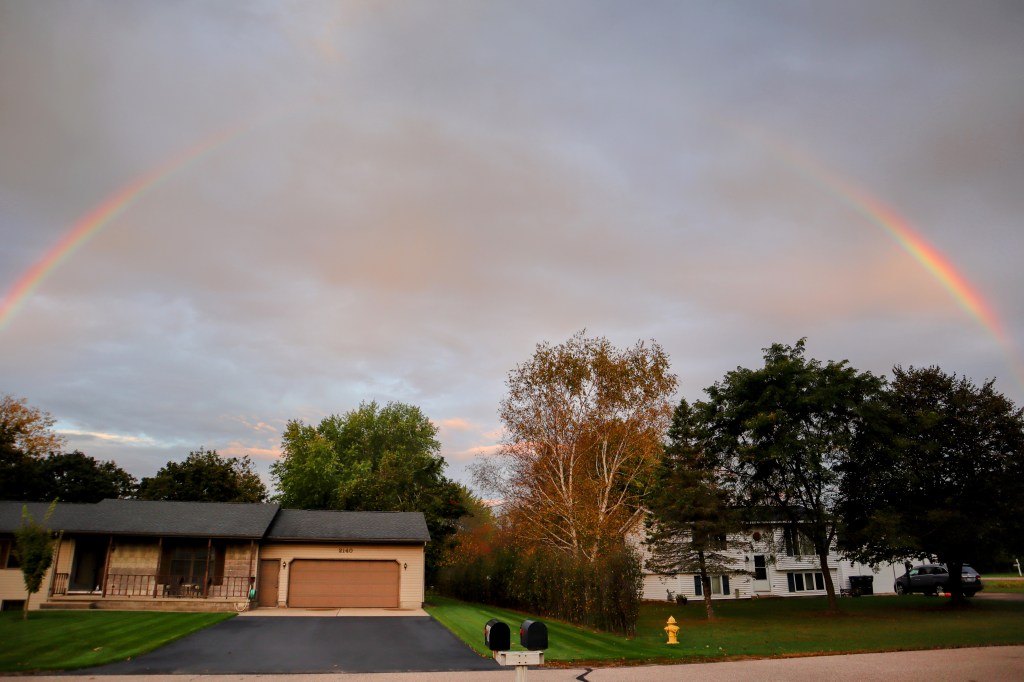
  • Somewhere Over the Rainbow

    Somewhere over the rainbow…

    Just when you think the chaos in your life will never end, God reminds you He is still here and won’t let you down.

  • On Being Told to Let It Go

    I had a realization this morning that has me thinking about this journey I’m on.

    Some people are uncomfortable with me sharing my truth. It makes them nervous. It forces them to realize that I will no longer cover for them.

    In the past, I always tried to be a peacemaker. I avoided conflict.

    That doesn’t work for me anymore.

    I’m not going to ignore the badmouthing behind my back. I’m not going to “just let it go.”

    If calling someone out on their bad behavior upsets them, perhaps they should shut their big mouths.

    If they don’t want me telling the truth about the abuse they continue to perpetuate, perhaps they should stop abusing me and seek therapy.

    The perfect family image was shattered years ago. This dysfunction continues because they let it continue.

    I cut myself off from these people for a reason. It’s not healthy for me to be with them.

    The anxiety and panic attacks are unbearable. I don’t want to live my life walking on eggshells because certain people feel entitled to control me or treat me poorly.

    “But they’re your family…”

    I hear this quite often from people who are close to my family members. It makes me wonder if they’ve been recruited to hoover me back into the dysfunction. Every time I hear it, this is my response:

    So what?

    Does being family mean they are entitled to treat me however they want? Does being family mean I’m obligated to tolerate it?

    These people have no idea what I’ve been through. Until they’ve walked in my shoes they don’t get to give me their advice.

    The people-pleaser inside me was always terrified to ruffle feathers. Now she’s mad. She’s tired of being treated like she exists solely to make others happy or feel comfortable.

    Those who are uncomfortable with me speaking up and using my voice should really start looking inward to figure out why this bothers them. It’s not my job to heal their insecurities or fix their fragile egos.

    Maybe they need to “let it go.”

  • Empowerment: Taking Back Your Life

    After years of feeling powerless I have finally begun the process of taking ownership of my life. To control my life I must be responsible for it. The first part of taking responsibility is accepting it, instead of denying it exists.

    Abuse is about power, and when you’ve been manipulated and guilted for years, it’s not easy to take your power back. When I was dealing with conflict with my family members I often wondered why they were treating me so terribly. Why is this happening to me? How can they be so controlling?

    It’s easier to deny what’s happening, then you don’t have to deal with it. I can’t live in denial. It’s unhealthy and harmful.

    Now that I have acquired coping skills I choose to liberate myself. I get to choose. I am freeing myself from being a victim. I may not have control over the way others behave toward me, but I do have control over what I will and will not tolerate.

    Now I ask, what are my solutions? What am I going to do about this? Do I need to do anything about this?

    Empowerment is a choice. It is accepting the realities that exist in the moment. Even if we do nothing, it’s important to realize that doing nothing is also a choice. Once you accept this you become “unstuck” and can create possibilities for yourself that didn’t previously exsist.