Author: heydanajane

  • Farewell to ‘Mr. Baseball’: Remembering Bob Uecker’s Wit, Wisdom, and the Voice of the Brewers

    Today, the world bids farewell to Bob Uecker, affectionately known as “Mr. Baseball,” who passed away at the age of 90 after a private battle with small-cell lung cancer.

    For many, including myself, Bob Uecker was more than just the voice of the Milwaukee Brewers; he was the soundtrack of our summers, the humor in our hardships, and the constant companion through countless innings.

    Growing up in Wisconsin, tuning into Brewers games meant inviting Bob’s wit and wisdom into our homes. His signature home run call, “Get up! Get outta here! Gone!”, echoed joyously through our living rooms, turning moments of play into lifelong memories.

    Bob’s journey from a modest playing career to a celebrated broadcaster is a testament to his resilience and charm. As a catcher, he humbly joked about his .200 batting average, yet it was this self-deprecating humor that endeared him to fans nationwide. His transition to the broadcast booth marked the beginning of a 54-year tenure with the Brewers, where his storytelling prowess transformed even the slowest of games into captivating narratives.

    Beyond the diamond, Bob’s charisma found its way to the silver screen. His portrayal of the irreverent announcer Harry Doyle in the “Major League” film series remains iconic, with lines like “Just a bit outside” becoming part of the baseball lexicon. As George Owens on the sitcom “Mr. Belvedere,” Bob showcased his versatility, bringing laughter to households across the nation.

    In Milwaukee, Bob was more than a broadcaster; he was a beloved figure whose contributions were commemorated with two statues at the Brewers’ stadium.

    Reflecting on his life, it’s clear that Bob Uecker was the heart and soul of the Brewers and a beloved figure in Wisconsin, celebrated for his wit and ability to connect with audiences.

    As we mourn his passing, we also celebrate the indelible mark he left on the world of sports and entertainment. Bob Uecker’s legacy will forever be intertwined with the game of baseball, the laughter he brought to millions, and the memories he helped create for fans like myself. Rest in peace, Mr. Baseball.

    Gene Trindl/TV Guide/Everett Collection
  • Rise Above: Why Supporting Todd Ashbeck Is the Right Thing to Do

    Betrayal is a harsh tune, and unfortunately, Todd Ashbeck knows it all too well. After pouring 12 years of heart, soul, and pure grit into Rising Phoenix—a band he founded—Todd was blindsided by the ultimate betrayal. His so-called “bandmates” unceremoniously ousted him from the very group he created. What’s worse? They’ve tried to carry on without him, as if Rising Phoenix wasn’t Todd’s brainchild from the start.

    Let’s get one thing clear: Rising Phoenix without Todd Ashbeck is no Rising Phoenix at all.

    Todd’s story is one of passion, dedication, and relentless drive. He didn’t just start a band; he built a legacy. He handpicked members, made connections with venues, and kept the band alive even when others faltered. And how was this loyalty repaid? By a coup orchestrated behind his back, led by individuals who couldn’t even respect the man who gave them their platform.

    Let’s break it down:

    • The Undeniable Truth: Todd founded Rising Phoenix in 2012, long before his former bandmates joined the fold.
    • The Backstabbing: Key decisions, including the firing of another member, were made without Todd’s knowledge.
    • The Smear Campaign: They’re now trying to paint Todd as the bad guy, twisting his words and actions to suit their narrative.

    But Todd’s passion and integrity can’t be erased with a few petty lies.

    What kind of “friends” plot to push someone out of their own creation? Todd’s account exposes the lack of respect, underhanded tactics, and toxic dynamics that led to this fallout. From rejecting great show opportunities to griping about money and venues, these former members clearly lacked the dedication Todd demanded.

    And let’s not even get started on band member, Josh. By Todd’s account, “The New Guy” had been scheming from the start, undermining Todd’s leadership at every turn. If this is how they treat a leader and founder, what’s stopping them from betraying others?

    Venues, take note: booking the so-called “Rising Phoenix” without Todd is supporting theft—plain and simple. This isn’t just a matter of band politics; it’s about integrity. Venues that respect artistry and the hard work it takes to build something from the ground up should refuse to support Todd’s former bandmates.

    Instead, we encourage venues and fans alike to stand with Todd as he rebuilds under a new band name. This new chapter promises the same passion, talent, and energy that Todd has always delivered—this time with a team that truly values him.

    Todd Ashbeck is a fighter, and he deserves our support. After 50 years in music, he’s not about to let a group of backstabbers silence his voice. His resilience and commitment to his craft are qualities we should all admire and support.

    To the venues considering booking “Rising Phoenix” without Todd: Don’t. There’s only one true Rising Phoenix, and it’s the one with Todd at the helm.

    To the fans: Let’s rally behind Todd and make sure the world knows the real story. Follow him, support his upcoming shows, and let’s help him rise above this betrayal.

    Todd, we’ve got your back.

    Stay tuned for updates as Todd reclaims his rightful place in the music world—because legends don’t lay down; they rise.

  • The Great Squirrel Caper: A Tail of Wits, Barks, and Bonks

    There’s an A-hole squirrel in my neighborhood, and no, I’m not exaggerating. This little nut-hoarding menace has turned my peaceful home into a canine version of NASCAR. Daley and Hank, my beloved fur-children, are obsessed. OBSESSED. I’m not even sure this squirrel actually collects acorns; his full-time job seems to be taunting my dogs.

    Every single day, this pint-sized instigator follows the same clever route like he’s auditioning for Mission: Impossible. He starts on the tree in the front yard, pauses dramatically as if to say, “You see me, don’t you? I’m irresistible.” Then he catapults onto the roof, sprinting across it with the grace of an Olympian (or so Daley and Hank must imagine, judging by their hysterical barking). The pièce de résistance? He leaps onto the tree to the north like some acrobatic villain in a Pixar film.

    Daley and Hank, meanwhile, have memorized his routine better than I’ve memorized my Netflix password. They race back and forth between the living room window and the bedroom window, barking with the passion of two dogs whose life’s purpose is to catch this smug little rodent.

    And here’s the kicker: sometimes, in their squirrel-induced fervor, they forget the layout of the house. That’s when the magic happens. They take off running so fast they can’t hit the brakes in time and—WHAM!—full headbutt into Owen’s bedroom door.

    It’s the kind of chaos you’d expect in a Looney Tunes cartoon. The door shakes, the dogs look momentarily stunned, and I’m left wondering if I should apologize to Owen or just blame the squirrel. (Let’s be real—it’s always the squirrel’s fault.)

    The best part? This little acorn-brained delinquent knows exactly what he’s doing. Sometimes he’ll stop mid-tree just to wiggle his tail like he’s mooning my dogs. And Daley and Hank, sweet but not particularly bright, fall for it every time.

    I’m considering putting up tiny “Wanted” posters with a squirrel sketch and a reward of unlimited belly rubs. But for now, I’ll just enjoy the chaos, the door headbutts, and the reminder that even a squirrel can have main-character energy.

    Daley, Hank, and that A-hole squirrel: the stars of my very own sitcom.

  • “Dear Children, Please Go to Bed”

    By 8 p.m., I’m done. Like, stick-a-fork-in-me done. The kind of done where your body feels like it’s been carrying a backpack full of bricks all day, and your brain has the processing power of a potato. You’d think after working all day, shuttling kids to practices, making meals, and answering 1,276 “Mom?” questions, I’d deserve some peace. But no. My children treat 8 p.m. as the perfect time to turn into caffeinated circus performers.

    Why, oh why, do they seem most alive when I am most dead inside?

    Maybe it’s the thrill of bedtime rebellion, or maybe they’ve somehow tapped into my last nerve and decided to bounce on it like a trampoline. Whatever the reason, come 8 p.m., they’re buzzing around, inventing entirely new ways to delay bedtime, test my patience, and provoke existential crises.

    “Mom, I need cold lunch for tomorrow!”
    “Mom, my sock feels weird!”
    “Mom, can you help me find my stuffed llama that I haven’t thought about in three years but now I suddenly can’t live without?”

    Meanwhile, I’m standing there, dead-eyed, muttering something like, “Go. To. Bed.”

    The thing is, I need them to go to sleep—not just for their sake (yes, I love you and want you rested and healthy, blah blah blah)—but for mine. I need that sweet, quiet alone time to unwind, stare blankly at Netflix, and maybe, if I’m feeling ambitious, fold half a basket of laundry before passing out. And here’s the kicker: if you don’t go to bed, neither can I.

    But my kids? They don’t care about my exhaustion. They’ll happily argue about the injustices of bedtime while doing gymnastics on the couch. They’ll ask deep, philosophical questions about life just as I’m trying to turn off the lights. They’ll suddenly need to talk about the thing that happened at school three weeks ago, and if I don’t listen right now, they’ll be emotionally scarred forever.

    So here I am, at the end of my rope, begging the universe for mercy while simultaneously Googling “why are kids insane at night.”

    To be clear, I love my children. They’re wonderful little humans full of curiosity, energy, and spirit. But after 8 p.m.? They’re too much. They become wild, uncontainable forces of nature, and all I want is for them to brush their teeth and close their eyes.

    Every night, I try to be zen about it. I promise myself I’ll stay calm. But by 8:30, my inner monologue is screaming: “I CANNOT WITH THESE PEOPLE. GO TO BED BEFORE I SELL ALL YOUR TOYS AND YOUR VIDEO GAMES.” And at that point, I’m not even pretending to be patient. I’m ushering them to their rooms like a cranky flight attendant shoving passengers down the aisle.

    So, dear children, please understand this: I love you endlessly, but my capacity for nonsense expires promptly at 8 p.m. If you see me after that time, I’m not your mom anymore—I’m just a tired shell of a person trying to survive until tomorrow.

    Now go to sleep before I lose whatever shred of sanity I have left. Please and thank you.

  • Skol? More Like LOL: Vikings Fall Short Again

    Ah, Minnesota Vikings fans. The eternal optimists of the NFL. Every year, without fail, they come out swinging with their purple-and-gold dreams of finally breaking the curse and hoisting that elusive Lombardi Trophy. And every year, like clockwork, reality gently (or not-so-gently) reminds them, “Not today, my friend.”

    The Vikings’ latest heartbreak came in the form of a 27-9 beatdown by the Los Angeles Rams. That’s right—just nine points. To put that in perspective, that’s the same number of points you’d score if you lost two rounds of bar trivia. And yet, as I sit here sipping my coffee from a Packers mug (taste that? It’s victory… from 2011), I can’t help but chuckle at how predictable this all was.

    Minnesota’s golden boy Sam Darnold got acquainted with the Rams’ defensive line in a way no quarterback should—nine sacks, folks. Nine! At this point, Darnold isn’t just seeing Rams in his nightmares; he’s probably naming them. “This one’s Aaron, that one’s Jared, and over there is Mr. I’m-Coming-For-You-Again.”

    Of course, Darnold, ever the stoic, offered his standard quarterback mea culpa after the game: “I clearly haven’t played good enough the last couple of weeks.” No kidding, Sam. Completing 25 of 40 passes for a respectable-looking 245 yards and a touchdown only sounds decent if you ignore the 18% sack rate and the fact that he was still hanging onto the ball like it was a family heirloom at a yard sale.

    The Rams didn’t even need a superhuman effort to pull this off. They just let their defense plunder away while the offense rode the momentum of a scoop-and-score fumble return. Jared Verse’s 57-yard sprint to the end zone might as well have come with theme music and a montage of Vikings fans sighing in unison.

    And while we’re on the subject of momentum, let’s talk about the Vikings’ playoff hopes. They had one job: beat the Lions last week, secure a bye, and prepare for a playoff run. Instead, they followed up that blunder with this disaster. From a 14-win season to a one-and-done playoff exit—Minnesota didn’t just drop the ball; they fumbled it, kicked it, and watched as the Rams ran it back for a touchdown.

    Head coach Kevin O’Connell tried to sprinkle in some coach-speak optimism: “We’ve got to find a way to check the ball down and just keep moving the ball forward.” But, Kevin, if you’re checking down on fourth-and-21, you’re not moving the ball forward—you’re moving your vacation plans forward.

    So here we are, Vikings Nation, another season of hope dashed on the jagged rocks of postseason reality. But hey, look on the bright side: there’s always next year. And if not, at least you can join me in celebrating our Packers victory… from 2011.

    Photo by Mark J. Rebilas
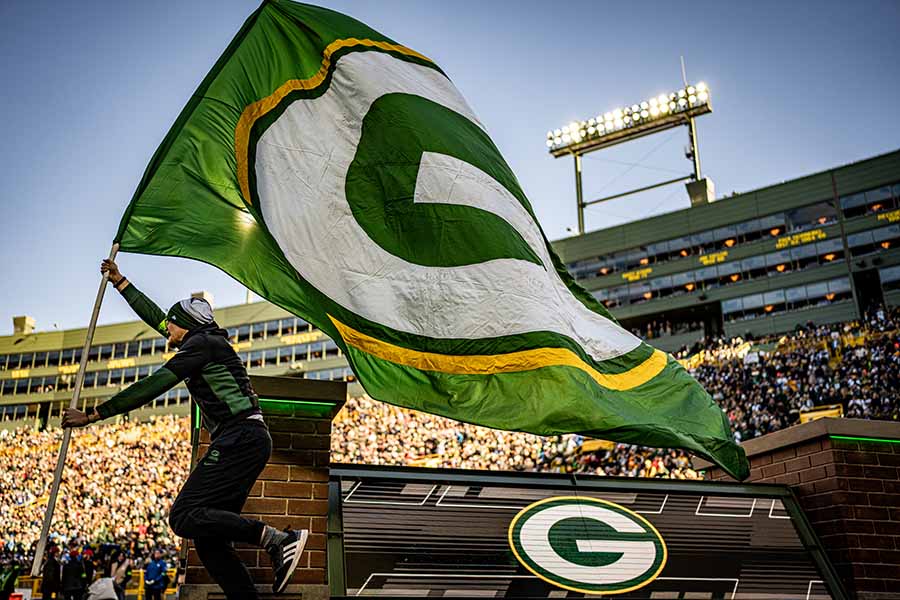
  • Hanging Up Hope: Until Next Season, Packers

    Today, I hung my Packers jersey in the closet. Not with anger, not with despair, but with the kind of bittersweet reverence only a true fan knows. After last night’s crushing playoff loss to the Eagles—22-10, in case you’ve blacked it out already—it feels like the end of a journey. The kind where you walk home in the rain, telling yourself the weather matches your mood.

    That jersey, though. It’s not just a piece of fabric; it’s a battle flag. Over the months, it’s soaked in every cheer, every groan, every hopeful “Go Pack Go!” This season, it’s been there through the highs of fourth-quarter comebacks and the lows of “How did we miss that tackle?” moments. It was there last night, too, as we fought to stay alive and watched our hopes slip through frozen fingers.

    Hanging it up today wasn’t easy. It never is. There’s an ache in knowing I won’t wear it again until the leaves are turning, the air is crisp, and the promise of a fresh season lies ahead. Eight months feels like a lifetime when you’re counting Sundays.

    But as I carefully placed it among the others—each Packer shirt a reminder of seasons past—I felt something else, too. Gratitude. Because even in a losing season, this team gives us so much. Community. Passion. The belief that maybe next year, we’ll hoist that Lombardi again.

    So, for now, I’ll fold away the frustration, tuck in the disappointment, and let hope linger in the air like Lambeau snow. The jersey might be out of sight, but the memories of this season won’t fade. Nor will the anticipation of what’s to come.

    Until then, we rest. We recover. And when September rolls around, we’ll suit up again. Because no matter how painful the losses, the victories always make it worth it.

    See you next season, Green and Gold.

    Photo courtesy of the Green Bay Packers.
  • Shopping Adventures with Owen and Gannon: Life Lessons on Marriage and Money

    Saturday morning started on a high note—house cleaning! I know, I know, thrilling stuff. But with the promise of a trip to Dollar Tree as a reward, Owen and Gannon were surprisingly helpful. What can I say? The allure of $1.25 treasures is powerful.

    Once the house sparkled (or at least looked less like a tornado hit it), we headed out to Dollar Tree, where they gleefully loaded up on candy, stickers, and whatever else their hearts desired. Mission accomplished, right? Not quite.

    Lunch was the next stop, and we hit up Mi Pueblo Mexican restaurant for chips, salsa, and some much-needed tacos. But the story doesn’t end there. Conveniently located next to Mi Pueblo is Ulta Beauty—an irresistible beacon of temptation for those of us with a weakness for skincare and makeup.

    That’s when Owen, my 15-year-old, surprised me. “Can we go to Ulta?” he asked, completely serious. Turns out, my teen son is all about checking out the latest colognes. I know, right? Who is this GQ gentleman-in-the-making?

    “I don’t know, Owen,” I said, trying to resist the trap. “Your dad will get mad if I spend money there. I don’t want to get a lecture as if he’s my dad.”

    Cue Gannon, my ever-spirited backseat commentator: “You’re a grown woman! You can do what you want!”

    While I appreciated his confidence in me, I had to set the record straight. “Yes, I CAN do what I want, but that doesn’t mean I SHOULD. Big difference, buddy.”

    Owen, however, wasn’t ready to let the conversation go. “When I get married, I’m going to give my wife lots of money so she can spend it however she wants. You make more money than Dad. Doesn’t that make you the boss?”

    And there it was—the jackpot comment. Naturally, I couldn’t let it slide. “Owen, when you get married, I’m going to share this conversation with your wife.”

    Before I could relish the thought, Gannon jumped in, determined to top his brother. “When I get married, my wife AND kids get to buy stuff when they want!”

    At that point, we were all laughing so hard we could barely breathe. But as funny as it was, it hit me—this was the perfect teachable moment. My boys are already plotting how to handle marital money, so maybe it’s time for a crash course in finances and relationships. After all, managing money will be very difficult if they are buying things whenever they wish!

    So, we skipped Ulta this time (you’re welcome, Huz), but the day wasn’t a loss. Between tacos and treasures, we walked away with some solid laughs and maybe—just maybe—a few life lessons about money, marriage, and the fine art of knowing when to say no to temptation.

    Parenting: where every shopping trip is an adventure and every conversation is future blackmail material.

  • The Heartbreak of California Wildfires: A Reflection on Loss, Privilege, and Coming Together

    As wildfires rage through southern California, I am overwhelmed by the devastation. The images of entire neighborhoods reduced to ash, families fleeing with only the clothes on their backs, and communities grappling with unimaginable loss are heartbreaking. My heart goes out to everyone affected, especially those who have lost their homes, cherished possessions, and sense of security.

    In moments like these, the human toll should take center stage. However, I’ve been struck by how much media attention is focused on celebrities who have lost their homes. While it’s undoubtedly tragic for anyone to lose everything, I find myself questioning the imbalance in coverage. These celebrities are, by and large, a very privileged group. They often have the means to rebuild, thanks to high incomes, excellent insurance policies, and vast support networks. For them, recovery is an inconvenience rather than an insurmountable challenge.

    That said, I know it’s devastating for anyone to lose their home—celebrities included. I’ve read many comments from people who have no sympathy for them, and I don’t agree with this sentiment. Loss is loss, no matter who you are. The idea that their pain is somehow invalid because they are wealthy doesn’t sit right with me.

    Even more upsetting are the remarks claiming that these fires are God’s judgment, a punishment brought upon “sinful Hollywood.” These comments are not only unkind but also presumptuous. None of us knows God’s plan, and it’s not our place to judge others or assume we understand His will.

    In the wake of such destruction, I believe God’s call is not for division or judgment but for unity and compassion. This is a time for everyone to come together, to be helpers in whatever way we can. Whether it’s donating to relief efforts, offering a listening ear, or simply praying for those affected, we all have the power to make a difference.

    Let’s remember that this devastation affects people from all walks of life—rich and poor, famous and unknown. While I hope celebrities who’ve experienced loss use their platforms and resources to advocate for wildfire survivors, I also hope we focus on the everyday heroes: neighbors helping neighbors, firefighters risking their lives, and families starting over from scratch. These are the stories that inspire hope and bring communities together.

    The wildfires are a stark reminder of how unpredictable and destructive life can be. Yet, in the face of this tragedy, we have an opportunity to show the best of humanity—our resilience, our generosity, and our ability to uplift one another. May this be a moment for unity, empathy, and meaningful change.

    Fire crews battle the Kenneth Fire in the West Hills section of Los Angeles, Thursday, Jan. 9, 2025. (AP Photo/Ethan Swope)
  • Female Robots for Human Companionship: Another Way the Patriarchy is Replacing Women

    Lately, I’ve been reading about the rise of female robots for human companionship, and honestly, it has me shaking my head. These robots, designed to be emotionally and physically “perfect,” feel like another step in the wrong direction when it comes to how society views women. To me, this isn’t just about technology—it’s about control, objectification, and the lengths the patriarchy will go to erase the complexities of real women.

    The Growing Market for Female Robots

    We’ve all seen the headlines: lifelike robots with flawless appearances and the ability to hold basic conversations are becoming more common. Companies like RealDoll and Hanson Robotics are at the forefront of creating female robots meant to “fulfill” emotional and physical needs. And here’s the kicker: nearly all of these robots are modeled after women.

    A 2020 report from the Foundation for Responsible Robotics found that while female robots dominate the market, there’s hardly a push for male counterparts. Why? Because these robots aren’t about connection—they’re about catering to a very specific (and outdated) version of femininity that’s all about being attractive and agreeable.

    A Patriarchal Fantasy Come to Life

    It’s impossible to ignore the patriarchal undertones here. These robots are basically the physical embodiment of male fantasies: beautiful, compliant, and completely programmable. No agency. No opinions. No complexity. They’re marketed as the “perfect partner,” but let’s call it what it is—a way to eliminate the need for real women and the real work that relationships require.

    This trend also ties back to how society assigns gender to roles. Several studies have found that most robots default to male unless the role is caregiving or service-related—then suddenly, they’re feminized. The message is loud and clear: women, whether real or robotic, exist to serve.

    The Danger of Replacing Real Connection

    Here’s what really worries me. These robots don’t just reflect outdated gender roles—they reinforce them. By creating a “perfect” version of femininity, we’re sending a message that real women, with their thoughts, feelings, and boundaries, are too much to deal with.

    And what happens when people get used to this? A 2017 MIT blog post suggests that overexposure to emotionally simplistic AI can actually harm a person’s ability to navigate real human relationships. Think about that: the more someone interacts with a robot programmed to please them, the less likely they are to handle the complexities of a real, messy, human connection.

    A Bigger Problem Than Just Robots

    The truth is, these robots are part of a much bigger issue. Women have been commodified for centuries—on screens, in ads, and now in robotics. The idea that women’s value lies in their ability to be attractive, subservient, and available isn’t new. This is just the latest way that idea is playing out.

    If this trend continues, it’s not hard to imagine it deepening the already-existing divides between men and women. Instead of encouraging respect and equality, these technologies are normalizing control, unrealistic expectations, and a world where women can literally be replaced.

    What Needs to Change

    The technology itself isn’t the problem—it’s how it’s being used. There’s potential here to create robots that reflect equality, diversity, and respect instead of perpetuating stereotypes. Some ideas?

    • Representation: Let’s see robots that don’t conform to narrow, gendered stereotypes.
    • Ethics First: Companies need to develop guidelines to prevent misuse.
    • Cultural Accountability: We need to ask hard questions about what these trends say about us and actively challenge harmful norms.

    So, What Do We Do?

    At the end of the day, this isn’t just a conversation about robots. It’s a conversation about what we value as a society. Do we want technology that uplifts and connects us? Or do we want technology that reinforces harmful power dynamics?

    Female robots for companionship may seem like a niche issue, but they reflect the same old story: the patriarchy finding new ways to undermine, control, and replace women. And if we don’t start pushing back, we’re all going to pay the price.

  • Understanding Triangulation: What It Is, How It Impacts Us, and How to Cope

    We’ve all been there—caught up in a situation where we’re feeling stuck between two people who aren’t getting along. Maybe it’s a family member, a colleague, or a friend. Someone might be telling you one side of a story, and then you hear the other person’s side, leaving you in the middle, uncertain of where you stand or what’s really going on. That feeling of being pulled in different directions is what’s called triangulation, and let me tell you, it can cause a lot of harm to relationships and your mental wellbeing.

    So, What Is Triangulation?

    Triangulation happens when one person drags a third person (you, in this case) into a conflict or issue that doesn’t necessarily concern you. This tactic typically happens when someone wants to avoid dealing directly with the person they have a problem with, so they go to someone else for validation, support, or to try to get them to take sides. Instead of directly communicating, the issue is distorted and passed around, like a game of telephone.

    It’s not just a family issue. Triangulation can happen in any setting—whether at work, with friends, or at home. It’s basically an unhealthy communication strategy used to manipulate, control, or get a particular outcome.

    Examples of Triangulation

    Family Perspective: Let’s say you’ve got a family member, we’ll call them Person A, who has an ongoing issue with another family member, Person B. Instead of talking things through directly with Person B, Person A decides to approach you, trying to get you to side with them. They might say things like, “I just don’t get why Person B does this to me. What do you think?”

    Now, you’re stuck in the middle, unsure of what to say. If you agree with Person A, you’re reinforcing their perspective without fully understanding the other side. If you try to take the neutral route, it might come across as picking sides anyway. Either way, the situation becomes more complicated and creates tension between you, Person A, and Person B.

    Workplace Perspective: Triangulation can be a nightmare in the workplace. Maybe you’ve seen it: A colleague complains about a manager or another team member to you, pulling you into their grievances. Instead of directly addressing the issue with the person they’re upset with, they try to get your sympathy, possibly in an attempt to win you over or get you to agree with their side. Now, you’re not only feeling uncomfortable but possibly in the middle of a situation that could affect your work dynamics, too. It creates division, mistrust, and undermines teamwork.

    The Harm It Causes

    Triangulation doesn’t just make you feel awkward—it can really harm relationships, both personal and professional. Here are some of the issues that arise when triangulation is at play:

    1. Miscommunication: Because you’re only hearing one side of the story, there’s a lot of room for misunderstanding. You don’t get the full picture, and things can get distorted, making it harder to figure out what’s really going on.
    2. Toxic Relationships: Triangulation creates an unhealthy dynamic where people don’t communicate directly. Instead, there’s secrecy, manipulation, and a breakdown of trust. Over time, it can chip away at the foundation of the relationship.
    3. Stress and Anxiety: When you’re caught in the middle, it can feel like you’re walking on eggshells. You worry about saying the wrong thing or making people upset. The constant stress of being a go-between can take a toll on your mental health.
    4. Disempowerment: If you’re always being dragged into conflicts, you may start to feel like your own voice and opinion don’t matter. Your role is reduced to being a pawn in someone else’s drama, and that can be incredibly disempowering.
    5. Division: In families and workplaces, triangulation creates sides, which causes division. People become more focused on taking sides or seeking validation than working together to resolve the issue at hand.

    How to Cope With Triangulation

    1. Set Boundaries: This is key. Whether at work or in your personal life, make it clear that you’re not comfortable being pulled into someone else’s conflict. Politely but firmly tell the person that you’re not the right person to talk to about the situation and encourage them to speak directly to the person involved.
    2. Be Neutral: If you find yourself in the middle of triangulation, try to remain neutral. Don’t take sides, and avoid making judgments based on incomplete information. If necessary, redirect the conversation back to the person they have the issue with.
    3. Encourage Direct Communication: One of the best ways to stop triangulation is by promoting direct communication between the parties involved. Gently suggest that the person who is upset speak directly to the person they’re having an issue with, rather than involving you.
    4. Don’t Get Emotional: Triangulation can be emotionally manipulative, but it’s important not to get caught up in the emotions of the situation. Keep your feelings in check and don’t let anyone use you to get a reaction out of others.
    5. Seek Support: If you’re dealing with triangulation, it’s helpful to talk to someone you trust. It could be a therapist, a friend, or a colleague who isn’t involved in the situation. Talking it out helps you process your feelings and avoid internalizing the stress of being in the middle.

    Final Thoughts

    Triangulation may seem like a small issue, but it can spiral into something bigger, affecting not only the relationships of the people directly involved but also your own emotional health. Whether at home or at work, it’s important to recognize triangulation when it happens and take steps to protect yourself. Open, honest, and direct communication is the key to avoiding it—and if you find yourself in the middle, it’s okay to step back, set boundaries, and prioritize your own peace of mind.

    If you’ve ever experienced triangulation, I’d love to hear how you’ve handled it or any tips you might have for coping with it. Let’s talk about it!