Tag: God

  • From Static to Stillness

    Last night I had one of those dreams that lingers.

    I pulled two metal antennae out of my head.

    Not gently. Not surgically. I just reached up and removed them, like they had always been there. I remember touching the holes afterward, feeling where they had been attached. It wasn’t bloody or dramatic. Just… aware. Curious. Almost relieved.

    And then, much later in the dream, I was nursing a baby.

    When I woke up, it felt symbolic. Not random. And the more I’ve sat with it, the more it feels like a picture of what this season of my life — and this season of Lent — has been.

    For a while now, I’ve felt mentally overloaded. Not just busy — overloaded. So many voices. So many opinions. So many expectations. Family systems. Politics. Faith conversations. Social media. Cultural narratives. Old childhood beliefs. New revelations.

    It’s like I’ve been walking around with antennae, constantly receiving signals.

    Constantly scanning.

    Constantly processing.

    And if I’m honest, some of those signals weren’t even mine to begin with. They were installed in childhood. Fear-based interpretations of God. Family patterns. Ideas about authority. Ideas about women. Ideas about obedience and worth and silence. Things I absorbed before I was old enough to evaluate them.

    The antennae in my dream felt metal. Mechanical. Not organic.

    That’s what struck me.

    They weren’t part of me. They were attached to me.

    Pulling them out felt like a quiet act of fasting.

    Because that’s what Lent is, isn’t it? Not just giving up chocolate or wine, but removing what doesn’t belong. Detaching from what feeds the ego, the noise, the fear. Stripping away what has attached itself to us over time so we can hear God more clearly.

    “I don’t need to receive every signal anymore.”

    That sentence has been sitting in my spirit this morning.

    Lent invites us into the desert. And the desert is quiet. No constant updates. No crowd noise. No performance. Just you, your thoughts, and God.

    Maybe the antennae had to come out so the static could stop.

    Touching the holes afterward felt like examen — noticing where those messages used to enter. Not pretending they were never there. Just acknowledging them. Naming them. Offering them.

    That’s what growth has felt like lately.

    Not rebellion.
    Not rejection.
    Revelation.

    I’ve been having these “aha” moments — the kind that don’t feel condemning, but freeing. Like God gently saying, “You weren’t ready to understand this before. But you are now.”

    Lent isn’t about shame. It’s about clarity.

    And here’s the part that moves me most.

    After removing the antennae, I was nursing a baby.

    That image feels holy.

    Because once you stop absorbing everything from the outside, you finally have the capacity to nurture what’s growing inside.

    Nursing is slow. Quiet. Intentional. Protective. It’s life-giving. It’s intimate. It’s not loud or performative.

    It feels like this softer version of me I’m growing into.

    I’m still strong. Maybe stronger. But softer. Less reactive. More grounded. More protective of my peace. More selective about what I allow into my mind and spirit.

    Maybe the baby represents a new understanding of God — not the fear-based version I inherited, but the faithful, patient, revealing-in-seasons God I’m coming to know.

    Maybe it represents my inner child finally being cared for instead of corrected.

    Maybe it represents faith that is chosen, not installed.

    Lent is a season of subtraction before resurrection.

    You clear out.
    You detach.
    You fast.
    You sit in the quiet.

    And in that space, something small and vulnerable is born.

    What if the goal isn’t just to give something up — but to make room to nurse what God is forming in us?

    If there’s anything someone else might take from this, maybe it’s this:

    You are allowed to question what you were handed.
    You are allowed to disconnect from voices that exhaust you.
    You are allowed to refine your faith instead of abandoning it.
    You are allowed to grow into revelations you weren’t ready for at 20.

    And Lent is not punishment.

    It’s pruning.

    Sometimes you have to remove the antennae before you can nourish the baby.

    This morning, my strange dream doesn’t feel strange at all.

    It feels like the desert.

    And it feels like new life quietly beginning.

  • A Nation in Mourning: Charlie Kirk’s Tragic Assassination

    I am overwhelmed with sorrow. I am seething with anger. Today, our brave, devout conservative friend Charlie Kirk was assassinated—struck down in cold blood while standing firmly for truth and faith at Utah Valley University. He wasn’t just a figurehead; he was a young father, a passionate believer, a warrior for Christ—and he fell victim to the hatred and division that poison this country.

    Charlie was brilliant. His mind was sharp, his insight clear. Whether he was debating on stage, speaking to students, or encouraging fellow believers, he had an ability to articulate truth in a way that cut through the noise. He was a leader who inspired countless young conservatives to think critically, live boldly, and never apologize for their faith. He had so much of life ahead of him—a life that should have been filled with more books, more speeches, more debates, more moments as a father and husband. That future was stolen.

    At approximately 12:10 p.m. MDT, a single gunshot rang out from a building roughly 200 yards away—hitting Charlie in the neck during a live public event. Within hours, he succumbed to his injuries and died at age 31, leaving behind a grieving wife and two young children.

    This wasn’t random violence—it was a savage act of political hatred. The perpetrators of this cruelty are the extremists who have poisoned our national conversation, who preach division, who despise Christians and conservatives, who incite fear and violence with their vitriol.

    To those who revel in chaos, who whisper that such violence is justified—know this: you have crossed a moral line. You have torn a family apart, left two children fatherless, and extinguished a vibrant life dedicated to faith and courage.

    I mourn Charlie’s life. I mourn the light he brought into conservative youth movements nationwide. I mourn his bold voice, his unapologetic Christianity, his unyielding commitment to truth. But I will not be silent.

    Let this crime spark a turning point. Let us confront and reject the hatred that divides us. We must stand united—Christians and conservatives in the face of extremist violence, in defense of free speech, in honor of Charlie’s legacy.

    Rest in peace, Charlie. Your brilliance, your faith, and your courage will not be forgotten.

  • ‘Twas the Night Before Christmas: The Jesus Edition

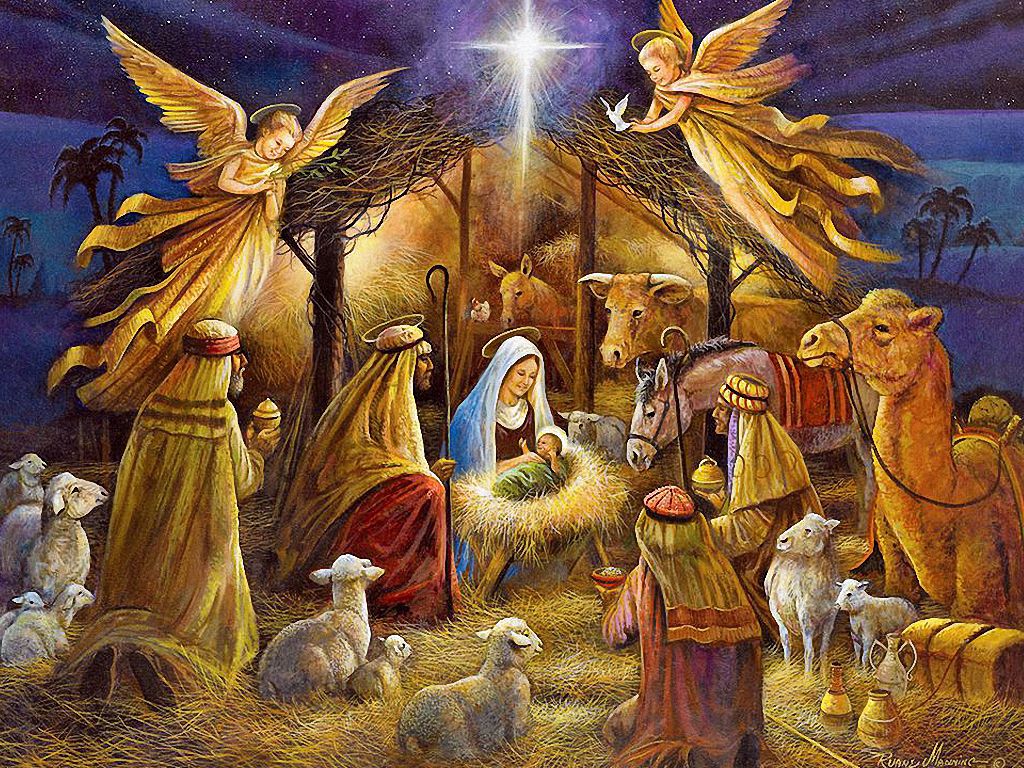
    Ah, Christmas Eve—a magical time filled with last-minute shopping, wrapping paper chaos, and a fridge stuffed with ingredients you promised would turn into a “Pinterest-worthy” holiday spread. But let’s not forget, amidst all the eggnog and Amazon boxes, the real reason for the season: Jesus’ birthday.

    Let’s rewind about 2,000 years ago. Picture this: A humble stable in Bethlehem. Mary, exhausted but glowing (and possibly questioning why she agreed to this road trip so late in her third trimester), is settling into her makeshift maternity suite. Joseph is frantically Googling “how to assemble a manger” on his stone tablet. Meanwhile, animals are casually photobombing the scene. The original Nativity, folks—raw, unfiltered, and free from Instagram filters.

    Fast forward to today, where we celebrate this momentous occasion by…overspending on electronics and arguing over who forgot to buy the marshmallows for the sweet potatoes. What would Jesus think of all this? Probably that we need a little perspective.

    Let’s talk Christmas Eve traditions:

    1. The Christmas Eve Candlelight Service:
      You dress the kids up, bribe them with candy canes, and pray no one sets their hair on fire. It’s a beautiful reminder of the light Jesus brought into the world—and a lesson in patience when your toddler belts out “Let It Go” during “Silent Night.”
    2. Santa’s Cookies and Milk:
      We leave out snacks for Santa, but let’s give a nod to Jesus, the OG reason for the feast. Maybe a loaf of homemade bread or some fish sticks? Too much? Okay, cookies it is.
    3. The Christmas Story:
      Reading Luke 2 aloud is a must. Sure, you might have to pause to explain words like “swaddling” and “manger” to a roomful of 21st-century kids, but it’s worth it. Bonus points if you make them act it out. Yes, your dog can totally play a sheep.
    4. The Gift Wrapping Marathon:
      Remember how the Wise Men brought gold, frankincense, and myrrh? Joseph probably didn’t roll his eyes and mutter, “Great, more myrrh. Just what we needed.” Take a lesson from them—your gifts don’t have to be perfect, just given with love.
    5. The Midnight Snack Debate:
      At some point, someone will bring out a cheese ball or leftover pie, declaring it’s a “holiday tradition.” It’s fine—Jesus turned water into wine, so I’m pretty sure He’d approve of impromptu feasts.

    The Big Picture:
    Christmas Eve is hectic, messy, and often filled with chaos—but it’s also beautiful. It’s about family, friends, and faith. As you gather around your tree tonight, remember that tiny stable in Bethlehem and the gift that outshines anything Amazon Prime could deliver: the gift of love, hope, and salvation.

    So light your candles, sing your carols, and don’t stress about the burnt sugar cookies. After all, the first Christmas wasn’t about perfection—it was about the perfect gift.

    Merry Christmas, and may your celebrations be as joyful and unexpected as shepherds meeting angels!

  • Embracing the Unbreakable Bond: Why Baptism Holds Eternal Promise

    As someone who shares my struggles with my faith and religion, I’m often asked what led me to stop attending Mass, and what led to my return to the Catholic Church. I’m one of many people who has questioned Catholicism and organized religion itself. Religion can be comforting for some and painful for others. I often hear stories from friends who have left the church for various reasons with no intention to return.

    Through prayer, I was able to ask God for His help in leading me to wherever he wanted me to be. I had contemplated other religions and none that I explored felt authentic to me, but I couldn’t put my finger on what it was that made me feel this way. After reading a recent article written by Catholic priest, Father Billy Swan, I was finally able to pinpoint it. I realized that the Catholic Church has never abandoned me, even in my times of turmoil. The Church was always waiting for me, whenever I decided I was ready to come back. Father Swan writes about himself, and of Bishop Robert Barron, and how they view those who wish to leave the Church, as well as those who wish to never return.

    In a world where shifts in faith and affiliation occur, the unshakable commitment of the Church to its members stands as a beacon of hope. Bishop Barron’s reflections remind us of the ‘nones’ and those who have disaffiliated from the Church, prompting contemplation on the depth of their departure.

    The account of a young man seeking to sever ties with the Church highlights the profound connection formed through the sacrament of Baptism. It’s not a mere administrative record; it’s an indelible spiritual seal that forever identifies us as God’s own. The analogy of a birthright resonates — just as a child’s inheritance remains intact despite distance, so does the Church’s love and hope for those who have drifted away.

    This love finds roots in ancient times, seen in God’s fidelity to an unfaithful Israel. The prodigal son’s tale paints an eloquent picture: a son’s mistakes cannot erase his identity as an heir. Paul’s teachings on divine sonship reveal that we are adopted by the Father, sharing in His inheritance through Baptism.

    The Church’s refusal to cancel baptismal records isn’t a bureaucratic decision; it’s a testament to unyielding love. The Church holds tight to the promises made on the day of Baptism, mirroring God’s unwavering devotion. God’s chosen remain chosen, even if they waver or stray.

    The encounter with the disaffiliated youth, although met with initial anger, mirrors the transformative journey of St. Paul — a fervent critic turned passionate advocate. Just as God transformed Paul, there’s boundless potential for this young man. The Church’s prayers continue, echoing the sentiment that no one is forgotten.

    In the world of change, this truth stands unwavering: God and the Church never give up on those who have left. Like the prodigal son’s room, the door is always open. So, as we seek to re-engage and bring back the disaffiliated, let this profound theology inspire our actions and fill our efforts with unending hope. The Church’s love remains eternal, a light guiding us all back to our spiritual home. That love is what brought me home.