Today is a hard day.
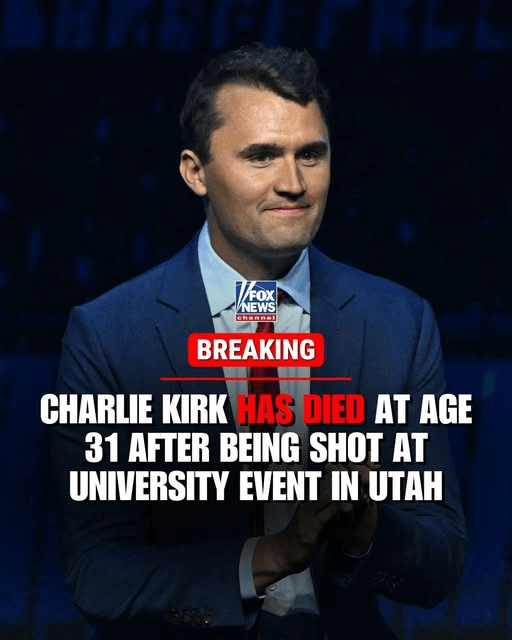
One year ago today, Charlie Kirk was murdered while doing something he had spent years doing: standing in front of people who disagreed with him and talking.
Arguing.
Challenging.
Provoking.
Listening.
Sometimes getting it wrong. Sometimes getting it right. Sometimes irritating the hell out of people.
But he showed up.
And someone decided that disagreement had crossed the line into justification for murder.
That should horrify every decent person, regardless of political affiliation.
Yet today, one year later, I am seeing things online that have left me genuinely shaken.
People mocking Charlie’s death.
People celebrating it.
People making jokes about the shooting.
People posting things that may not explicitly say, “I am glad he was murdered,” but come damn close enough that everyone knows what they mean.
And I’ve had an uncomfortable realization.
There are people on my Facebook feed whom I no longer want in my life.
Not because they are liberal.
Not because they voted differently than I did.
Not because they disagree with me about abortion, Donald Trump, immigration, gender, taxes, guns, or any other political issue.
I can handle disagreement.
Hell, I expect it.
I have friends with whom I disagree about enormous things. I love people who don’t vote like I do. I don’t need everyone around me to share my worldview.
But there is a line between disagreeing with someone’s beliefs and celebrating their destruction because of those beliefs.
That line matters to me.
And perhaps the most disturbing part is that Charlie himself seemed to understand something I am still struggling to learn.
He was remarkably willing to engage people he disagreed with.
He would sit across from college students who openly despised him and say, essentially, Come talk to me.
He didn’t require agreement before granting someone humanity.
I admire that enormously.
And I’m going to be honest:
I’m not sure I’m that strong.
Maybe that is my own uncomfortable confession today.
I don’t know that I can embrace someone with compassion after watching them celebrate the murder of someone simply because they hated what he believed.
I can forgive someone for having different political opinions.
I can understand that reasonable people can reach radically different conclusions.
I can even laugh at myself when someone makes a good point that challenges my assumptions.
But if you see a man murdered for his political beliefs and your reaction is good, he deserved it, one less fascist, or some variation of I have no sympathy because I hated him…
I need some distance from you.
And I’m not going to apologize for that.
Because here’s the question I can’t stop thinking about:
If someone took my life because of my conservative beliefs, what would you say?
Would you mourn?
Would you say, What a tragedy. I disagreed with her, but she didn’t deserve that.
Or would you say:
Good.
She got what she deserved.
One less conservative.
I’m not going to lose sleep over it.
Would you celebrate?
Would you make memes?
Would you turn my death into a punchline?
Because if you could do that to Charlie, I have to wonder what you would do if the person being carried away in a body bag was me.
And that’s where this stops being theoretical.
Because Charlie wasn’t murdered because he was a murderer.
He wasn’t killed because he had physically harmed the people who disagreed with him.
He was killed because someone allegedly decided that his political expression made him worthy of death. Prosecutors have alleged that Robinson targeted Kirk because of his political expression, and the case is now headed toward trial.
That is terrifying.
Because once we decide that certain opinions make people less deserving of life, the principle doesn’t stay neatly contained on one side of the political aisle.
It never does.
Today it’s Charlie Kirk.
Tomorrow it’s someone you love.
And eventually, perhaps, it’s you.
That’s why I don’t care whether you liked Charlie.
You didn’t have to.
You could think he was arrogant.
You could think he was wrong.
You could think his politics were dangerous.
You could think his rhetoric was inflammatory.
You could despise everything he stood for.
And still believe he should be alive.
That’s the bare minimum.
Actually, it’s more than the bare minimum.
It is civilization.
We are supposed to be able to hate an idea without hating the person who holds it.
We are supposed to be able to argue without annihilating one another.
We are supposed to believe that the person across the political aisle is still a human being whose life has value.
And when we lose that?
We have lost something far more important than an election.
We’ve lost the ability to coexist.
So yes, today I am grieving Charlie Kirk.
I’m grieving the husband who lost his life.
I’m grieving the father whose children will grow up without him.
I’m grieving a young man who had an enormous amount of life left to live.
And I’m grieving something else, too.
I’m grieving the people I thought understood the difference between political disagreement and moral depravity.
Some of them apparently don’t.
And maybe that’s okay.
Maybe this is what boundaries are for.
I don’t have to hate them.
I don’t have to attack them.
I don’t have to convince them.
I can love some people from a distance.
But I don’t have to keep people in my life who make me question whether they believe my life would still have value if they hated my politics enough.
Charlie spent his life telling people to debate him.
He invited people to challenge him.
He believed ideas should be confronted with better ideas.
And perhaps the best way to honor him isn’t by becoming more hateful ourselves.
Perhaps it is by refusing to become the thing that killed him.
We can disagree.
We can argue.
We can challenge one another.
We can even despise each other’s politics.
But we don’t get to decide that our political opponents are less human.
And we certainly don’t get to celebrate when they’re dead.
Because the moment we start cheering for political murder, we aren’t defending our values anymore.
We’re abandoning them.