Tag: Christianity

  • A Nation in Mourning: Charlie Kirk’s Tragic Assassination

    I am overwhelmed with sorrow. I am seething with anger. Today, our brave, devout conservative friend Charlie Kirk was assassinated—struck down in cold blood while standing firmly for truth and faith at Utah Valley University. He wasn’t just a figurehead; he was a young father, a passionate believer, a warrior for Christ—and he fell victim to the hatred and division that poison this country.

    Charlie was brilliant. His mind was sharp, his insight clear. Whether he was debating on stage, speaking to students, or encouraging fellow believers, he had an ability to articulate truth in a way that cut through the noise. He was a leader who inspired countless young conservatives to think critically, live boldly, and never apologize for their faith. He had so much of life ahead of him—a life that should have been filled with more books, more speeches, more debates, more moments as a father and husband. That future was stolen.

    At approximately 12:10 p.m. MDT, a single gunshot rang out from a building roughly 200 yards away—hitting Charlie in the neck during a live public event. Within hours, he succumbed to his injuries and died at age 31, leaving behind a grieving wife and two young children.

    This wasn’t random violence—it was a savage act of political hatred. The perpetrators of this cruelty are the extremists who have poisoned our national conversation, who preach division, who despise Christians and conservatives, who incite fear and violence with their vitriol.

    To those who revel in chaos, who whisper that such violence is justified—know this: you have crossed a moral line. You have torn a family apart, left two children fatherless, and extinguished a vibrant life dedicated to faith and courage.

    I mourn Charlie’s life. I mourn the light he brought into conservative youth movements nationwide. I mourn his bold voice, his unapologetic Christianity, his unyielding commitment to truth. But I will not be silent.

    Let this crime spark a turning point. Let us confront and reject the hatred that divides us. We must stand united—Christians and conservatives in the face of extremist violence, in defense of free speech, in honor of Charlie’s legacy.

    Rest in peace, Charlie. Your brilliance, your faith, and your courage will not be forgotten.

  • ‘Twas the Night Before Christmas: The Jesus Edition

    Ah, Christmas Eve—a magical time filled with last-minute shopping, wrapping paper chaos, and a fridge stuffed with ingredients you promised would turn into a “Pinterest-worthy” holiday spread. But let’s not forget, amidst all the eggnog and Amazon boxes, the real reason for the season: Jesus’ birthday.

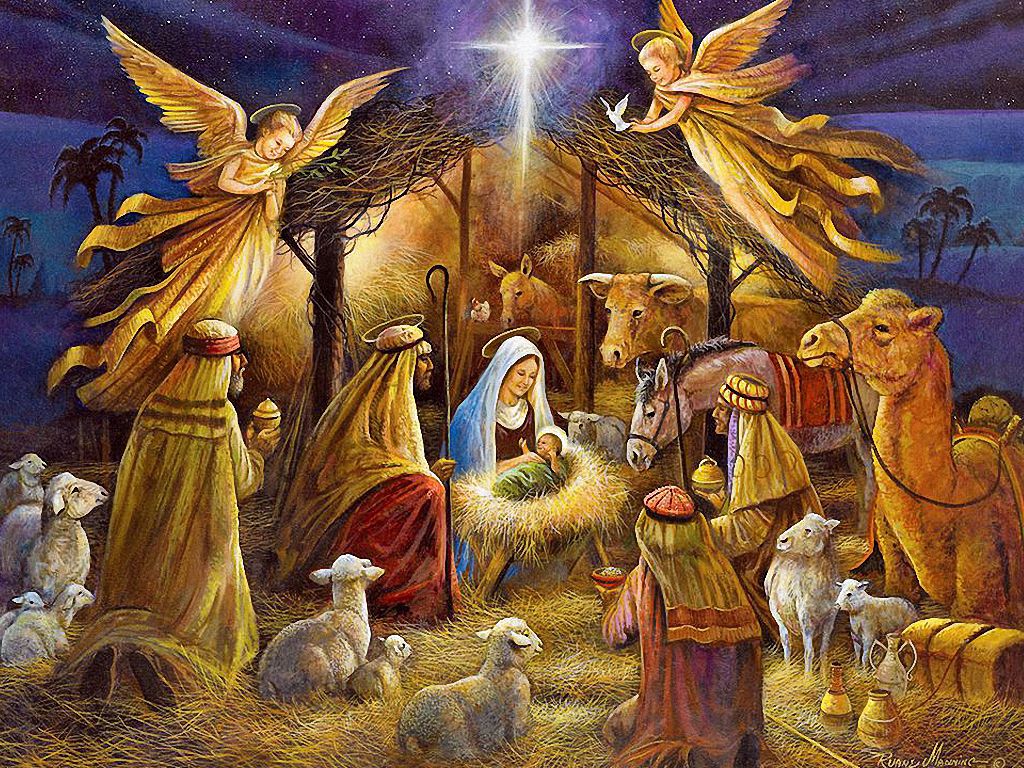
    Let’s rewind about 2,000 years ago. Picture this: A humble stable in Bethlehem. Mary, exhausted but glowing (and possibly questioning why she agreed to this road trip so late in her third trimester), is settling into her makeshift maternity suite. Joseph is frantically Googling “how to assemble a manger” on his stone tablet. Meanwhile, animals are casually photobombing the scene. The original Nativity, folks—raw, unfiltered, and free from Instagram filters.

    Fast forward to today, where we celebrate this momentous occasion by…overspending on electronics and arguing over who forgot to buy the marshmallows for the sweet potatoes. What would Jesus think of all this? Probably that we need a little perspective.

    Let’s talk Christmas Eve traditions:

    1. The Christmas Eve Candlelight Service:
      You dress the kids up, bribe them with candy canes, and pray no one sets their hair on fire. It’s a beautiful reminder of the light Jesus brought into the world—and a lesson in patience when your toddler belts out “Let It Go” during “Silent Night.”
    2. Santa’s Cookies and Milk:
      We leave out snacks for Santa, but let’s give a nod to Jesus, the OG reason for the feast. Maybe a loaf of homemade bread or some fish sticks? Too much? Okay, cookies it is.
    3. The Christmas Story:
      Reading Luke 2 aloud is a must. Sure, you might have to pause to explain words like “swaddling” and “manger” to a roomful of 21st-century kids, but it’s worth it. Bonus points if you make them act it out. Yes, your dog can totally play a sheep.
    4. The Gift Wrapping Marathon:
      Remember how the Wise Men brought gold, frankincense, and myrrh? Joseph probably didn’t roll his eyes and mutter, “Great, more myrrh. Just what we needed.” Take a lesson from them—your gifts don’t have to be perfect, just given with love.
    5. The Midnight Snack Debate:
      At some point, someone will bring out a cheese ball or leftover pie, declaring it’s a “holiday tradition.” It’s fine—Jesus turned water into wine, so I’m pretty sure He’d approve of impromptu feasts.

    The Big Picture:
    Christmas Eve is hectic, messy, and often filled with chaos—but it’s also beautiful. It’s about family, friends, and faith. As you gather around your tree tonight, remember that tiny stable in Bethlehem and the gift that outshines anything Amazon Prime could deliver: the gift of love, hope, and salvation.

    So light your candles, sing your carols, and don’t stress about the burnt sugar cookies. After all, the first Christmas wasn’t about perfection—it was about the perfect gift.

    Merry Christmas, and may your celebrations be as joyful and unexpected as shepherds meeting angels!

  • Navigating Spiritual Abuse and Rediscovering Faith: My Journey of Healing

    In the realm of family dynamics, the influence of faith and spirituality can be both a source of comfort and a tool for manipulation. For many, the family serves as the primary vessel through which religious beliefs are transmitted. However, when those beliefs are used to control and manipulate, the effects can be deeply damaging. This is the story of my journey through spiritual abuse within my family of origin, how I broke free from its grip, and how I eventually found healing and renewed faith.

    Growing up in a family where faith was central, I was raised to revere authority figures, especially those within the religious context. In my family, it was instilled in me that anyone with “authority” over me was essentially speaking God’s word. This belief set the stage for an environment where unquestioning obedience was expected, and deviation from family-defined norms was met with guilt and shame. The lines between divine guidance and personal agendas blurred, leaving me vulnerable to manipulation.

    As a young girl, I experienced a form of spiritual abuse that messed with my perspective on forgiveness and self-worth. Despite Catholic teachings about confession and redemption, I was made to believe that my mistakes were somehow beyond forgiveness, that my sins were an unshakable mark of shame. This led me to constantly feel this overwhelming pressure to be flawless, to maintain this image of perfection that was impossible to uphold. But as humans do, I made mistakes along the way, and each time I stumbled, it felt like the world was crashing down. I couldn’t escape this feeling of worthlessness and irredeemability, like I was just a lost cause. Breaking free from that mindset has been a journey, one that involves reshaping my understanding of spirituality and self-acceptance.

    One of the most damaging aspects of my experience was the misuse of scripture as a means of control. My family would selectively extract verses to reinforce their ideals and manipulate me into conforming to their vision of what my life should be. This manipulation often took the form of guilt-inducing messages, leaving me feeling spiritually obligated to adhere to their expectations. This ultimately led me to a point where I stopped attending Mass altogether, unable to bear the weight of their skewed interpretations of faith.

    Recognizing the toxicity of the situation, I realized the importance of setting healthy boundaries with family members who were intent on molding me into a role that didn’t align with my authentic self. It was a challenging and necessary step to redefine the boundaries of our relationship, asserting my autonomy and refusing to be constrained by their expectations. This process was both liberating and painful, as I confronted the discomfort of asserting my own beliefs and values.

    Walking away from the abuse was just the first step. Over time, I began to rebuild my relationship with God on my terms. Slowly, I started attending Mass again, this time with a newfound sense of agency. But it was through the Alpha program that I truly began to deconstruct the distorted perspectives of how Christianity should be practiced. Alpha provided a safe space to ask questions, challenge assumptions, and rediscover spirituality in an authentic and transformative way.

    My journey through spiritual abuse within my family of origin was marked by manipulation, control, and the courage to break free. The conditioning that led me to equate authority with divine truth proved to be a tangled web that required careful unraveling. Through the process of setting boundaries and seeking healing, I learned that faith is a deeply personal journey—one that should empower and uplift, rather than restrict and confine.

    If you find yourself entangled in a similar situation, remember that you have the right to define your relationship with God, and your faith, on your terms. Setting boundaries with family members who seek to shape your identity is an act of self-preservation and a step towards reclaiming your autonomy. Just as I found healing and renewed faith through the Alpha program, there are resources available to help you navigate your own journey towards spiritual freedom and authentic connection.